check

check

check

check
check
check
check
check

check

check
In the world of industrial automation, precision and reliability are non-negotiable. The KT9-50/25/102/115 photoelectric switch stands as a testament to this principle, offering a robust solution for countless sensing applications. This comprehensive guide delves into the features, applications, and technical nuances of this versatile sensor, providing engineers and system integrators with the insights needed to optimize their operations.
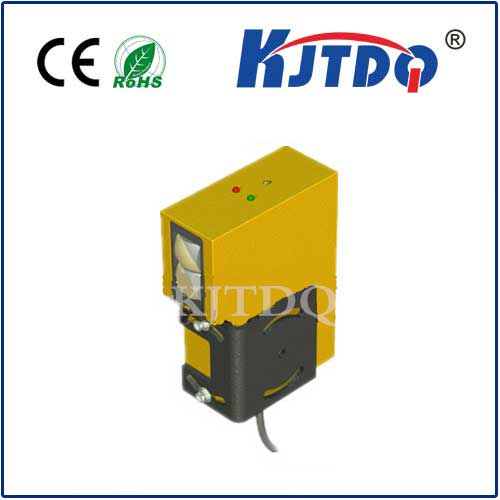
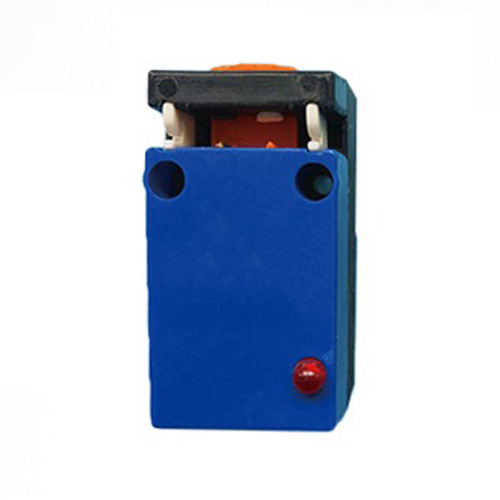
At its core, the KT9-50/25/102/115 is a through-beam photoelectric sensor. This design consists of two separate units: a transmitter and a receiver. The transmitter emits a focused beam of light, typically infrared or red visible light, which is then captured by the receiver positioned directly opposite. The core function is elegantly simple. When an object passes between the two units, it interrupts the light beam. This interruption is instantly detected by the receiver, which triggers a switching signal. This binary, go/no-go detection is exceptionally reliable for clear, unambiguous object presence monitoring.
The model number itself reveals key specifications. The "50" often denotes the sensing distance, which in this case is 50 meters for the through-beam configuration. This long-range capability makes it ideal for large-scale applications like warehouse door monitoring, conveyor belt systems spanning wide areas, or vehicle detection in parking facilities. The "25" typically refers to a 25-meter range for a retro-reflective mode, if supported, adding to its versatility. The "102" and "115" codes usually relate to specific housing designs, connection types (like a 4-pin M12 connector), and output configurations (e.g., NPN or PNP transistor outputs).
The advantages of choosing the KT9 series are manifold. Its through-beam design offers the highest possible sensing distance and is largely immune to the color, texture, or reflectivity of the target object. Whether detecting a transparent glass bottle, a matte black carton, or a shiny metal part, the sensor performs consistently. It is engineered for harsh industrial environments, featuring a rugged housing that provides excellent resistance to dust, dirt, and water jets, often meeting IP67 protection standards. The stable light beam and advanced circuitry ensure minimal interference from ambient light, guaranteeing stable operation even under challenging lighting conditions.
Practical applications are vast across multiple industries. In packaging and material handling, these sensors are indispensable for counting products on high-speed lines, detecting jams on conveyors, and ensuring precise positioning for robotic pick-and-place operations. In the automotive sector, they monitor the presence of components on assembly lines. In logistics, they secure automated storage and retrieval systems by verifying the passage of pallets. They are also crucial for safety applications, such as perimeter guarding on machinery or ensuring a clear path for automated guided vehicles (AGVs).
Installation and alignment, while straightforward, require attention to detail. For the through-beam type, the transmitter and receiver must be precisely aligned to ensure the beam is accurately received. Modern versions often incorporate alignment indicators, such as LED signals that change color or brightness when optimal alignment is achieved. Once installed, maintenance is minimal. Periodic cleaning of the lenses to remove dust or grime is typically all that's required to maintain peak performance for years.
When integrating the KT9-50/25/102/115 into a control system, understanding its electrical output is key. The sensor acts as a solid-state switch. When the beam is unbroken, its output state is one condition (e.g., "OFF" or "HIGH"); when broken, it switches to the opposite state ("ON" or "LOW"). This signal is then fed into a Programmable Logic Controller (PLC), a relay, or another control device to trigger the desired action, such as stopping a motor, incrementing a counter, or activating an alarm.
Selecting the right photoelectric sensor is critical. The KT9-50/25/102/115 is a premier choice for applications demanding long-range, highly reliable detection where the object's characteristics may vary. Its durability and consistent performance reduce downtime and maintenance costs, contributing directly to increased productivity and operational efficiency. For system designers looking for a proven, dependable workhorse sensor for object detection, the KT9 series represents a smart and reliable investment in the backbone of automation.