check

check

check

check
check
check
check
check

check

check
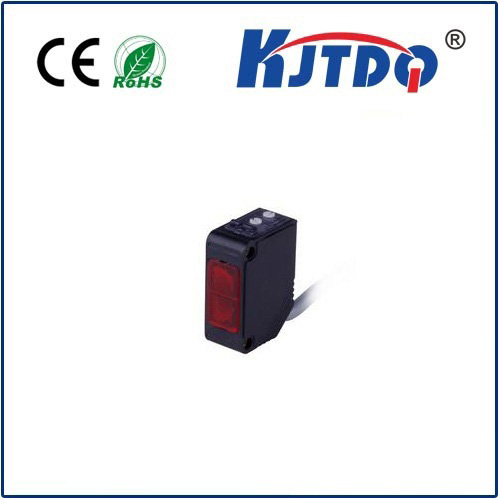
In the dynamic landscape of industrial automation, precision, reliability, and durability are non-negotiable. The CL58-3023PT photoelectric switch emerges as a cornerstone component, engineered to meet the rigorous demands of modern manufacturing, packaging, material handling, and assembly lines. This advanced sensor exemplifies the integration of robust design with sophisticated optical technology, offering a dependable solution for object detection, counting, and positioning tasks across diverse industrial environments.
The CL58-3023PT operates on the fundamental principle of modulated infrared light. It functions as a through-beam sensor, comprising a separate transmitter and receiver unit. The transmitter emits a focused beam of infrared light, which is then captured by the opposing receiver. When an object passes between the two units, it interrupts this light beam. The receiver detects this interruption and triggers a switching signal—either NPN or PNP output depending on configuration—to the connected control system, such as a PLC (Programmable Logic Controller). This simple yet highly effective mechanism allows for long-range detection with exceptional accuracy and minimal influence from the object's surface color, texture, or material, provided it is opaque.
Key technical specifications define the CL58-3023PT's superior performance. It typically offers a long sensing range, capable of stable detection over several meters, making it ideal for large machinery or conveyor systems. The housing is constructed from high-grade industrial plastics or metals, providing an IP67 or higher protection rating. This ensures complete defense against dust ingress and protection against temporary immersion in water, allowing it to perform flawlessly in harsh, wash-down environments common in food processing or pharmaceutical plants. The device is designed to withstand significant vibration and mechanical shock, maintaining calibration and functionality. Furthermore, it features a built-in sensitivity adjustment potentiometer or teach-in function, enabling technicians to fine-tune the sensor's response to specific application needs, reducing false triggers from background interference.
The advantages of implementing the CL58-3023PT photoelectric switch are manifold. Its primary benefit is consistent, non-contact detection. Unlike mechanical limit switches, it has no moving parts that can wear out, leading to dramatically extended service life and reduced maintenance costs. The non-contact nature also means there is no physical force applied to the detected object, protecting delicate products. Its fast response time allows for high-speed counting and sorting operations, crucial for productivity. The long operating range provides flexibility in machine design, often simplifying mechanical layouts. For challenging conditions involving steam, light dust, or minor misalignments, the stable modulated light signal ensures reliable operation where standard sensors might fail.
Practical applications for the CL58-3023PT are extensive. In automated packaging lines, it is used to detect the presence of boxes on a conveyor, triggering the sealing or labeling mechanism. Within the automotive industry, it ensures robotic arms accurately pick and place components by verifying part presence at specific stations. In warehouse and logistics automation, these sensors count items on sorting lines and control the flow of parcels. They are also indispensable in woodworking and metalworking for detecting board or sheet metal edges for precise cutting and machining. Any process requiring reliable, long-distance detection of opaque objects is a candidate for this sensor.
When selecting and installing the CL58-3023PT, several best practices ensure optimal performance. First, verify the required sensing distance and choose a model with an appropriate range margin. Ensure the mounting brackets are secure and the transmitter and receiver are precisely aligned; even a small misalignment can significantly reduce effective range. For through-beam models, keeping the lens clean from dirt, dust, or condensation is critical. The electrical connections must be made according to the datasheet, paying close attention to the voltage supply (commonly 10-30V DC) and the load connected to the output. Implementing proper electrical shielding and routing cables away from power lines can prevent electrical noise interference.
The CL58-3023PT photoelectric switch stands as a testament to the evolution of industrial sensing technology. It delivers a blend of ruggedness, precision, and versatility that is essential for enhancing operational efficiency, ensuring product quality, and minimizing downtime. By providing a reliable "eye" on the production process, it forms an integral part of the feedback loop that drives intelligent, automated systems. For engineers and system integrators seeking a proven and robust sensing solution, the CL58-3023PT offers a compelling combination of performance and value, solidifying its role as a key component in the toolkit of industrial automation.