check

check

check

check
check
check
check
check

check

check
In the world of industrial automation, precision and reliability are not just preferences; they are absolute necessities. The E3F-DS30C4 photoelectric switch stands as a cornerstone component in countless systems, from packaging lines and material handling to security and access control. This diffuse reflective sensor is engineered to deliver consistent, non-contact detection, making it an indispensable tool for engineers and system integrators seeking robust performance. Unlike mechanical switches prone to wear and tear, the E3F-DS30C4 operates on an optical principle, ensuring a long operational life and minimal maintenance.
At its core, the E3F-DS30C4 emits a beam of light from its built-in LED. When an object enters its detection range, the light reflects off the object's surface and returns to the sensor's receiver. This model is specifically a diffuse reflective type, meaning it detects the object using the light reflected directly from the object itself, without the need for a separate reflector. This design simplifies installation and setup, as only the sensor and the target need to be considered. The "30C4" designation typically indicates a sensing distance, often around 30 centimeters, though exact specifications should always be verified with the manufacturer's datasheet. This range is ideal for medium-distance applications like detecting boxes on a conveyor belt, monitoring bin levels, or counting products.
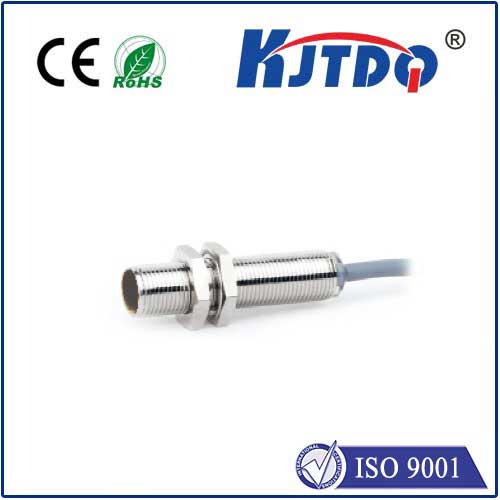
The construction of the E3F-DS30C4 is tailored for industrial environments. Housed in a rugged, typically cylindrical body, it offers resistance to common challenges like dust, moisture, and vibration. Many variants come with an IP67 rating, signifying complete protection against dust and the ability to withstand temporary immersion in water. This durability ensures stable operation in harsh conditions, from automotive manufacturing plants to food processing facilities. The output is usually in the form of a digital signal—either NPN or PNP transistor output—allowing for seamless integration with Programmable Logic Controllers (PLCs), relays, and other control circuitry. The wiring is straightforward, typically involving connections for power supply, ground, and the output signal.
One of the key advantages of the E3F-DS30C4 is its versatility. It can detect a wide array of objects regardless of material, although the detection efficiency can vary based on the color, texture, and reflectivity of the surface. Light-colored, matte objects are detected at the maximum rated distance, while dark or shiny objects may require adjustment or a shorter operating distance. Modern units often feature a sensitivity adjustment potentiometer, allowing technicians to fine-tune the sensor for the specific application and target material, minimizing false triggers and ensuring reliable detection.
Implementing the E3F-DS30C4 requires careful consideration of a few factors for optimal performance. Proper alignment is less critical than with through-beam sensors, but environmental factors like ambient light, dust, and background objects can influence operation. Installing the sensor at a slight angle to the target's path can sometimes help avoid direct reflection issues. Regular cleaning of the lens is recommended to prevent buildup that could attenuate the light beam. Furthermore, understanding the load characteristics and ensuring compatibility with the connected control system is crucial to prevent electrical damage.
From automated assembly stations that verify component presence to complex robotic systems that rely on precise positioning cues, the E3F-DS30C4 photoelectric switch provides a fundamental layer of sensing intelligence. Its blend of simple principle, robust design, and adaptable functionality has cemented its status as a go-to solution. For anyone designing or maintaining an automated process, mastering the use of such sensors is a fundamental skill. By providing a reliable electrical signal based on the physical presence of an object, this device acts as the eyes of the machine, enabling smarter, safer, and more efficient operations across a vast spectrum of modern industry.