check

check

check

check
check
check
check
check

check

check
In the world of industrial automation and machine control, the reliability and accuracy of sensing components are paramount. Among the myriad of options available, the RL33-2443GH photoelectric switch stands out as a robust and versatile solution for a wide range of detection applications. This comprehensive guide delves into the features, benefits, and practical uses of this advanced sensor, providing valuable insights for engineers, system integrators, and procurement specialists.
The RL33-2443GH is a through-beam photoelectric sensor designed for long-range, high-precision object detection. Its core principle involves a separate transmitter and receiver unit. The transmitter emits a focused beam of light, typically infrared or laser, which is then received by the opposing unit. When an object interrupts this beam, the receiver triggers a switching signal. This design offers significant advantages, most notably exceptional sensing distances and high immunity to environmental interference such as dust, steam, or target surface color and reflectivity. The "GH" suffix often indicates a specific housing material or ingress protection rating, suggesting suitability for demanding industrial environments.
One of the key strengths of the RL33-2443GH is its impressive sensing range. Capable of detecting objects over distances that can extend several meters, it is ideal for applications where the sensor and reflector or receiver must be positioned far apart. This makes it perfect for large machinery, conveyor belt systems, automated storage and retrieval systems (AS/RS), and vehicle detection in parking or logistics facilities. The long-range capability eliminates the need for multiple sensors, simplifying system design and reducing overall costs.
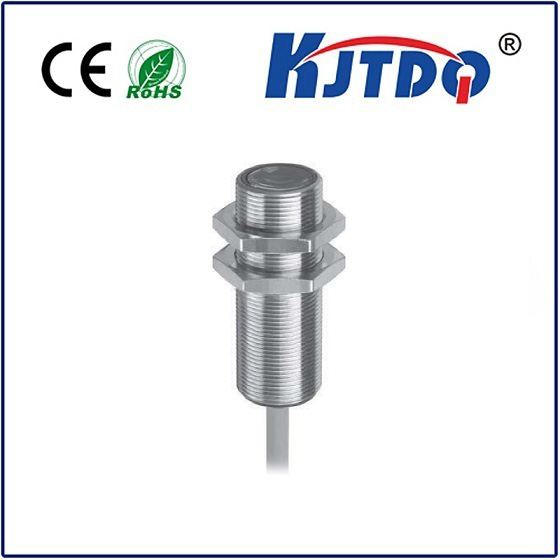
Durability and reliability are non-negotiable in industrial settings. The RL33-2443GH is typically housed in a rugged casing, often made from metal or high-grade industrial plastic, providing resistance against physical impact, vibration, and chemical exposure. Many models feature high Ingress Protection (IP) ratings like IP67 or IP69K, ensuring reliable operation even when exposed to water jets, dust, and oils. This robust construction guarantees a long operational life with minimal maintenance, reducing downtime and total cost of ownership.
Installation and alignment are critical for through-beam sensors. The RL33-2443GH is designed with user convenience in mind. Many units come with built-in alignment indicators, such as LED signals that change color or blink to confirm precise optical axis alignment between the transmitter and receiver. This feature drastically reduces setup time and prevents operational errors. Furthermore, its compact design allows for flexible mounting in space-constrained locations. The output is typically a stable digital signal (PNP/NPN or relay) that interfaces seamlessly with Programmable Logic Controllers (PLCs), frequency inverters, and other control systems.
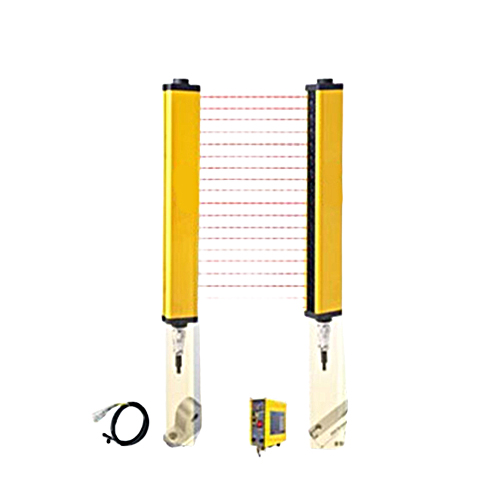
The applications for the RL33-2443GH photoelectric switch are vast and varied. In packaging lines, it accurately detects the presence of boxes or products on a conveyor, triggering subsequent actions like labeling, filling, or sorting. In the automotive industry, it is used for precise positioning of parts during assembly or for checking the presence of components. In material handling, it ensures pallets are correctly positioned for robotic pick-and-place operations. It also plays a crucial role in security systems as a part of safety light curtains or intrusion detection beams. Its immunity to ambient light and object surface properties makes it a dependable choice where other sensor types might fail.
When selecting a photoelectric switch, comparing the RL33-2443GH with other types is essential. Unlike diffuse-reflective sensors that detect light bounced back from an object, the through-beam design of the RL33-2443GH is unaffected by the color, texture, or angle of the target. Compared to proximity sensors, it offers a much longer range. While retro-reflective sensors use a single unit and a reflector, the through-beam model generally provides superior stability and range in dirty environments, as it is less likely to be fooled by highly reflective objects that might return light to a retro-reflective sensor's receiver.
For optimal performance, proper selection and maintenance are key. Consider the required sensing distance, the size of the target object, the environmental conditions (temperature, contaminants), and the required response speed. Regular cleaning of the lenses is recommended to prevent buildup that could attenuate the light beam. Always refer to the manufacturer's datasheet for specific electrical specifications, connection diagrams, and mounting instructions to ensure safe and correct integration into your control system.
In conclusion, the RL33-2443GH photoelectric switch represents a pinnacle of reliability and performance in through-beam sensing technology. Its long-range detection, environmental robustness, and ease of integration make it an indispensable component for modern automated systems. By providing a precise and unwavering "eye" for machinery, it enhances efficiency, safety, and productivity across countless industries. For any application demanding accurate non-contact detection over distance, the RL33-2443GH is a proven and trustworthy solution that delivers consistent results day in and day out.