check

check

check

check
check
check
check
check

check

check
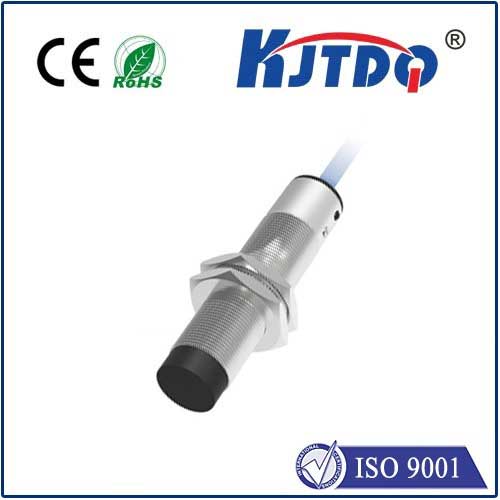
In the intricate world of industrial automation, the reliability of every component is paramount. Among these, the photoelectric switch stands as a silent sentinel, enabling countless processes with its non-contact detection capabilities. The GLV18-6/25/103/159 photoelectric switch represents a specific and highly engineered solution within this category, designed for applications demanding unwavering accuracy and durability. This guide delves into its functionality, key specifications, and the critical role it plays in modern systems.
At its core, a photoelectric switch operates by emitting a beam of light—typically infrared, red, or laser—and detecting changes in the received light signal. The GLV18-6/25/103/159 model utilizes this principle with a through-beam sensing method. This involves a separate emitter and receiver unit. The emitter projects a continuous light beam towards the receiver. When an object passes between them, it interrupts this beam, triggering an output signal from the receiver unit. This method is renowned for its long sensing range and high reliability, as it is less susceptible to the color or reflectivity of the target object compared to reflective models.
Decoding the model number GLV18-6/25/103/159 reveals its tailored specifications. The 'GLV18' often denotes the series or housing type, typically a cylindrical, threaded barrel design common for easy installation. The '6' and '25' are crucial figures representing the operating voltage range, which in this case is 6 to 25 volts DC. This wide range offers significant flexibility, allowing integration into various control systems, from low-voltage logic circuits to standard 24V DC industrial panels. The '103' and '159' likely refer to specific technical parameters such as the sensing distance or output configuration. For instance, '103' could indicate a 10-meter sensing range, while '159' might specify a complementary NPN (sourcing) or PNP (sinking) transistor output. It is essential to consult the manufacturer's exact datasheet for precise interpretation, as coding can vary.
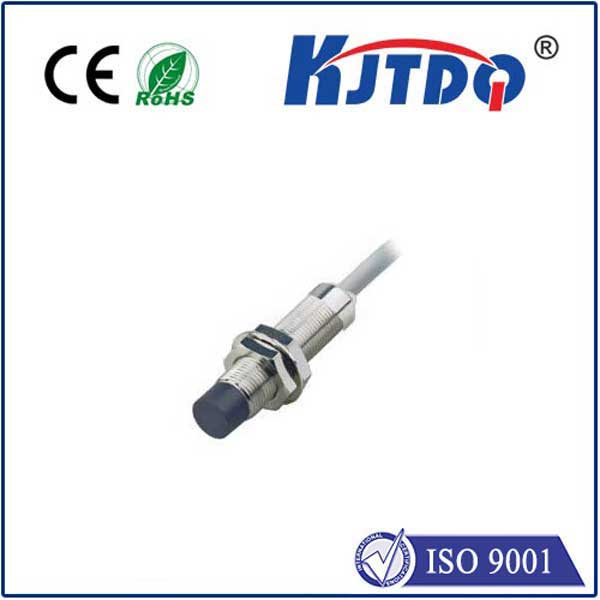
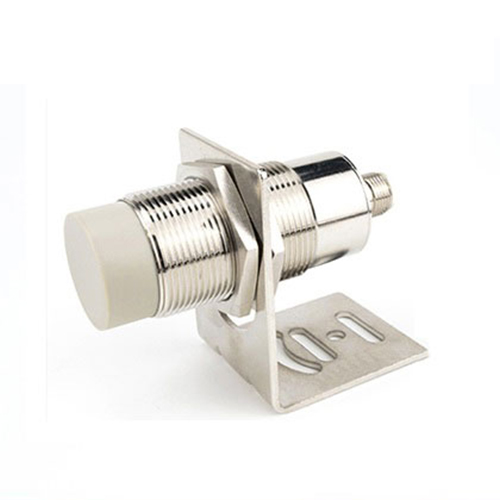
The construction of the GLV18-6/25/103/159 is built for harsh environments. The housing is usually made from robust materials like nickel-plated brass or stainless steel, providing excellent resistance to corrosion, impacts, and environmental stressors such as dust and moisture. Many variants achieve an IP67 protection rating, meaning they are dust-tight and can withstand temporary immersion in water. This ruggedness ensures consistent performance in demanding settings like packaging lines, material handling systems, woodworking machinery, and automated assembly stations.
Integrating this sensor into a control system is straightforward. The DC power supply is connected to the designated terminals, and the output wire is linked to a programmable logic controller (PLC), relay, or other control device. The key advantage of the through-beam design is its simplicity and immunity to false triggers from shiny or dark objects, as it relies solely on beam interruption. Maintenance is minimal, primarily involving periodic lens cleaning to ensure optimal light transmission and checking for physical misalignment between the emitter and receiver.
When selecting a photoelectric switch like the GLV18-6/25/103/159, engineers evaluate several factors beyond the basic model number. The required sensing distance, the size and material of the target objects, ambient light conditions, and the required response speed are all critical. Its through-beam nature makes it ideal for precise object detection, counting, and position verification where high accuracy over a longer distance is needed. For applications where mounting both an emitter and receiver is impractical, diffuse-reflective or retro-reflective models might be considered, though they may have shorter ranges or different sensing characteristics.
In conclusion, the GLV18-6/25/103/159 photoelectric switch is not merely a component but a precision tool for automation. Its through-beam sensing, wide voltage compatibility, and rugged design make it a dependable choice for engineers seeking to enhance system reliability and efficiency. By understanding its specifications and operational principles, professionals can effectively deploy this sensor to solve complex detection challenges, ensuring smooth and uninterrupted industrial operations. Always refer to the official technical documentation for application-specific details and wiring diagrams to guarantee optimal performance and safety.