check

check

check
check
check
check
check
check
check
check
In the intricate world of industrial automation, the reliability of a single component can dictate the efficiency of an entire production line. Among these critical components, photoelectric switches stand as silent sentinels, enabling non-contact detection with remarkable precision. The PR12-TM10D photoelectric switch emerges as a standout solution in this category, engineered to meet the rigorous demands of modern manufacturing, logistics, and packaging systems. This comprehensive guide delves into the features, applications, and technical advantages that make the PR12-TM10D an indispensable tool for engineers and system integrators.
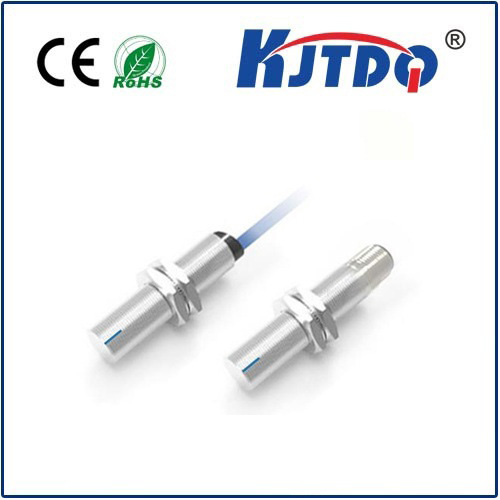
At its core, the PR12-TM10D is a through-beam photoelectric sensor. This design involves a separate transmitter and receiver unit. The transmitter emits a focused beam of light, typically infrared or red visible light, which is then received by the opposing unit. An object is detected when it interrupts this beam. This principle offers significant benefits, most notably an exceptionally long sensing range and high immunity to environmental interferences like dust, steam, or target object color and surface finish. The PR12-TM10D is specifically calibrated for stable detection over distances that challenge other sensor types, providing a reliable "yes" or "no" signal in high-speed counting, positioning, and safety curtain applications.
The construction of the PR12-TM10D speaks volumes about its durability. Housed in a rugged, typically metal or high-grade polymer casing, it is built to withstand the harsh conditions prevalent in industrial settings. Its ingress protection rating, often reaching IP67, ensures complete defense against dust ingress and protection against temporary immersion in water. This makes it perfectly suited for washdown environments in food and beverage processing or outdoor applications where exposure to the elements is unavoidable. Vibration resistance is another key attribute, guaranteeing consistent performance even on moving machinery or conveyor systems subject to constant oscillation.
Electrical integration is streamlined for efficiency. The PR12-TM10D commonly features a pre-wired cable or a quick-disconnect connector, simplifying installation and maintenance. It operates on a standard DC voltage range, compatible with most programmable logic controller (PLC) systems. The output is typically a solid-state NPN or PNP transistor, providing a swift, bounce-free signal for immediate processing by the control system. Many models also incorporate a clear LED indicator, offering visual confirmation of both power status and output activation, which is invaluable for quick troubleshooting and setup verification.
The versatility of the PR12-TM10D is demonstrated across a vast array of industries. In material handling, it is deployed for precise pallet detection, ensuring automated guided vehicles (AGVs) and conveyor systems operate in synchronized harmony. Within packaging machinery, it performs critical tasks such as label presence verification, cap detection on bottles, and ensuring cartons are properly formed before sealing. In the automotive sector, these sensors monitor the passage of components on assembly lines, contributing to just-in-time manufacturing processes. Furthermore, their through-beam configuration allows them to be arranged in arrays to create safety light curtains, protecting workers from hazardous machine movements.
Selecting and implementing the PR12-TM10D requires attention to key parameters. The sensing range must be chosen to accommodate the specific application distance with a margin for alignment. The response time, measured in milliseconds, must be fast enough to detect objects on high-speed lines without missing a beat. Environmental factors are crucial; while the sensor is robust, understanding the ambient temperature range, potential chemical exposure, and intensity of mechanical shock is essential for long-term reliability. Proper alignment of the transmitter and receiver is critical for through-beam models, and many units come with alignment aids to facilitate this process.
When compared to other sensing technologies like inductive proximity sensors or ultrasonic sensors, the PR12-TM10D photoelectric switch offers distinct advantages. Unlike inductive sensors that only detect metals, it can detect virtually any material that interrupts its light beam—plastic, glass, wood, or liquid. Compared to ultrasonic sensors, it generally provides faster response times and is less affected by air turbulence or temperature gradients, though it may be susceptible to heavy, opaque contamination on its lenses. This balance of speed, material versatility, and environmental resilience solidifies its position.
In conclusion, the PR12-TM10D photoelectric switch is more than just a component; it is a foundational element for building intelligent, responsive, and safe automated systems. Its through-beam design delivers unmatched reliability for object detection over distance. Coupled with industrial-grade ruggedness, easy integration, and broad applicability, it represents a smart investment for enhancing operational precision and minimizing downtime. For system designers seeking a proven, robust sensing solution, the PR12-TM10D stands as a benchmark in photoelectric technology, ready to deliver consistent performance where it matters most.