check

check

check
check
check
check
check
check
check
check
In the world of industrial automation, reliability and precision are not just desirable traits; they are absolute necessities. The seamless operation of production lines, packaging systems, and material handling equipment hinges on the flawless performance of its most fundamental components: sensors. Among these, photoelectric switches stand as the silent sentinels, providing the critical data that drives decision-making in automated processes. The OBE500-R3F-S photoelectric switch emerges as a standout solution in this domain, engineered to deliver exceptional performance where it matters most.
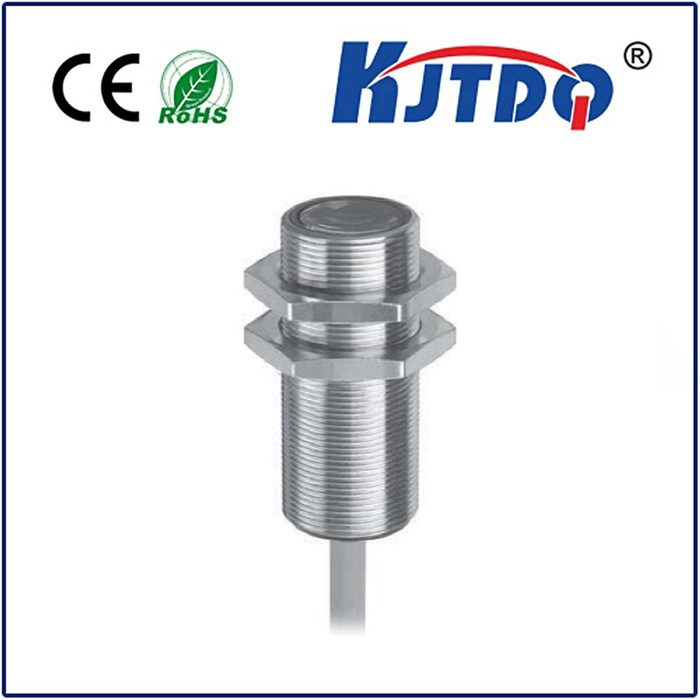
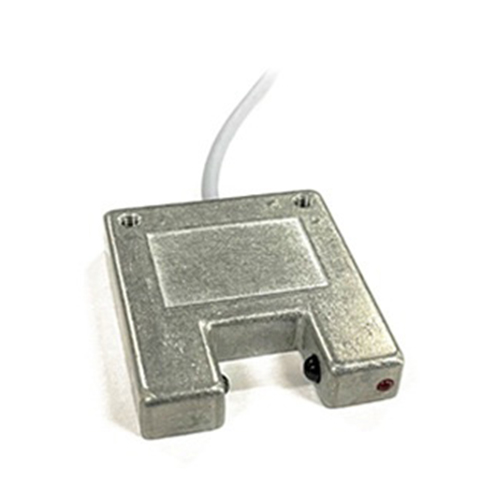
The OBE500-RF3-S is a retro-reflective photoelectric sensor, a design known for its versatility and ease of installation. Unlike through-beam sensors that require separate emitter and receiver units on opposite sides, the retro-reflective model houses both the light source and the receiver in a single, compact housing. It operates by emitting a beam of light towards a dedicated reflector. When an object interrupts this beam, the sensor detects the absence of the reflected light and triggers a switching signal. This design simplifies wiring and mounting, reducing installation time and cost, which is a significant advantage in complex or expansive systems.
What sets the OBE500-R3F-S apart is its robust construction and advanced optical design. Built to withstand the rigors of industrial environments, it typically features a sturdy housing rated for high IP (Ingress Protection) levels, protecting it from dust, moisture, and mechanical impacts. The heart of its performance lies in its focused, modulated LED light beam. This modulation technique allows the sensor to ignore ambient light—from factory overhead lighting to sunlight—ensuring stable operation without false triggers. The "R3F-S" designation often indicates specific characteristics such as a sensing range, output type (like a solid-state NPN or PNP switch), and connection method, making it suitable for direct integration into programmable logic controller (PLC) systems.
The applications for the OBE500-R3F-S are vast and varied. On packaging lines, it accurately detects the presence or absence of products on a conveyor, ensuring proper filling, labeling, and case packing. In automotive assembly, it verifies the correct positioning of components. Within automated storage and retrieval systems (AS/RS), it is used for pallet detection and height control. Its reliability makes it indispensable for tasks like counting objects, monitoring bin levels, and initiating automated processes upon object detection. The key benefit is the enhancement of overall equipment effectiveness (OEE) by minimizing downtime caused by sensor failure or inaccuracy.
Selecting the right photoelectric switch requires careful consideration of several factors, and the OBE500-R3F-S is designed to meet these challenges. Its sensing range is a critical parameter, ensuring it can reliably detect objects at the required distance. The response time is exceptionally fast, capable of detecting high-speed objects on fast-moving production lines. Furthermore, many models offer adjustable sensitivity, allowing technicians to fine-tune the sensor to ignore background objects or transparent materials, providing unparalleled operational flexibility.
Installation and maintenance are straightforward. Correct alignment with the reflector is crucial for optimal performance, a process aided by built-in indicators that show power status and output activation. Regular maintenance primarily involves keeping the lens clean from dirt, grease, or debris that could attenuate the light beam. The durability of the OBE500-R3F-S means such maintenance is infrequent, contributing to lower total cost of ownership.
In conclusion, for engineers and system integrators seeking a dependable, precise, and robust detection solution, the OBE500-R3F-S photoelectric switch represents a superior choice. Its retro-reflective design offers a perfect balance of performance and practicality, excelling in diverse industrial settings. By ensuring accurate object detection, it forms the reliable foundation upon which efficient, safe, and productive automation systems are built, driving continuous improvement in modern manufacturing and logistics operations.