check

check

check

check
check
check
check
check
check

check
In the intricate world of industrial automation, precision and reliability are not just preferences; they are absolute necessities. At the heart of countless systems, ensuring smooth operations and safety, lies a critical component: the photoelectric sensor. Among the myriad of options available, the E3F-DS30Y2 photoelectric switch stands out as a paragon of dependable performance. This comprehensive guide delves into the features, applications, and advantages of this specific model, explaining why it is a preferred choice for engineers and system integrators globally.
The E3F-DS30Y2 is a diffuse-reflective photoelectric sensor. This means it contains both a light emitter and a receiver in a single housing. It operates by emitting a beam of light, typically infrared or visible red, and detecting the light that is reflected back from a target object. Unlike through-beam sensors that require separate emitter and receiver units, the E3F-DS30Y2 offers a simpler, more compact installation. Its sensing range is precisely calibrated, with the "30" in its model name often indicating a standard sensing distance, making it ideal for medium-range detection tasks.
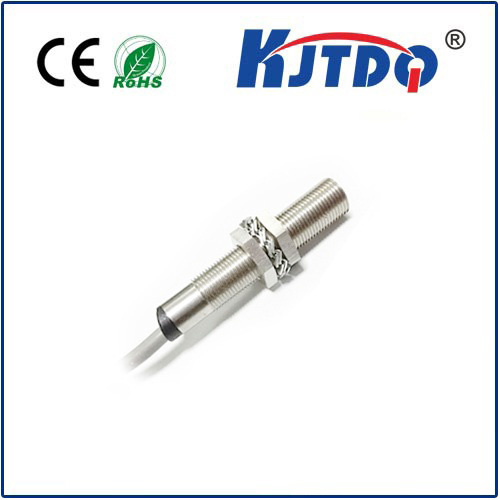
What truly sets the E3F-DS30Y2 apart is its robust design tailored for industrial environments. It is commonly housed in a rugged, cylindrical metal or high-grade plastic casing that provides excellent resistance to impact, vibration, and environmental contaminants like dust and oil splash. Many variants feature an IP67 protection rating, meaning they are dust-tight and can withstand temporary immersion in water. This durability ensures consistent operation in challenging settings such as packaging lines, material handling systems, and automotive assembly plants.
The electrical characteristics of the E3F-DS30Y2 are designed for seamless integration. It typically operates on a wide range DC voltage (e.g., 10-30V DC), offering flexibility in different power setups. The output is usually in the form of an NPN or PNP transistor switch, providing a clear on/off signal to a programmable logic controller (PLC) or other control units. This digital output is crucial for tasks like object counting, position verification, and jam detection. The sensor often includes a visible LED indicator that shows both power status and output activation, greatly simplifying setup, alignment, and troubleshooting.
Installation and alignment are straightforward. The compact, cylindrical shape allows for easy mounting in tight spaces using standard brackets or nuts. For optimal performance with the E3F-DS30Y2 diffuse model, it is important to consider the color, surface texture, and size of the target object. Light-colored, matte surfaces reflect light well and are detected at the maximum range, while dark, shiny, or absorbent surfaces may require a reduced sensing distance. Many models come with a potentiometer for sensitivity adjustment, allowing technicians to fine-tune the sensor to ignore background objects and focus on the intended target.
The applications for the E3F-DS30Y2 are vast and varied. In manufacturing, it is used to detect the presence of products on a conveyor belt, control filling levels in bottles, or ensure correct positioning of components. In automated storage and retrieval systems, it verifies the presence of pallets or boxes. It can also serve as a safety interlock, detecting if a guard door is open or if an operator's hand is in a hazardous zone. Its reliability makes it a workhorse in industries ranging from food and beverage to pharmaceuticals and electronics.
Choosing the E3F-DS30Y2 over generic or less robust sensors offers significant long-term benefits. Its high repeat accuracy ensures processes run consistently, reducing waste and improving product quality. The reduced need for maintenance and replacement due to its rugged construction translates to lower total cost of ownership and less system downtime. Furthermore, its standardized design and widespread use mean easier sourcing of replacements and greater availability of technical support.
When implementing the E3F-DS30Y2, best practices include ensuring a stable power supply, protecting the cable from excessive flexing and abrasion, and performing regular functional checks as part of preventive maintenance. Keeping the lens clean from dust and grime is essential for maintaining optimal sensing performance.
In conclusion, the E3F-DS30Y2 photoelectric switch represents a blend of sophisticated sensing technology and practical, hardened design. It provides a reliable, cost-effective solution for a multitude of detection challenges in automation. For system designers and maintenance engineers seeking a sensor that delivers day-in and day-out performance with minimal fuss, the E3F-DS30Y2 proves to be an indispensable component in building efficient and resilient automated systems.