check

check

check

check
check
check
check
check

check

check
In the world of industrial automation and machinery control, precision and reliability are non-negotiable. The E3F-DS30Y1 photoelectric switch stands as a cornerstone component for countless applications demanding accurate object detection. This comprehensive guide delves into the features, working principles, and practical applications of this versatile sensor, providing essential knowledge for engineers, technicians, and procurement specialists.
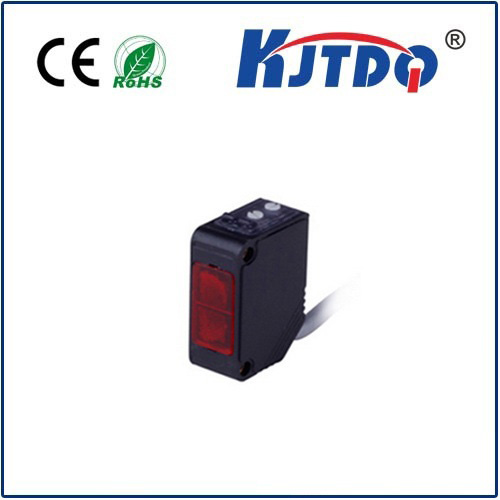
The E3F-DS30Y1 is a diffuse reflective photoelectric sensor. Unlike through-beam sensors that require separate emitter and receiver units, this model integrates both elements into a single, compact housing. It operates by emitting a beam of infrared light from its built-in LED. When an object enters its detection range, the light reflects off the object's surface and returns to the receiver. The sensor's internal circuitry then processes this signal to trigger an output switch. This self-contained design simplifies installation, reduces wiring complexity, and lowers overall system cost, making it a preferred choice for space-constrained environments.
A key specification of the E3F-DS30Y1 is its 30cm (approximately 12 inches) sensing distance. This range is ideal for a vast array of mid-range detection tasks. The sensor features a stable sensing performance, largely immune to ambient light interference due to its modulated infrared light signal. It typically offers both Normally Open (NO) and Normally Closed (NC) output configurations via an NPN transistor output, providing flexibility for different control logic requirements in PLCs (Programmable Logic Controllers) or relay systems. Its housing is often constructed from durable ABS or similar engineering plastics, offering good resistance to dust and minor splashes, though for harsh environments, checking the specific Ingress Protection (IP) rating is crucial.
The real-world applications for the E3F-DS30Y1 are extensive. In packaging lines, it reliably detects the presence or absence of products on conveyors, ensuring proper filling, capping, and labeling. Within automated assembly systems, it verifies if components are correctly positioned before a robotic arm proceeds with its task. It is commonly used for object counting in bottling plants, detecting jam conditions in machinery, and as a part presence sensor in vending machines. Its diffuse reflective nature makes it suitable for detecting non-transparent objects of various colors and materials, though highly reflective or absorbent surfaces may require testing or adjustment.
Selecting and installing the E3F-DS30Y1 requires attention to several factors. First, ensure the target object's size, color, and surface texture are compatible with diffuse sensing. Light-colored, matte surfaces provide the best reflectivity. Second, consider the operating environment—factors like temperature, humidity, and exposure to chemicals or oil mist. Third, proper alignment is less critical than with through-beam sensors, but avoiding highly reflective backgrounds is important to prevent false triggering. Always refer to the manufacturer's datasheet for precise electrical characteristics, such as supply voltage (commonly 10-30V DC), output current, and response time.
Troubleshooting common issues often involves a few simple checks. If the sensor fails to detect, verify the power supply connections and voltage. Ensure the object is within the 30cm range and that its surface is suitable for reflection. Cleaning the lens from accumulated dust or debris can often restore performance. Using a multimeter to check the output signal status when an object is presented can help diagnose whether the issue lies with the sensor or the downstream control system.
In conclusion, the E3F-DS30Y1 photoelectric switch represents a perfect balance of performance, durability, and value. Its straightforward operation, robust construction, and adaptable nature have cemented its role as a fundamental element in modern industrial control systems. By understanding its capabilities and optimal use cases, professionals can leverage this sensor to enhance automation efficiency, improve safety, and ensure seamless production flow. For any project requiring dependable mid-range object detection, the E3F-DS30Y1 remains a trusted and proven solution.