check

check

check

check
check
check
check
check

check

check
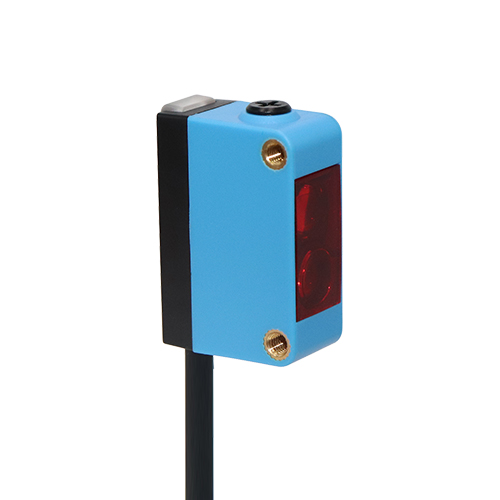
In the realm of industrial automation and precision engineering, the demand for reliable, accurate, and robust distance measurement solutions is paramount. The OD1-B100H50I25 laser sensor emerges as a standout component, engineered to meet the rigorous challenges of modern manufacturing, logistics, and quality control environments. This comprehensive guide delves into the core features, operational principles, and diverse applications of this advanced sensing technology, highlighting why it is a critical asset for professionals seeking to enhance system accuracy and efficiency.
At its heart, the OD1-B100H50I25 is a laser triangulation sensor. This method involves projecting a focused laser beam onto a target surface. The reflected light is then captured by a sensitive receiver at a specific angle. By precisely calculating the displacement of the reflected light spot on the receiver, the sensor determines the exact distance to the target with exceptional accuracy. The "B100H50I25" designation typically refers to key operational parameters: a measuring range of 100mm, a stand-off distance of 50mm, and a high resolution, often in the micrometer range, ensuring detailed and repeatable measurements.
The construction of the OD1-B100H50I25 prioritizes durability and performance. Housed in a rugged, often metal casing, it is designed to withstand harsh industrial conditions, including dust, vibrations, and variable ambient light. Its integrated electronics are optimized for stable operation, minimizing drift and ensuring long-term reliability. The sensor typically features various output options, such as analog voltage or current signals, digital interfaces like IO-Link, or switch outputs, allowing for seamless integration into existing PLC (Programmable Logic Controller) systems and data acquisition networks.
One of the primary advantages of the OD1-B100H50I25 laser sensor is its non-contact measurement capability. This eliminates mechanical wear and tear, prevents damage to delicate surfaces, and allows for high-speed inspection that contact-based probes cannot achieve. Applications are vast and impactful. In automotive assembly, it verifies the precise gap and flushness between body panels. In electronics manufacturing, it measures component height and coplanarity on circuit boards. Within the packaging industry, it ensures consistent fill levels and checks label placement. Furthermore, it is indispensable in robotics for precise positioning and guidance, and in logistics for parcel dimensioning and sorting.
Selecting and implementing the OD1-B100H50I25 requires careful consideration. The target surface's color, material, and texture can influence the laser's reflection. While modern sensors like this one often have built-in algorithms to compensate for these variations, understanding the application specifics is crucial for optimal performance. Proper mounting, alignment, and environmental shielding from extreme contaminants are essential steps during installation. Regular calibration against known standards helps maintain measurement integrity over time.
Compared to other technologies like ultrasonic or inductive sensors, laser triangulation sensors offer superior resolution and faster response times. The OD1-B100H50I25 sits in a competitive space, balancing a substantial measuring range with high precision, making it a versatile choice for many mid-range accuracy applications. Its value proposition lies in delivering laboratory-grade measurement stability in a factory-hardened package.
In conclusion, the OD1-B100H50I25 laser sensor represents a sophisticated tool for engineers and system integrators. Its principle of laser triangulation, combined with robust design and intelligent electronics, provides a reliable solution for critical distance and position measurement tasks. By enabling non-contact, high-speed, and micron-level accuracy, it drives quality improvements, reduces waste, and boosts productivity across countless industries. For any project demanding dependable dimensional control, integrating a sensor of this caliber is a strategic investment in operational excellence and future-proof automation.