check

check

check

check
check
check
check
check

check

check
In the rapidly evolving landscape of automation, robotics, and IoT, the demand for reliable, accurate, and cost-effective distance sensing solutions has never been higher. Enter the TF-Luna laser sensor, a compact LiDAR module that is redefining expectations for short-range measurement. Unlike ultrasonic sensors prone to environmental interference or complex vision systems requiring significant processing power, the TF-Luna offers a straightforward, laser-based approach to obtaining precise distance data.
At its core, the TF-Luna utilizes Time-of-Flight (ToF) technology. It emits a modulated, eye-safe infrared laser beam towards a target. The sensor then precisely measures the time it takes for the light to reflect back to its receiver. This time interval is directly proportional to the distance traveled, allowing the module to calculate the range with high accuracy. This principle enables consistent performance largely unaffected by ambient light conditions or the color and texture of most target objects, a significant advantage over other optical methods.
The physical and operational specifications of the TF-Luna are what make it exceptionally versatile. Housed in a remarkably small form factor, it is easily integrated into space-constrained applications. Its typical measuring range extends from a few centimeters up to several meters, with a high measurement frequency that supports real-time monitoring and control. Communication is typically handled via a simple serial interface (like UART or I2C), making it compatible with a vast array of microcontrollers and single-board computers, including the ubiquitous Arduino and Raspberry Pi platforms. This plug-and-play capability drastically reduces development time.
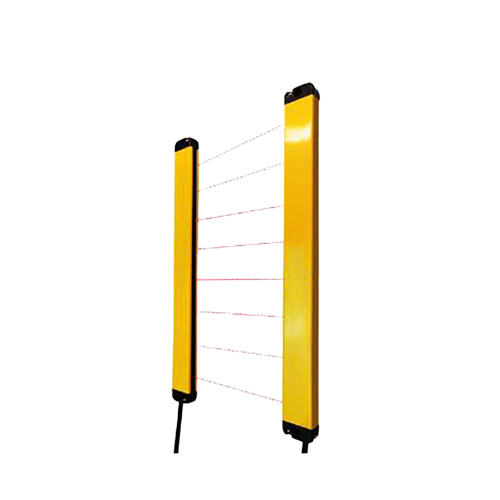
Practical applications for the TF-Luna laser sensor are vast and growing. In robotics, it serves as an essential component for obstacle avoidance, navigation, and spatial mapping, allowing autonomous vehicles and robotic arms to interact safely with their surroundings. For UAVs (drones), it provides critical altitude hold and landing assistance data. In industrial settings, it can be used for precise object positioning on conveyor belts, liquid level detection in tanks, or as a safety curtain for machinery. Creative makers and DIY enthusiasts employ it for smart parking systems, gesture control interfaces, and interactive art installations.
When integrating the TF-Luna, several best practices ensure optimal performance. First, ensure a stable power supply within the specified voltage range to prevent erratic readings. Second, consider the reflectivity of the target surface; while performance is robust, extremely dark or absorbent materials at longer ranges may require calibration or testing. Mounting the sensor securely to minimize vibration is also crucial, as is avoiding optical interference from direct sunlight shining into the receiver lens. Most modules come with configurable parameters, allowing users to fine-tune the measurement frequency and output format to suit specific project needs.
Compared to alternative technologies, the TF-Luna strikes an impressive balance. It is more accurate and stable than ultrasonic sensors, especially in noisy environments. It is far simpler and less computationally intensive than camera-based systems or more expensive industrial-grade LiDAR units. This balance of performance, size, and cost positions the TF-Luna as an accessible yet powerful tool for engineers, developers, and innovators.
The ongoing development in sensor fusion and edge computing opens new horizons for modules like the TF-Luna. By combining its precise distance data with inputs from inertial measurement units (IMUs) or other sensors, systems can achieve a richer understanding of their environment. As the drive towards smarter automation and more intuitive human-machine interfaces continues, the role of dependable, fundamental sensing components becomes ever more critical.
In conclusion, the TF-Luna laser sensor stands out as a fundamental building block for modern electronic projects and commercial products requiring precise, non-contact distance measurement. Its combination of ToF laser accuracy, compact design, simple interface, and affordability provides a compelling solution that bridges the gap between concept and functional prototype, and beyond into deployed systems. For anyone looking to add reliable ranging capabilities to their next project, the TF-Luna represents a proven and powerful choice.