check

check

check

check
check
check
check
check

check

check
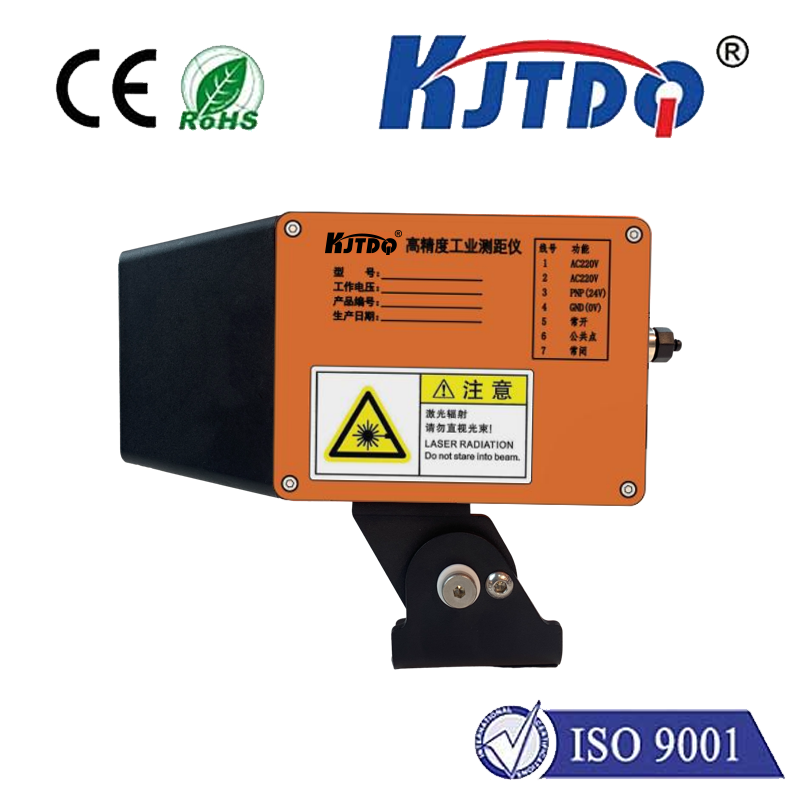
In the demanding world of industrial automation, precision is not just a goal; it's a fundamental requirement. The 01D105 laser sensor stands as a testament to this principle, offering engineers and system integrators a reliable tool for non-contact measurement and detection. This compact yet powerful device is engineered to deliver consistent performance in environments where accuracy, speed, and durability are paramount.
The core technology behind the 01D105 is its advanced laser triangulation principle. By projecting a focused laser beam onto a target surface and analyzing the position of the reflected light on a sensitive receiver, the sensor calculates distance with exceptional accuracy. This method allows for high-resolution measurements, making the 01D105 ideal for applications such as precise gap detection, thickness monitoring, and profile scanning. Its ability to measure minute variations is crucial for quality control processes on production lines, ensuring every component meets strict specifications.
One of the standout features of the 01D105 is its robust design tailored for industrial settings. It is built to withstand common challenges like ambient light interference, vibration, and dust. The sensor housing is typically ruggedized, providing protection against incidental impacts and harsh conditions. This resilience ensures minimal downtime and reliable operation over extended periods, contributing directly to increased productivity and reduced maintenance costs. The integration of stable circuitry and temperature compensation algorithms further guarantees measurement stability, even as factory floor temperatures fluctuate.
Ease of integration is another significant advantage. The 01D105 laser sensor often comes with multiple output options, such as analog voltage, current, or digital interfaces like IO-Link. This flexibility allows it to connect seamlessly with a wide range of programmable logic controllers (PLCs), human-machine interfaces (HMIs), and data acquisition systems. Setup and configuration are typically straightforward, with teach-in functions or simple parameter adjustments enabling quick adaptation to specific tasks, from monitoring the fill level in containers to verifying the presence of small electronic components on a PCB.
The application scope for the 01D105 is remarkably broad. In the automotive industry, it is used for brake pad wear measurement and robotic guidance. In packaging, it ensures correct label placement and checks seal integrity. In electronics manufacturing, it verifies component height and coplanarity. Its high-speed response capability allows it to keep pace with fast-moving assembly lines, providing real-time feedback for immediate process adjustments. This versatility makes it a valuable asset across sectors, enhancing automation and enabling more sophisticated, data-driven manufacturing.
Selecting the right sensor for an application involves considering several factors. The 01D105 offers various models with different measuring ranges, resolutions, and laser spot sizes. Understanding the specific requirements of the task—such as the required precision, the nature of the target surface (color, material, reflectivity), and the environmental conditions—is essential for optimal performance. Proper mounting, alignment, and periodic calibration are also best practices that ensure the sensor continues to deliver accurate data throughout its service life.
In conclusion, the 01D105 laser sensor embodies the innovation driving modern industrial automation forward. By providing precise, reliable, and non-contact measurement, it empowers manufacturers to achieve higher levels of quality, efficiency, and control. As industries continue to embrace smart manufacturing and the Industrial Internet of Things (IIoT), sensors like the 01D105 will play an increasingly critical role in collecting the vital data needed for optimization and predictive maintenance, solidifying their place as indispensable components on the factory floor.