check

check

check

check
check
check
check
check
check

check
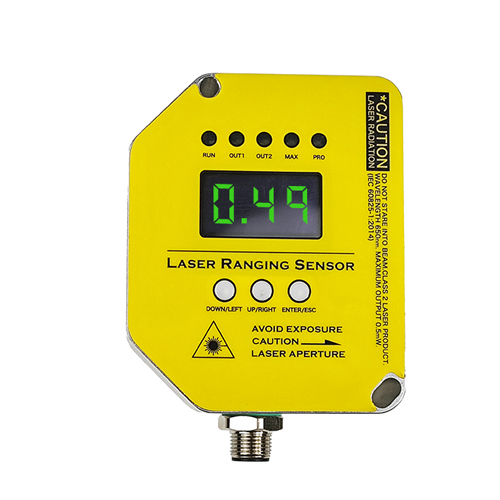
In the demanding world of industrial automation and quality control, achieving micron-level precision is not just an advantage—it’s a necessity. The DME4000-111S05 laser sensor stands as a pivotal tool in this arena, engineered to deliver unparalleled accuracy and reliability for a vast array of measurement tasks. This comprehensive guide delves into the core features, operational principles, and practical applications of this sophisticated device, providing essential insights for engineers and decision-makers.
At its heart, the DME4000-111S05 is a through-beam laser sensor. This design utilizes two separate units: a laser transmitter and a receiver. The transmitter emits a highly focused, visible red laser beam. The receiver, positioned directly opposite, detects this beam. The core measurement principle is based on the interruption of this beam. When an object passes between the two units, it blocks the laser light. The sensor's high-speed electronics precisely detect this change in state, triggering an output signal. This method is renowned for its exceptional accuracy, long sensing distances, and ability to detect extremely small or fast-moving objects with high positional repeatability, making the 111S05 variant particularly robust for challenging environments.
The designation DME4000-111S05 reveals key specifications. The "DME4000" series indicates a family of precision photoelectric sensors. The "111S05" suffix typically details the specific model configuration, often relating to its output type (e.g., a solid-state relay or NPN/PNP transistor output) and connection style, such as a pre-wired cable or connector. This particular model is designed for seamless integration into control systems, providing a stable and fast response signal to programmable logic controllers (PLCs) or other automation hardware.
Operational performance is where the DME4000-111S05 truly excels. It offers a remarkably long sensing range, often up to several meters, while maintaining a tight, visible laser spot for precise targeting. Its response time is in the microsecond range, enabling it to reliably detect objects on high-speed production lines without missing a beat. Furthermore, it boasts high environmental resistance. The housing is typically robust, rated at IP67 or higher, making it resistant to dust ingress and capable of withstanding temporary immersion in water. This durability ensures consistent operation in settings exposed to coolants, oils, or washdowns. The visible red laser beam also simplifies alignment and setup, reducing installation time and potential errors.
The applications for this sensor are extensive and critical across industries. In packaging machinery, it is indispensable for precise label detection, cap placement verification, and missing product detection on conveyor lines. Within the automotive sector, it ensures the correct positioning of components in assembly robots and verifies the presence of tiny parts like pins or springs. In electronics manufacturing, it can detect the presence of miniature components on circuit boards or count micro-parts. Material handling systems rely on it for precise object detection for sorting, positioning, and palletizing. Its immunity to ambient light interference and color or surface finish of the target object makes it a versatile and dependable choice where other sensors might fail.
Selecting and implementing the DME4000-111S05 requires careful consideration. Key factors include the required sensing distance, the size and speed of the target object, the environmental conditions (temperature, contaminants), and the necessary output signal type for the host controller. Proper mounting and alignment are crucial; sturdy brackets should be used to prevent vibration from misaligning the beam. Regular maintenance involves keeping the lenses clean from dust or oil film to ensure optimal performance. While the initial setup is straightforward due to the visible beam, verifying the stability of the signal under all operating conditions is a recommended best practice.
When compared to other sensing technologies like diffuse-reflective sensors or ultrasonic sensors, the through-beam laser sensor offers distinct advantages. It provides the highest accuracy and longest range. It is less affected by the color, reflectivity, or surface angle of the target object. However, it requires mounting two units and precise alignment, which can be a drawback in space-constrained applications where a single-unit diffuse sensor might be preferred despite its shorter range and potential sensitivity to object surface properties.
In conclusion, the DME4000-111S05 laser sensor represents a cornerstone of modern industrial sensing. Its combination of extreme precision, high speed, long range, and environmental ruggedness makes it an invaluable component for ensuring quality, efficiency, and reliability in automated processes. For engineers seeking a proven and reliable solution for critical detection and measurement tasks, understanding and utilizing the capabilities of the DME4000-111S05 is a step toward optimizing system performance and achieving manufacturing excellence.