check
check
check
check
check
check
In the demanding world of industrial automation and precision engineering, the quest for reliable, accurate, and robust measurement solutions is never-ending. Among the frontrunners in this technological race is the DME5000-113 laser sensor, a device that has redefined expectations for non-contact measurement. This comprehensive guide delves into the core features, applications, and benefits that make this sensor a cornerstone of modern manufacturing and quality control processes.
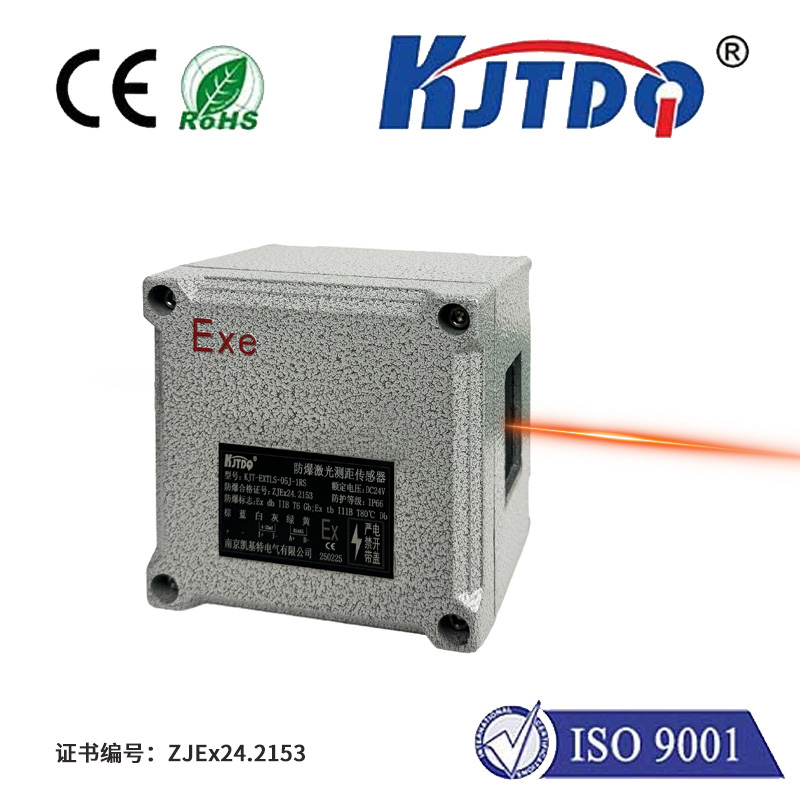
At its heart, the DME5000-113 is a time-of-flight (ToF) laser distance sensor. It operates by emitting a pulsed laser beam towards a target object. The sensor's sophisticated internal circuitry precisely measures the time it takes for the light pulse to reflect back to the detector. This elapsed time is then converted into an exact distance measurement with exceptional accuracy and repeatability. Unlike conventional sensors, its laser-based technology allows it to perform consistently on a wide variety of surfaces, including those that are dark, shiny, or textured, where other optical methods might struggle.
One of the most compelling attributes of the DME5000-113 is its remarkable measurement range and precision. Engineered for challenging industrial environments, it offers a substantial measuring span, capable of handling both near and far targets with unwavering stability. The resolution is exceptionally fine, enabling the detection of minute variations in position, thickness, or height that are invisible to the human eye. This capability is crucial for applications like wafer alignment in semiconductor production or gap inspection in automotive assembly, where micron-level tolerances are mandatory.
Durability and integration ease are where this sensor truly shines. Housed in a rugged, compact metal casing, the DME5000-113 is built to withstand the rigors of factory floors—resistant to dust, moisture, and vibration. Its design philosophy emphasizes straightforward integration into existing systems. It supports standard industrial communication protocols, allowing seamless connection to PLCs (Programmable Logic Controllers), robotic arms, and data acquisition systems. Configuration is typically intuitive, often via simple teach-in methods or software, minimizing setup time and reducing downtime during installation or recalibration.
The practical applications of the DME5000-113 laser sensor span across numerous industries, showcasing its versatility. In logistics and warehousing, it is deployed for precise pallet dimensioning, height control for automated storage and retrieval systems (AS/RS), and conveyor belt monitoring. Within the automotive sector, it ensures the correct positioning of components on assembly lines, verifies weld seam profiles, and controls robot trajectories for painting or sealing. In electronics manufacturing, it plays a pivotal role in PCB warpage detection, component placement verification, and coating thickness measurement. Furthermore, its high-speed response makes it ideal for dynamic tasks such as monitoring the fill level of fast-moving bottles on a production line or checking the profile of extruded materials.
Choosing the DME5000-113 translates into tangible operational benefits. The primary advantage is the significant enhancement in product quality. By providing continuous, high-accuracy feedback, it enables real-time process adjustments, drastically reducing the rate of defects and waste. This leads to improved yield and lower production costs. Secondly, its non-contact nature means there is no wear and tear from physical touch, ensuring long-term reliability and minimal maintenance, which boosts overall equipment effectiveness (OEE). Finally, by automating critical inspection tasks, it frees human operators for more complex duties, enhancing workplace safety and operational efficiency.
When implementing the DME5000-113, several best practices ensure optimal performance. Proper mounting is essential to avoid mechanical stress and ensure a clear line of sight to the target. Understanding the target surface's properties is key; while the sensor performs well on most materials, highly reflective or absorbent surfaces may require specific settings or optional filters. Regular cleaning of the front lens is recommended to prevent dust accumulation from affecting the laser beam. Additionally, leveraging its programmability to set up tolerance windows and output alarms can create a proactive system that flags deviations before they become costly errors.
In conclusion, the DME5000-113 laser sensor stands as a testament to advanced electro-optical engineering, offering a powerful blend of precision, robustness, and adaptability. It is more than just a measuring device; it is a critical enabler for Industry 4.0, providing the reliable data backbone needed for smart, automated, and efficient manufacturing. For engineers and system integrators aiming to push the boundaries of accuracy and productivity, integrating the DME5000-113 is a strategic decision that delivers measurable returns on investment, ensuring processes are not only controlled but optimized for the future.