check
check
check
check
check
check
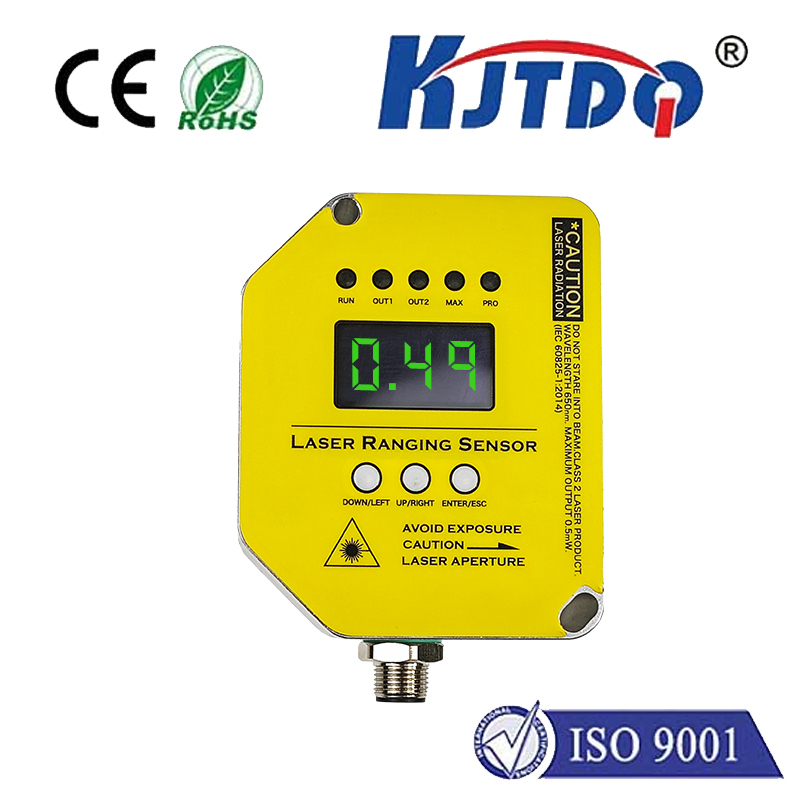
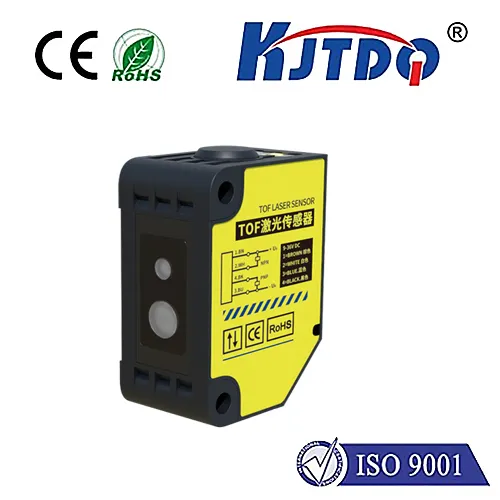
In the demanding world of industrial automation and quality control, achieving micron-level accuracy is not just an advantage; it's a necessity. This is where the DME4000-314 laser sensor emerges as a pivotal tool for engineers and system integrators. Designed for robustness and precision, this sensor represents a significant leap in non-contact measurement technology, capable of delivering reliable data in the most challenging environments.
The core strength of the DME4000-314 lies in its advanced laser triangulation principle. Unlike conventional sensors, it projects a focused laser point onto the target surface. The reflected light is captured by a high-resolution receiver at a precise angle. Any minute change in the target's distance or height causes a shift in the position of this light spot on the receiver. An integrated, high-speed processor calculates this shift with exceptional accuracy, translating it into a precise distance measurement. This method allows for measurements that are both incredibly fast and immune to the inconsistencies often associated with mechanical contact or varying surface colors and materials.
Engineers consistently highlight several key features that set the DME4000-314 apart in practical applications. Its measurement range and resolution are tailored for tasks requiring fine detail, from inspecting PCB solder joints to verifying the thickness of coated materials. The sensor boasts an impressive response time, enabling its use on high-speed production lines without becoming a bottleneck. Furthermore, its built-in environmental compensation algorithms ensure stability despite fluctuations in ambient temperature or the presence of minor contaminants, a common challenge in factory settings.
Integration is straightforward, thanks to multiple output options including analog voltage, current, and digital interfaces like IO-Link. The IO-Link capability, in particular, offers a new dimension of smart sensor functionality. It allows for remote parameter configuration, real-time diagnostics, and condition monitoring, facilitating predictive maintenance and reducing machine downtime. The rugged housing, typically rated at IP67, provides protection against dust and water jets, making it suitable for deployment in machining centers, automotive assembly lines, and food processing plants.
Consider a real-world scenario in automotive manufacturing: verifying the precise gap and flushness between car door panels and the body frame. Manual checks are slow and subjective. A system equipped with multiple DME4000-314 sensors can perform these measurements simultaneously in seconds, with data fed directly to the production control system. Any deviation beyond strict tolerances triggers an immediate alert, preventing defective units from proceeding down the line. Similarly, in the electronics industry, these sensors are indispensable for measuring component coplanarity and lead inspection, ensuring the reliability of every circuit board.
When selecting a laser sensor like the DME4000-314, it is crucial to align its specifications with the application's demands. Key parameters to evaluate include the required measuring range, the necessary resolution (often in micrometers), the acceptable measuring rate (frequency), and the environmental conditions. For instance, measuring a highly reflective or dark absorbent surface may require specific sensor settings or optional filters to guarantee optimal performance. Consulting the detailed technical datasheet and, if possible, testing with actual samples is always recommended.
The DME4000-314 laser sensor is more than just a component; it is an enabler of quality, efficiency, and automation. By providing accurate, non-contact distance and height data, it forms the eyes of modern automated systems, allowing for closed-loop control and unparalleled process consistency. For industries striving towards zero-defect manufacturing and Industry 4.0 standards, implementing reliable measurement solutions like this is a fundamental step. Its blend of precision, speed, and durability makes it a trusted choice for overcoming complex measurement challenges and driving operational excellence across diverse sectors.