check

check

check

check

check

check
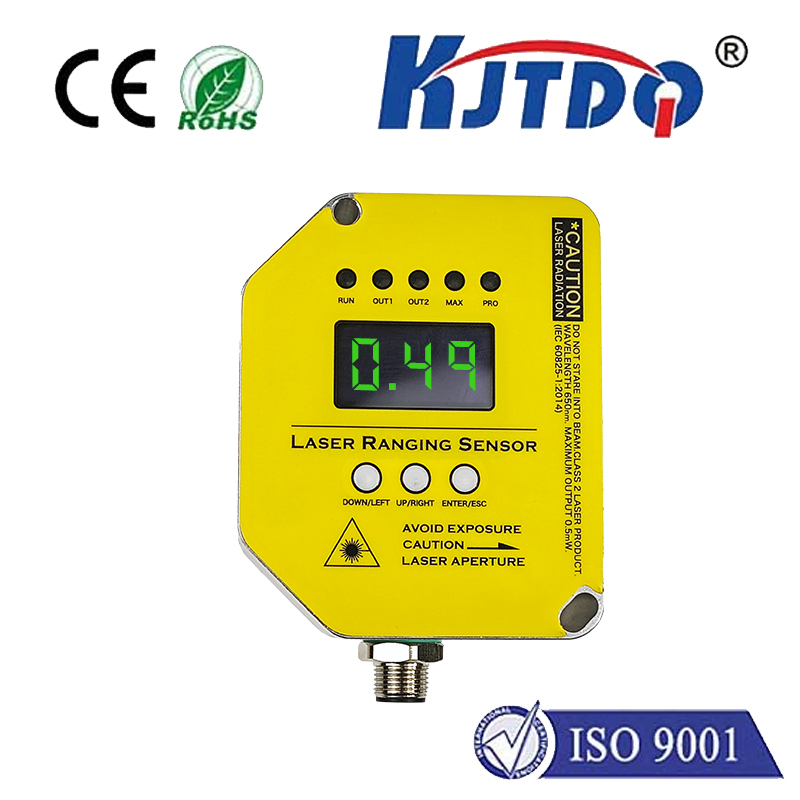
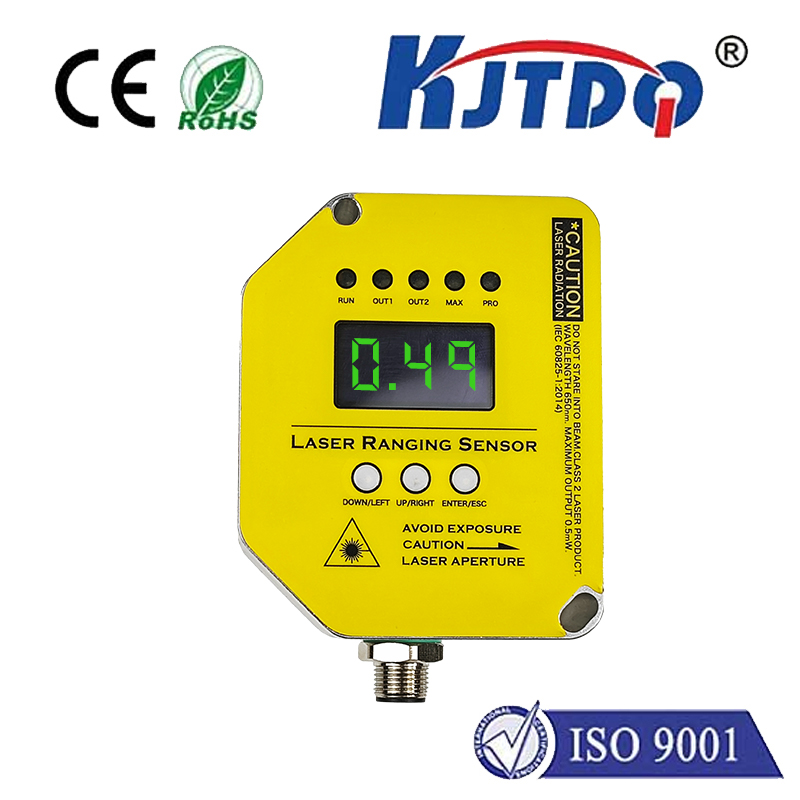
In the world of industrial automation and quality control, precision is not just a goal; it's a fundamental requirement. The DME4000-214 laser sensor stands as a testament to this principle, offering engineers and system integrators a robust and highly accurate solution for a wide array of measurement tasks. This device transcends being a mere component, evolving into a critical enabler for efficiency, consistency, and data-driven decision-making on the factory floor.
At its core, the DME4000-214 is a time-of-flight laser distance sensor. It operates by emitting a laser pulse towards a target and precisely measuring the time it takes for the reflection to return. This method allows for non-contact measurement, which is crucial for applications involving delicate, hot, moving, or otherwise inaccessible surfaces. The "214" variant typically signifies specific performance characteristics, such as its measuring range, output type, or housing style, making it suitable for predefined industrial scenarios.
What sets the DME4000-214 apart in a crowded market is its blend of reliability, speed, and environmental resilience. Designed for continuous operation in harsh industrial environments, it often features a high protection rating (like IP67), making it resistant to dust, moisture, and mechanical shocks. This durability ensures minimal downtime and consistent performance even near machining centers, assembly lines, or outdoor logistics hubs. The sensor provides rapid measurement updates, allowing it to keep pace with high-speed production processes, from monitoring the fill level of containers on a conveyor belt to verifying the dimensions of manufactured parts in real-time.
The applications for the DME4000-214 are vast and varied. In material handling and logistics, it is indispensable for palletizing, warehouse automation, and controlling crane heights, preventing collisions and optimizing storage space. Within manufacturing, it plays a pivotal role in robotic guidance, ensuring arms move to exact positions for welding, painting, or assembly. It is also a cornerstone of quality assurance, performing precise checks on part thickness, width, height, or presence without physical contact that could mar the product. Furthermore, in process industries, it can reliably monitor the level of bulk solids in silos or liquids in tanks, contributing to inventory management and process control.
Integration is straightforward, thanks to standardized output signals such as analog voltage/current, IO-Link, or various fieldbus protocols. This compatibility allows the DME4000-214 to communicate seamlessly with Programmable Logic Controllers (PLCs), human-machine interfaces (HMIs), and broader control systems. The inclusion of IO-Link is particularly beneficial, as it enables advanced parameterization, remote diagnostics, and condition monitoring, paving the way for predictive maintenance strategies. Users can adjust settings, monitor device health, and receive early warnings of potential issues, all from a central control room.
Choosing the DME4000-214 laser sensor is an investment in operational excellence. It replaces unreliable mechanical methods and less robust sensing technologies, reducing maintenance costs and measurement errors. The high accuracy it delivers directly translates to less material waste, improved product quality, and higher overall equipment effectiveness (OEE). For engineers tasked with designing or upgrading automated systems, specifying a sensor like the DME4000-214 means building a foundation of reliable data—the very currency of modern smart manufacturing.
Ultimately, the value of the DME4000-214 lies in its ability to make the invisible visible and the imprecise exact. It acts as the eyes of the machine, providing a continuous stream of precise dimensional data that drives automation, ensures quality, and safeguards processes. In an era where margins for error are continually shrinking, deploying such a capable and resilient measurement tool is not merely an option but a strategic imperative for industries aiming to thrive in a competitive global landscape.