check

check

check

check

check

check
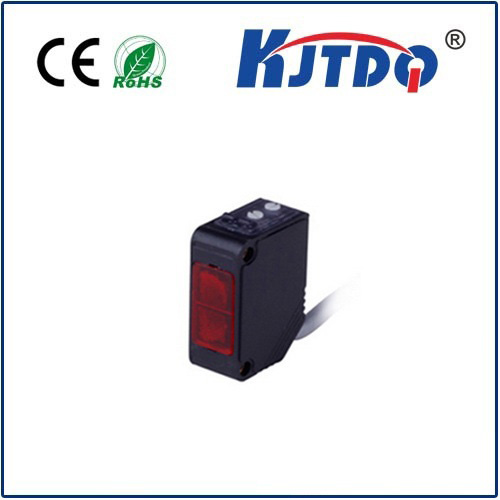
In the rapidly evolving landscape of industrial automation, the demand for reliable, high-precision measurement tools is paramount. The O1D100 laser sensor emerges as a critical component in this ecosystem, offering unparalleled accuracy for a wide range of applications. This device exemplifies the integration of advanced optical technology with robust industrial design, providing a solution that meets the stringent requirements of modern manufacturing, logistics, and quality control processes.
The core technology behind the O1D100 is its utilization of a focused laser beam for distance measurement. Unlike traditional mechanical or ultrasonic sensors, the laser-based system provides exceptional resolution and repeatability. The principle of operation is based on the time-of-flight or triangulation method, where the sensor calculates distance by measuring the time it takes for the laser light to reflect off a target or by analyzing the angle of the reflected beam. This allows the O1D100 to deliver measurements with micron-level precision, even on challenging surfaces or in environments with variable ambient light conditions. Its compact form factor belies its powerful capabilities, making it easy to integrate into existing production lines or robotic systems without requiring significant retrofitting.
One of the defining features of the O1D100 laser sensor is its versatility. It is engineered to perform consistently in diverse industrial settings. For instance, in automotive assembly lines, it ensures precise gap and flush measurement between body panels. In electronics manufacturing, it verifies the exact placement of miniature components on circuit boards. Within warehouse automation, it guides robotic arms for accurate picking and placing of goods by providing real-time positional data. The sensor's high sampling rate enables dynamic measurement of moving objects, which is essential for conveyor belt sorting systems and high-speed packaging machinery. Furthermore, its robust housing is often rated for IP67 protection, ensuring reliable operation despite exposure to dust, moisture, and mechanical vibrations commonly found in factory environments.
Integration and ease of use are paramount for minimizing downtime. The O1D100 typically features multiple output options, such as analog voltage/current, digital interfaces like IO-Link, or serial communication protocols. This flexibility allows it to connect seamlessly with Programmable Logic Controllers (PLCs), human-machine interfaces (HMIs), and central control systems. Many models also come with intuitive configuration software, enabling engineers to quickly set measurement windows, thresholds, and filtering parameters without deep programming knowledge. This user-centric design reduces setup time and allows for rapid reconfiguration when production needs change.
The impact of deploying the O1D100 laser sensor extends beyond simple measurement. It is a cornerstone for implementing Industry 4.0 principles. By providing accurate, digitized data about physical processes, it feeds into larger data analytics and machine learning systems. This data can be used for predictive maintenance, where subtle changes in measurement trends can signal the need for equipment servicing before a failure occurs. It also enhances overall quality assurance by providing 100% inspection capabilities, reducing waste and ensuring that only products meeting strict specifications proceed down the line. The result is a significant boost in operational efficiency, product quality, and cost savings.
When selecting a laser sensor like the O1D100 for a specific application, several technical parameters require careful consideration. The measuring range, spot size, resolution, and linearity are crucial. The required measurement speed must align with the process cycle time. Environmental factors such as the material, color, and surface texture of the target object can affect performance, though advanced models often have algorithms to compensate for these variables. Understanding the specific application context is key to unlocking the full potential of the sensor.
In conclusion, the O1D100 laser sensor represents a significant leap forward in non-contact measurement technology. Its precision, durability, and adaptability make it an indispensable tool for industries striving for higher levels of automation and quality control. As factories become smarter and more connected, the role of such precise sensing technology will only grow in importance, driving innovation and efficiency across the global manufacturing sector.