check

check

check

check

check

check
In the demanding world of industrial automation, the quest for reliable, high-precision measurement and detection is never-ending. The OID202 laser sensor emerges as a standout solution, engineered to meet the rigorous challenges of modern manufacturing, logistics, and quality control environments. This compact yet powerful device represents a significant leap in sensing technology, offering unparalleled accuracy and stability where it matters most.
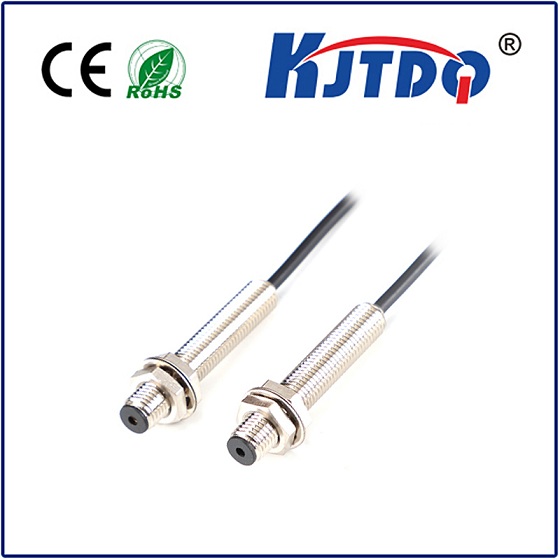
At its core, the OID202 is a through-beam laser sensor. This design involves separate transmitter and receiver units. The transmitter emits a focused, coherent laser beam, which is then captured by the receiver positioned directly opposite. An object is detected when it interrupts this beam. This fundamental principle allows for extremely precise detection, with the OID202 capable of sensing even the smallest objects or thinnest materials with consistent reliability. Its high-resolution capability makes it indispensable for applications requiring exact positioning, such as in semiconductor handling, precision assembly lines, or automated packaging systems where minute component placement is critical.
One of the most compelling features of the OID202 laser sensor is its exceptional performance in challenging conditions. Unlike standard photoelectric sensors that can be disrupted by ambient light, color variations, or surface reflectivity, the focused laser beam of the OID202 provides superior stability. It maintains a consistent detection point regardless of the target's color, texture, or material composition. This characteristic is vital in industries like automotive manufacturing, where sensors must reliably detect everything from glossy painted surfaces to matte black rubber components without adjustment or false triggers. Furthermore, its robust housing is designed to withstand industrial environments, offering resistance to dust, moisture, and vibration, ensuring long-term operation with minimal maintenance.
The application scope for the OID202 is remarkably broad. In logistics and material handling, it is extensively used for precise object counting on high-speed conveyor belts, palletizing control, and height detection. Its ability to provide a sharp, clear beam allows for accurate edge detection in web guiding systems within the printing and textile industries. In electronic manufacturing, the sensor plays a crucial role in verifying the presence of tiny components on circuit boards or ensuring the correct insertion of connectors. The through-beam design also allows for longer sensing distances compared to diffuse-reflective models, enabling its use in larger machinery and automated storage and retrieval systems (AS/RS).
Integration into existing control systems is straightforward. The OID202 typically features standard output options like NPN or PNP, making it compatible with a wide range of Programmable Logic Controllers (PLCs), human-machine interfaces (HMIs), and other industrial controllers. Its easy alignment, often aided by a visible red laser spot, reduces installation time and complexity. For engineers and system integrators, this translates to faster deployment and reduced downtime during setup or sensor replacement.
Beyond basic detection, the precision of the OID202 enables more advanced process control. It can be used to trigger subsequent actions in a sequence with exact timing, such as initiating a robotic arm's movement the moment a part is precisely positioned. This level of timing accuracy is essential for synchronizing complex automated processes, enhancing overall production line efficiency, and reducing cycle times. The reliability of the laser beam ensures that these processes run smoothly over millions of cycles, contributing to higher overall equipment effectiveness (OEE).
In conclusion, the OID202 laser sensor is more than just a detection device; it is a foundational component for building intelligent, efficient, and resilient automated systems. Its combination of pinpoint accuracy, environmental robustness, and versatile application potential addresses the core needs of Industry 4.0. By providing a reliable "yes" or "no" at a critical point in a process, it empowers machinery to operate with greater autonomy, precision, and consistency. For any operation seeking to minimize errors, reduce waste, and optimize throughput, integrating a sensor of this caliber is a strategic investment in operational excellence and future-proofing industrial capabilities.