check

check

check

check

check

check
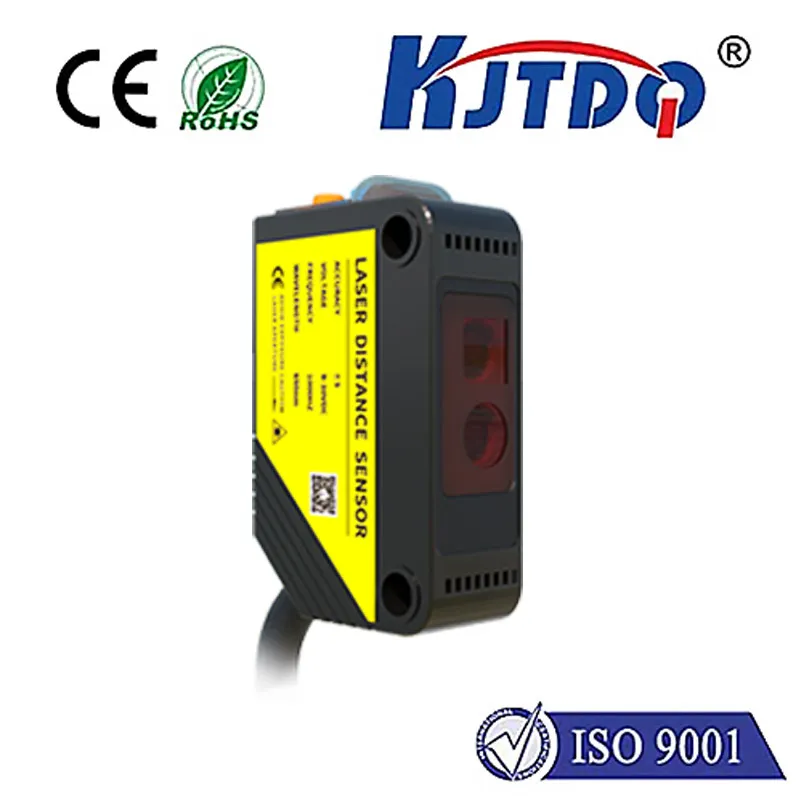
In the demanding world of industrial automation, achieving consistent and reliable object detection is paramount. The OMT300-R201-2EP-IO-L laser sensor emerges as a sophisticated solution, engineered to deliver unparalleled precision in a wide array of applications. This compact yet powerful device represents a significant leap forward in sensing technology, offering users a blend of accuracy, durability, and seamless integration that sets a new industry standard.
At its core, the OMT300-R201-2EP-IO-L utilizes a focused laser beam for measurement and detection. Unlike traditional photoelectric sensors, this laser-based approach provides a sharply defined, visible light spot. This characteristic is crucial for applications requiring exact positioning, such as detecting small components, monitoring edge positions on webs of material, or ensuring precise fill levels in transparent containers. The visible red laser beam simplifies alignment and setup dramatically, reducing installation time and minimizing errors.
The model designation itself reveals key features. The 'OMT300' series indicates a robust background in optical measurement. The 'R201' often refers to specific sensing characteristics, such as a precise sensing range or a particular beam pattern. The '2EP' suffix is critical, denoting a dual digital output configuration—typically one PNP (sourcing) and one NPN (sinking) output. This dual-output design provides exceptional flexibility, allowing the sensor to interface seamlessly with a vast range of programmable logic controllers (PLCs), safety systems, and other control units from different manufacturers without the need for additional interface modules.
The 'IO-L' component signifies integration with the IO-Link communication protocol. This is a game-changer for modern smart factories. IO-Link transforms the sensor from a simple switching device into an intelligent data point on the network. Through IO-Link, users can remotely access a wealth of parameter data and diagnostic information. Settings like switching thresholds, response times, and operating modes can be configured and monitored from a central control station. Furthermore, predictive maintenance becomes possible by tracking internal parameters like temperature or signal strength over time, helping to prevent unplanned downtime.
Durability is a non-negotiable requirement in industrial environments, and the OMT300-R201-2EP-IO-L is built to withstand harsh conditions. Its housing is typically designed to meet high IP ratings, ensuring protection against dust and water jets. It can reliably operate across a wide temperature range, maintaining accuracy in both cold storage facilities and hot manufacturing cells. The laser source itself is known for its long service life and stable output, ensuring consistent performance over thousands of operating hours.
Practical applications for this sensor are extensive. In packaging machinery, it ensures labels are applied correctly or verifies the presence of a product in a carton. In automotive assembly, it can detect the precise position of a robot-welded seam or confirm the installation of a tiny fastener. In material handling, it provides exact positioning for palletizing robots or monitors the diameter of rolled goods. The combination of a precise laser spot and configurable outputs makes it ideal for tasks where reliability is critical.
Choosing the OMT300-R201-2EP-IO-L laser sensor is an investment in operational efficiency and quality control. Its precision reduces waste from false triggers or missed detections. The IO-Link capability future-proofs your installation, enabling integration into Industry 4.0 data collection strategies. The reduced wiring and simplified troubleshooting afforded by its dual-output design lower total cost of ownership. For engineers and system integrators seeking a versatile, high-performance sensor that delivers exact results day after day, this laser sensor stands as a superior choice, driving productivity and ensuring consistent output in the most challenging industrial settings.