check

check

check

check

check

check
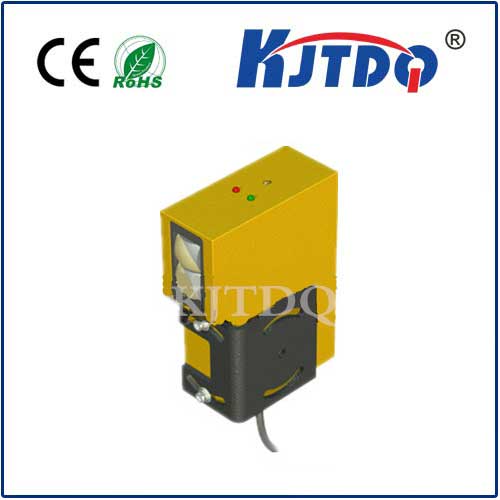
In the rapidly evolving landscape of industrial automation, the demand for reliable, high-precision measurement solutions is paramount. The DT500-A123 laser sensor emerges as a critical component in this domain, offering unparalleled accuracy and robustness for a wide array of applications. This device represents a significant leap in non-contact measurement technology, designed to meet the stringent requirements of modern manufacturing, quality control, and robotic guidance systems.
The core technology behind the DT500-A123 is its advanced laser triangulation principle. This method involves projecting a focused laser beam onto a target surface. The reflected light is then captured by a high-resolution receiver at a specific angle. By precisely calculating the displacement of the reflected light spot, the sensor can determine the distance to the target with exceptional accuracy, often in the micrometer range. This non-contact approach eliminates the risk of surface damage or wear associated with mechanical probes, making it ideal for measuring delicate, hot, or fast-moving objects.
One of the standout features of the DT500-A123 is its impressive measurement performance. It typically offers a high sampling rate and a wide measuring range, allowing it to capture rapid changes in position or thickness with consistency. Its built-in microprocessor handles complex data processing internally, providing stable and real-time output signals such as analog voltage, current, or digital interfaces like RS-485. This versatility enables seamless integration into existing PLC (Programmable Logic Controller) systems or data acquisition networks. The sensor is also renowned for its strong environmental resistance. Encased in a rugged housing, it is often rated with a high IP (Ingress Protection) grade, ensuring reliable operation in challenging conditions involving dust, moisture, and ambient light interference.
The practical applications of the DT500-A123 laser sensor are vast and varied. In automotive assembly lines, it is used for gap and flush measurement between body panels, ensuring perfect fit and finish. In electronics manufacturing, it precisely controls the height of components during surface-mount technology (SMT) processes. Within the lumber and metals industries, it performs exact thickness profiling and warpage detection. Furthermore, its role in robotic bin picking and weld seam tracking is indispensable, providing the "eyes" for robots to interact accurately with their environment. This adaptability across sectors underscores its value as a universal tool for enhancing productivity and quality.
Deploying the DT500-A123 is designed to be straightforward. Many models feature intuitive teach-in functions for easy setup of measurement windows and thresholds. However, optimal performance requires careful consideration of the target surface's properties. Highly reflective or transparent materials can sometimes pose a challenge, but these are often addressed by using specialized filters or adjusting the sensor's angle of incidence. Regular maintenance is minimal, primarily involving keeping the lens clean to ensure an unobstructed laser path.
When compared to other measurement technologies like ultrasonic sensors or traditional contact probes, the DT500-A123 laser sensor offers distinct advantages in speed, precision, and application flexibility. It fills a crucial niche where other methods fall short. As Industry 4.0 continues to drive the integration of smart sensors and IoT connectivity, the future for sensors like the DT500-A123 looks increasingly integrated. Expectations point toward enhanced connectivity protocols, embedded intelligence for predictive diagnostics, and even greater miniaturization without compromising power.
For engineers and system integrators seeking to improve automation accuracy, the DT500-A123 laser sensor presents a compelling solution. Its blend of precision, durability, and ease of integration makes it a cornerstone technology for building smarter, more efficient, and more reliable industrial systems. By enabling finer control and detailed inspection, it directly contributes to reduced waste, higher throughput, and superior end-product quality, proving to be a sound investment for the future of manufacturing.