check

check

check

check

check

check
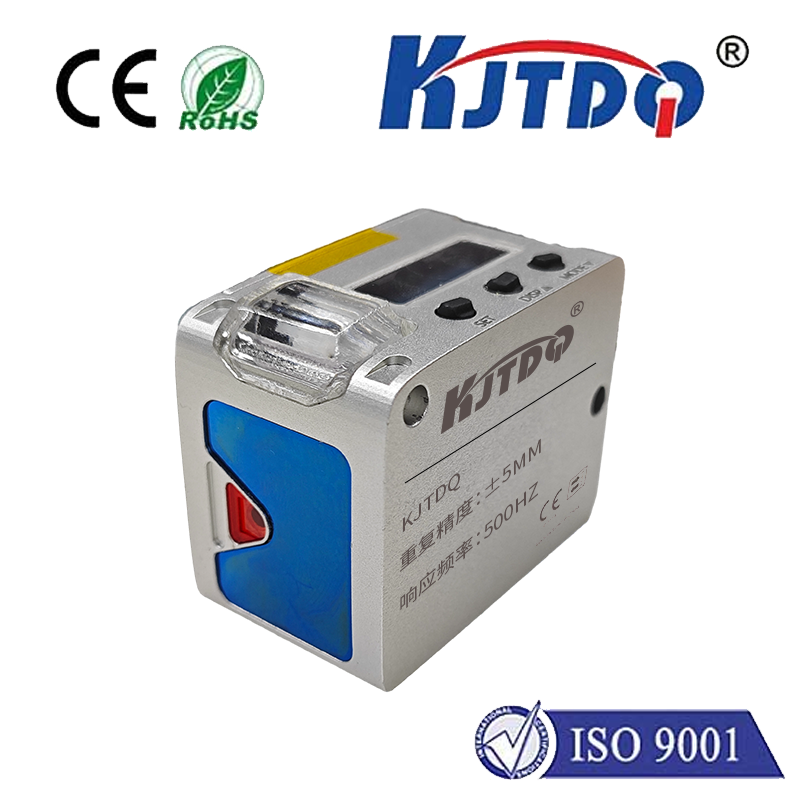
In the demanding world of industrial automation, achieving consistent and reliable measurement is non-negotiable. The OMT50-R100-2EP-IO-L laser sensor emerges as a critical solution, engineered to deliver high-precision performance in diverse and challenging environments. This compact yet powerful device represents a significant advancement in sensing technology, offering users unparalleled accuracy and operational flexibility.
The core functionality of the OMT50-R100-2-EP-IO-L lies in its advanced laser triangulation principle. It projects a visible red laser spot onto a target object. The reflected light is captured by a high-resolution receiver, and sophisticated internal algorithms calculate the exact distance based on the position of the reflected beam. This method allows for precise, non-contact measurement of distance, height, and position with micron-level resolution. The "R100" in its designation indicates a 100mm sensing range, providing a versatile working window for numerous applications.
Key features set this sensor apart in a crowded marketplace. Its integrated IO-Link communication protocol, denoted by the "-IO-" suffix, is a game-changer for modern smart factories. IO-Link enables seamless bidirectional digital communication, far surpassing traditional analog or switching outputs. Through this interface, parameters can be configured remotely, real-time process data can be monitored, and detailed diagnostic information is readily available. This facilitates predictive maintenance, reduces downtime, and simplifies integration into Industry 4.0 and Industrial Internet of Things (IIoT) architectures.
The robust design of the OMT50-R100-2EP-IO-L ensures reliable operation. The "2EP" signifies a dual-channel switching output (e.g., NPN or PNP configurable), allowing for flexible control logic, such as window mode for tolerance checking. The housing is built to withstand typical industrial hazards, including dust, moisture, and vibration. Its laser class 2 rating ensures eye safety during operation, while the visible beam simplifies alignment and setup, saving valuable commissioning time.
Practical applications for this sensor are extensive across manufacturing sectors. In automotive assembly, it verifies the precise placement of components like pistons or gaskets. In electronics manufacturing, it measures the coplanarity of chip pins or the thickness of circuit boards. On packaging lines, it ensures consistent fill levels in bottles or checks the presence of labels. Its high speed and accuracy make it ideal for quality control inspection, robot guidance, and edge detection tasks.
Selecting and integrating the OMT50-R100-2EP-IO-L requires consideration of several factors. The target material, color, and surface texture can influence the sensor's reading; reflective or transparent surfaces may require specific settings or accessories. Understanding the required resolution, response time, and output needs is crucial. Fortunately, the sensor's programmability via IO-Link allows for on-the-fly adjustments to optimize performance for different materials without physical recalibration.
Compared to ultrasonic or inductive sensors, laser sensors like the OMT50-R100-2EP-IO-L offer superior precision and a much smaller spot size, enabling measurements on very small features. The inclusion of IO-Link future-proofs the investment, providing a data-rich connection that is becoming the standard for industrial communication. This transforms the sensor from a simple measurement device into an intelligent node within a networked production system.
For engineers and system integrators, the OMT50-R100-2EP-IO-L laser sensor provides a dependable and sophisticated tool. It addresses the core need for accurate dimensional data while adding layers of intelligence and connectivity that enhance overall system efficiency and insight. By ensuring precise measurements and contributing valuable process data, it helps optimize production flow, maintain stringent quality standards, and reduce operational costs, solidifying its role as a vital component in advanced automation solutions.