check

check

check

check

check

check
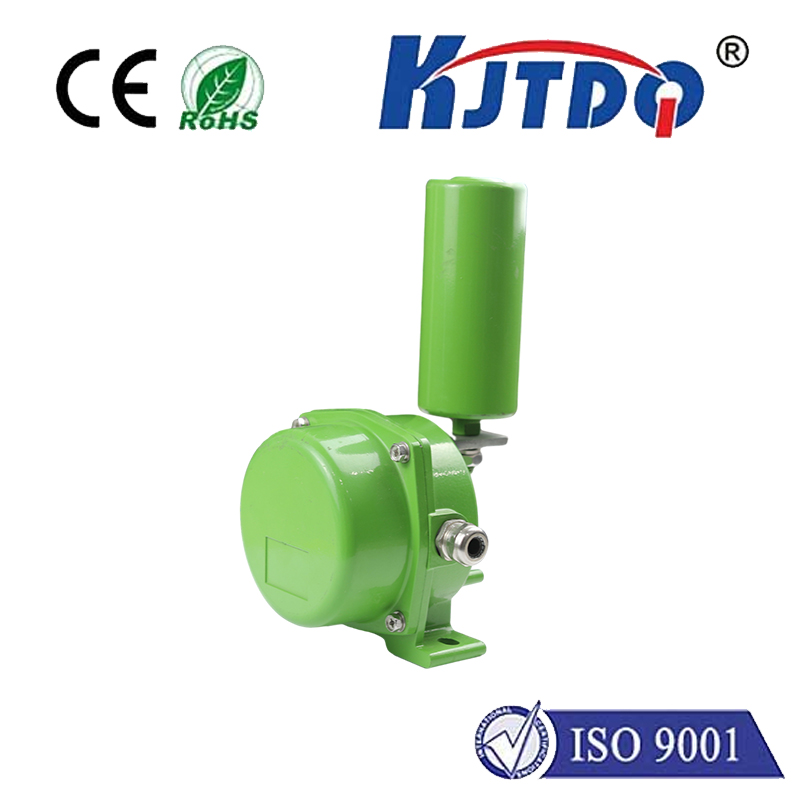
In the fast-paced world of industrial automation and material handling, operational efficiency is paramount. However, it should never come at the expense of worker safety. This is where the critical role of emergency stop devices comes into sharp focus. Among these, the pull cord switch stands as a fundamental and reliable safeguard. The D4MC-5020 pull cord switch emerges as a standout component, engineered to provide immediate system shutdown in potentially hazardous situations, particularly along the lengths of conveyor belts.
Imagine a long conveyor system transporting raw materials in a mining operation or finished goods in a distribution center. Operators and maintenance personnel work alongside these moving belts. If a person's clothing gets caught, if a blockage occurs, or if any other emergency arises, reaching a fixed stop button might be impossible. The D4MC-5020 solves this problem by offering a continuous "lifeline" of safety. Its design typically involves a sturdy cable or cord running parallel to the conveyor. This cable is connected to the switch mechanism. In an emergency, a simple pull on this cord from any point along its length will instantly actuate the switch, sending a stop signal to the conveyor's motor control circuit. This immediate action can prevent equipment damage, product loss, and most importantly, serious personal injury.
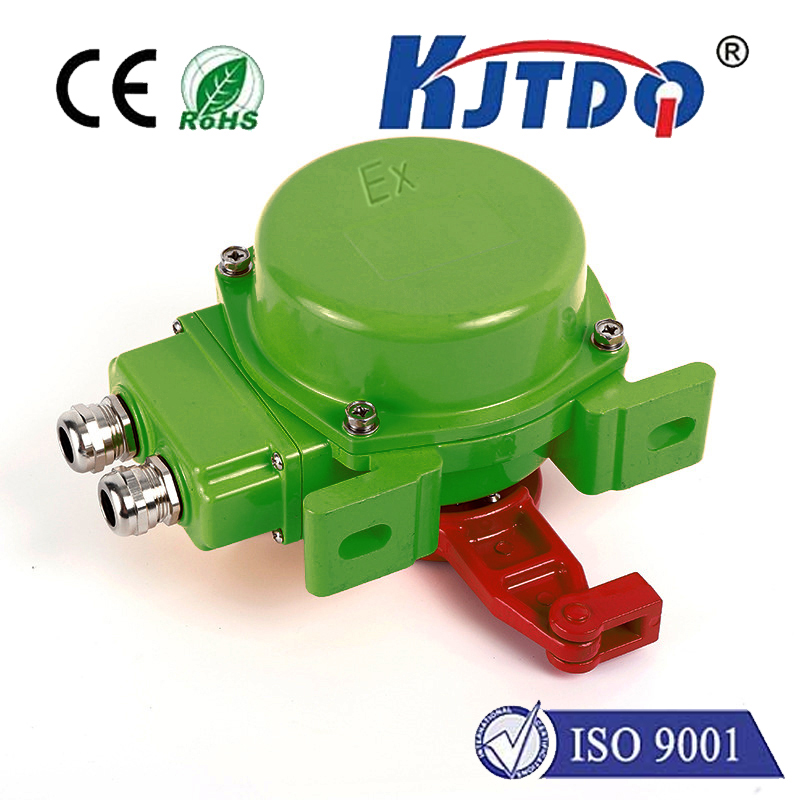
The effectiveness of the D4MC-5020 pull cord switch hinges on its robust construction and precise engineering. Built to withstand harsh industrial environments, it often features a heavy-duty metal or high-impact polymer enclosure with a high IP (Ingress Protection) rating. This ensures resistance to dust, moisture, and mechanical impacts commonly found in factories, warehouses, and outdoor installations. The internal switching mechanism is designed for reliability and a clear, unambiguous action. Many models, including those in the D4MC series, offer a latching function. Once activated by a pull, the switch remains in the tripped ("stop") position until manually reset by an authorized operator. This visual indication clearly identifies the location of the emergency, aiding in a swift response and investigation before restarting the system.
Installation and integration are straightforward. The D4MC-5020 is typically mounted at strategic intervals along the conveyor frame. The pull cord is then tensioned and run through a series of guide brackets. It connects directly into the machine's safety interlock circuit. Compliance with international safety standards is a non-negotiable aspect. A reputable D4MC-5020 pull cord switch is designed and certified to meet stringent regulations such as ISO 13850 (Safety of machinery — Emergency stop function — Principles for design) and relevant IEC standards. This ensures the device performs its critical function consistently and is recognized as a valid safety component in audits and inspections.
Beyond basic emergency stopping, modern iterations of pull cord switches like the D4MC-5020 offer enhanced features. Some models include dual-channel outputs for connection to advanced safety PLCs (Programmable Logic Controllers), enabling monitoring of the switch's health and providing a higher Safety Integrity Level (SIL). Others may have integrated flags or indicators that visibly pop out when activated, making the tripped unit easy to locate from a distance in large facilities. Regular testing is crucial, and the design often facilitates easy manual testing without causing system disruption to verify operational readiness.
Choosing the right safety component is a decision that carries significant weight. The D4MC-5020 pull cord switch represents more than just a product; it embodies a commitment to creating a safer working environment. It provides a simple, intuitive, and highly effective means for personnel to take immediate control in a dangerous situation. For engineers, plant managers, and safety officers responsible for conveyor systems, milling operations, packaging lines, or any machinery with extended hazardous zones, specifying a reliable pull cord switch is a fundamental step in risk mitigation. It serves as a constant, accessible guardian, ensuring that the pursuit of productivity is always aligned with the unwavering priority of protecting human well-being on the factory floor.