check

check

check

check

check

check
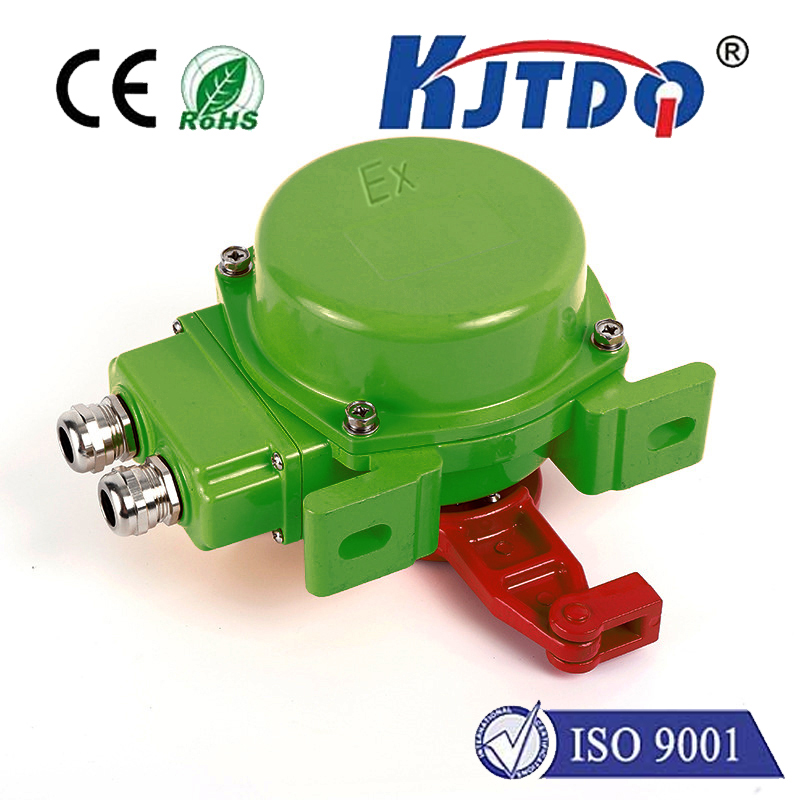
In environments where safety and immediate machine stoppage are paramount, the humble pull cord switch plays a critical, often understated role. Among the reliable options available, the JYB/KS-ISBNLS-I series stands out as a robust and versatile safety component designed for demanding applications. This emergency stop device is engineered to provide a fail-safe method for halting conveyor systems, machinery, and equipment from multiple points along its length, ensuring operator safety is never compromised.
The core principle of a pull cord switch, like the JYB/KS-ISBNLS-I model, is straightforward yet highly effective. It consists of a switch mechanism housed in a durable enclosure, typically mounted along the side of a conveyor or machine. A steel wire rope, or pull cord, runs the entire length of the hazardous zone and is attached to the switch's actuating lever. In an emergency—whether an operator is caught, a product jams, or any unsafe condition arises—any person can pull the cord from any point. This action immediately triggers the switch, cutting power to the drive motor and bringing the equipment to a swift stop. This simple, intuitive action requires minimal training, making it a universally understood safety protocol.
What distinguishes the JYB/KS-ISBNLS-I series is its design tailored for resilience. Industrial settings, such as mining, aggregate processing, packaging lines, and bulk material handling, are fraught with dust, moisture, vibration, and mechanical impact. This pull cord switch is often built with a heavy-duty, corrosion-resistant enclosure, meeting high Ingress Protection (IP) ratings to shield internal components from contaminants. The internal switching mechanism is designed for high reliability, often featuring a direct-opening action (positive break) in accordance with safety standards like IEC 60947-5-1, ensuring the safety function is maintained even if contacts weld. Many models include a manual reset function; after activation, the switch must be physically reset at the location of the incident, forcing an investigation into the cause of the stop before operations can resume—a key feature for procedural safety.
Beyond heavy industry, the precision and reliability of such switches find crucial application in the medical and laboratory equipment sectors. While the form factor may differ, the principle remains vital for patient and operator safety in certain specialized machinery, where immediate cessation of movement is required.
Installation and maintenance are key to sustained performance. The pull cord should be installed at a recommended height and distance from the machinery, ensuring easy and unobstructed access. Regular testing is non-negotiable; a weekly functional test where the cord is pulled to verify the machine stops and the reset function works is a best practice that prevents failure in a real emergency. The switch's mechanical components, like the tension on the cord and the condition of the rope, should be inspected periodically for wear or damage.
Choosing a pull cord switch like the JYB/KS-ISBNLS-I is an investment in foundational safety. It is not merely a compliance checkbox but a proactive measure to protect personnel, prevent costly equipment damage from catastrophic failures, and minimize downtime. When selecting a model, engineers must consider factors such as the required safety integrity level, the length of the run, the environmental conditions, and the necessary electrical specifications for the control circuit.
In conclusion, in the complex ecosystem of industrial automation and safety systems, the JYB/KS-ISBNLS-I pull cord switch serves as a vital, straightforward lifeline. Its presence along a conveyor or machine is a constant reminder that human safety is prioritized, offering a simple, mechanical means to assert control in potentially dangerous situations. For facility managers, engineers, and safety officers, specifying and maintaining such devices is a fundamental responsibility, ensuring a safer working environment for everyone.