check

check

check

check

check

check
In the fast-paced world of industrial automation, conveyor systems are the lifelines of material handling. They move tons of goods daily, from manufacturing plants to distribution centers. However, the immense power and continuous operation of these systems present significant safety hazards. A single moment of inattention or a mechanical fault can lead to catastrophic accidents, causing injury to personnel and costly downtime. This is where the critical role of emergency stop devices comes into sharp focus. Among these, the ELAW-31-JC pull cord switch stands out as a fundamental and reliable safeguard.
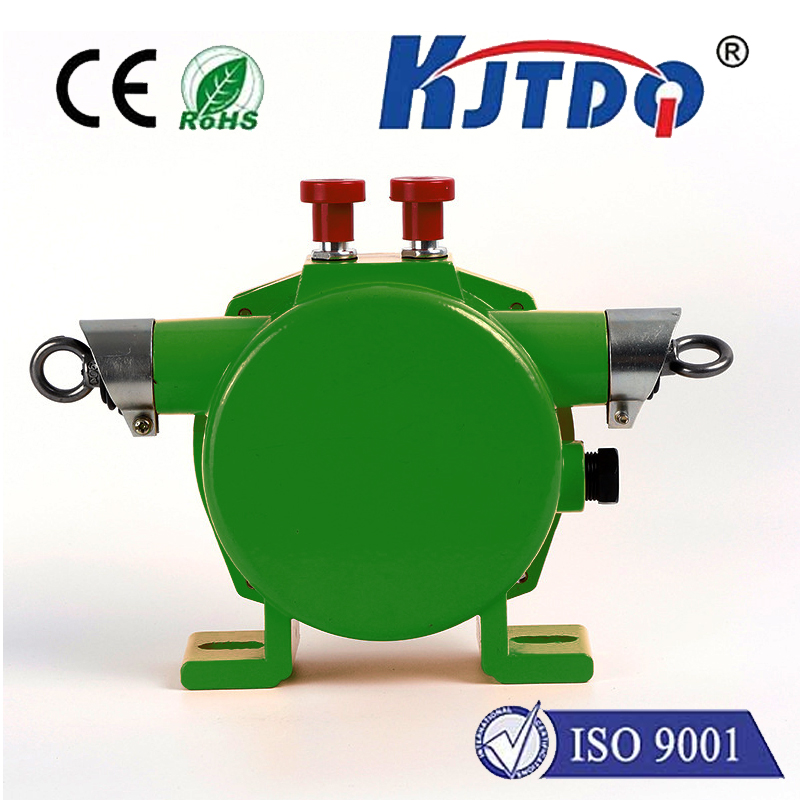
The ELAW-31-JC is engineered specifically for belt conveyor applications. Its primary function is straightforward yet vital: to provide a means for immediate system shutdown from any point along the conveyor's length. Installed at regular intervals on both sides of the conveyor, the switch features a prominently colored, durable pull cord that runs parallel to the belt. In an emergency—whether a worker sees a person caught in the machinery, a fire starts, or a critical component fails—anyone can instantly activate the switch by pulling the cord. This action mechanically trips the switch, breaking the safety circuit and sending a stop signal directly to the conveyor's motor control center, halting all motion within seconds.
What sets the ELAW-31-JC apart is its robust design tailored for harsh industrial environments. The housing is typically constructed from heavy-duty, corrosion-resistant materials like die-cast aluminum or stainless steel, offering protection against dust, moisture, and physical impact. Internally, it features a high-precision switching mechanism with gold-plated contacts to ensure a reliable electrical signal every time, minimizing the risk of failure when it is needed most. Many models are designed with a dual-action mechanism: pulling the cord activates the stop, but resetting requires a manual, deliberate action, often involving a twist or a key. This "manual reset" feature is crucial as it prevents the conveyor from being accidentally restarted before the emergency situation has been fully investigated and resolved, adding an extra layer of safety.
Installation and maintenance are designed with practicality in mind. The switch is usually mounted on the conveyor's side frame, and the pull cord is tensioned appropriately to prevent sagging while remaining easily accessible. Regular testing, as mandated by safety standards like OSHA or ISO 13850, is simple: personnel can pull the cord at various points to verify the switch activates and the conveyor stops reliably. This proactive testing ensures the safety system is always operational. Furthermore, the ELAW-31-JC often integrates seamlessly with broader plant safety networks or PLCs, allowing for centralized monitoring of its status.
Beyond its immediate safety function, implementing reliable devices like the ELAW-31-JC pull cord switch has profound operational benefits. It demonstrates a company's commitment to creating a culture of safety, which boosts employee morale and productivity. It helps organizations comply with stringent international safety regulations, avoiding heavy fines and legal liabilities. Most importantly, it protects a company's most valuable asset—its people—while safeguarding against the immense financial losses associated with workplace accidents, equipment damage, and unplanned production stoppages.
In conclusion, in the complex ecosystem of industrial conveyor systems, safety cannot be an afterthought. It must be engineered into the system's very core. The ELAW-31-JC pull cord switch embodies this principle. It is more than just a switch; it is a dedicated, fail-safe guardian that empowers every worker to act in an emergency, providing a simple, physical, and highly reliable link between human intervention and machine shutdown. For any operation relying on conveyor belts, specifying and maintaining high-quality emergency stop devices like the ELAW-31-JC is not merely a regulatory checkbox—it is a fundamental responsibility and a cornerstone of sustainable, safe industrial operation.