check

check

check

check

check

check
In industrial settings where flammable gases, vapors, or combustible dusts are present, safety is not just a priority—it's a non-negotiable requirement. This is where specialized equipment, certified for use in such hazardous locations, becomes critical. Among these essential components are limit switches, devices that control machinery by detecting the presence or absence of an object. When these switches are designed and certified for explosive atmospheres, they fall under a specific and rigorous international standard: IECEx. This article delves into the world of IECEx limit switches, explaining their importance, how they work, and why their certification is paramount for operational integrity and personnel safety.
The IECEx System, or the International Electrotechnical Commission System for Certification to Standards Relating to Equipment for Use in Explosive Atmospheres, provides a global framework for certifying equipment intended for use in hazardous areas. Unlike regional certifications that may only be valid in specific countries, IECEx offers an internationally recognized benchmark. For a limit switch to earn the IECEx mark, it must undergo stringent testing and assessment by an accepted certification body. This process verifies that the switch's design, construction, and materials prevent it from becoming an ignition source. It ensures that even under fault conditions, such as an internal spark or excessive surface temperature, the switch will not trigger an explosion in the surrounding hazardous atmosphere.
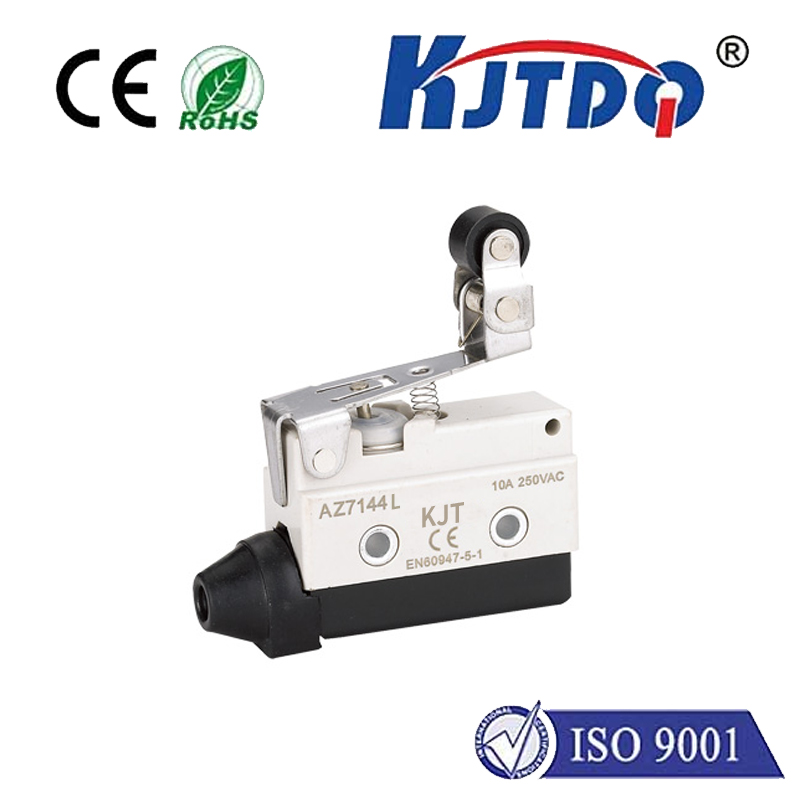
So, what exactly is an IECEx limit switch? At its core, it is a electromechanical device used to detect the position of a machine part. It typically consists of an actuator (like a lever, roller, or plunger) linked to a set of electrical contacts. When the actuator is moved by the machine part it is monitoring, the contacts either open or close, sending a signal to a control system to start, stop, or change a process. The fundamental difference from a standard limit switch lies in its protective housing and internal design. An IECEx-certified switch is engineered with robust enclosures that can contain any internal explosion and cool hot gases exiting the enclosure to a safe temperature, a principle known as flameproof or "Ex d" protection. Other protection methods like increased safety ("Ex e") or intrinsic safety ("Ex i") may also be applied, depending on the switch's design and the specific zone classification.
The applications for these specialized switches are vast and span numerous high-risk industries. In oil and gas refineries, they are used on valve actuators to confirm whether a valve is fully open or closed. On conveyor systems in grain silos or chemical powder processing plants, they act as position sensors to prevent over-travel or jamming, where combustible dust clouds can form. On offshore drilling platforms, they ensure the safe positioning of heavy equipment. In pharmaceutical manufacturing, where alcohol-based solvents are used, they provide reliable machine control. In each scenario, the consequence of a standard switch failing and creating a spark could be catastrophic, leading to fires, explosions, significant asset damage, and tragic loss of life.
Selecting the correct IECEx limit switch requires careful consideration of several factors beyond just the certification mark. First and foremost is the Zone Classification of the installation area. Hazardous areas are classified into Zones based on the frequency and duration of the presence of an explosive atmosphere (e.g., Zone 0, 1, 2 for gases; Zone 20, 21, 22 for dust). The switch must have a certification that matches or exceeds the Zone's requirements. The Temperature Class (T-class) is equally crucial; it indicates the maximum surface temperature the equipment will reach under operation and must be below the ignition temperature of the specific gas or dust present. Other practical considerations include the mechanical durability of the actuator, the electrical rating (voltage and current), the type of output contacts (e.g., SPDT, DPDT), and the ingress protection (IP) rating for environmental factors like water and dust.
Implementing and maintaining IECEx limit switches is a commitment to a culture of safety. Proper installation by qualified personnel, following the manufacturer's guidelines and the conditions outlined in the certification document, is essential. The integrity of the certified enclosure must never be compromised; this means using the correct cable glands, ensuring bolts are tightened to specified torques, and not making unauthorized modifications. Regular inspection and maintenance are also key. While the robust design is meant for harsh environments, actuators can wear, seals can degrade, and contacts can fatigue over time. A proactive maintenance schedule helps identify issues before they lead to switch failure or, worse, a compromise in the explosion-protected qualities of the device.
In conclusion, IECEx limit switches represent a critical intersection of precision engineering and rigorous safety certification. They are far more than simple on/off sensors; they are guardians in some of the world's most challenging industrial environments. By providing reliable position feedback without introducing ignition risks, they enable automation and control processes to proceed safely and efficiently. For engineers, plant managers, and safety officers operating in classified areas, specifying and utilizing IECEx-certified limit switches is a fundamental responsibility. It is an investment that goes beyond compliance, serving as a cornerstone for protecting human lives, valuable infrastructure, and the continuity of essential industrial operations globally. Understanding their function and certification ensures that safety is built into the very machinery that drives industry forward.