check

check

check

check

check

check
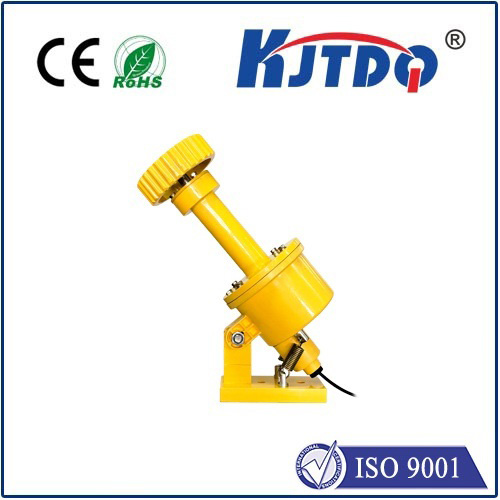
In the dynamic landscape of industrial automation, where precision and reliability are non-negotiable, the GF4C Rotary Limit Switch stands as a cornerstone component for motion control and positional safety. This electromechanical device is engineered to translate the mechanical motion of a rotating shaft into a definitive electrical control signal, acting as a critical sentinel in countless automated systems. Its primary function is to establish or interrupt an electrical circuit once a machine part reaches a predetermined angular position, thereby initiating, halting, or sequencing operations with unwavering accuracy.
The operational principle of the GF4C is elegantly robust. At its core, a rotating camshaft, driven by the motion of the machine it monitors, turns inside the switch housing. Precisely positioned cams on this shaft actuate micro-switches or proximity sensors as they rotate. Each cam's profile and angular setting can be meticulously adjusted, allowing engineers to define multiple set points within a single revolution. This programmability is a key advantage, enabling complex control sequences from a single, compact unit. When a cam engages its corresponding switch, it sends a clear signal to the system's programmable logic controller (PLC) or relay circuit, dictating the next action—whether it's stopping a conveyor, reversing a motor, opening a valve, or triggering an alarm to prevent overtravel.
The designation "GF4C" signifies a specific model series known for its durable construction and versatile application. Typically, these switches are housed in rugged, sealed enclosures rated for demanding environments, offering protection against dust, moisture, oil, and mechanical impact. This makes them indispensable in harsh sectors such as steel mills, material handling (cranes and hoists), packaging machinery, and heavy-duty processing plants. Their ability to provide absolute positional feedback—unlike incremental encoders that can lose reference—makes them particularly valuable for safety interlocks and fail-safe positioning where zero error tolerance is required.
Selecting and implementing a GF4C Rotary Limit Switch involves several critical considerations. Engineers must evaluate the required number of switching operations, the electrical load (current and voltage) of the connected circuit, the rotational speed of the driving shaft, and the environmental conditions. Proper mechanical linkage, often through a gearbox or lever arm, is crucial to ensure the switch accurately reflects the machine's movement. Regular maintenance, including checking for wear on cams and switch heads and verifying electrical contact integrity, is essential for long-term, trouble-free operation. Modern iterations may also integrate inductive or magnetic non-contact sensing elements alongside traditional mechanical contacts, offering even higher longevity for high-cycle applications.
Beyond basic limit functions, advanced configurations of the GF4C series can facilitate intricate automation logic. By ganging multiple switches or utilizing models with several independently adjustable cams, it is possible to create multi-stage processes, speed change points, or zone-based controls. This flexibility transforms a simple limit switch into a programmable sequence controller for rotating equipment like turntables, indexers, and slew drives. Its role in safety systems cannot be overstated; by physically preventing machinery from operating beyond its designed mechanical limits, it protects both equipment from damage and personnel from potential hazards.
In conclusion, the GF4C Rotary Limit Switch remains a fundamentally reliable and precise workhorse in automation technology. Its electromechanical simplicity provides a level of deterministic security that is highly valued in complex industrial systems. For engineers designing machinery that demands repeatable, safe, and accurate positional control, understanding and specifying the correct GF4C rotary limit switch configuration is a pivotal step. It represents not just a component, but a commitment to operational integrity, ensuring that automated movements are both intelligent and inherently safe, cycle after cycle.