check

check

check

check

check

check
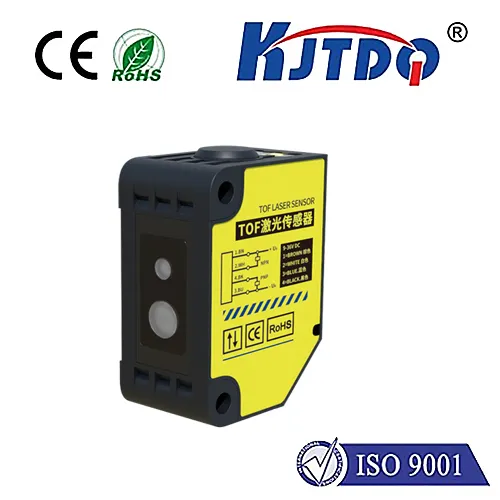
In today's fast-paced industrial and technological landscape, the demand for accurate distance measurement has never been higher. The laser ranging sensor with a 100-meter capability stands out as a pivotal tool, enabling precision across diverse fields from construction and surveying to robotics and security. Unlike traditional measuring methods that rely on physical contact or less accurate technologies, this sensor utilizes advanced laser technology to deliver non-contact, high-precision readings up to 100 meters, ensuring efficiency and reliability in critical operations.
The core of the 100-meter laser ranging sensor lies in its sophisticated time-of-flight (ToF) or phase-shift measurement principles. By emitting a focused laser beam towards a target and calculating the time it takes for the light to reflect back, the sensor determines distance with remarkable accuracy, often within millimeters. This process happens in milliseconds, allowing for real-time data acquisition that is essential in dynamic environments. For instance, in construction sites, professionals use these sensors to monitor structural alignments or measure land contours without the need for cumbersome tapes or manual calculations, significantly reducing human error and project timelines.
One of the key advantages of the 100-meter range is its versatility. In industrial automation, these sensors integrate seamlessly into robotic systems, guiding machinery for precise positioning and object detection. They enhance safety in warehouses by monitoring inventory levels or ensuring clear pathways for automated vehicles. Similarly, in the security sector, laser ranging sensors contribute to perimeter monitoring, detecting intrusions over long distances with minimal false alarms. Their ability to operate in various lighting conditions—from bright daylight to complete darkness—makes them indispensable for 24/7 applications.
Durability and ease of use further define modern laser ranging sensors. Many models are built with robust housings that resist dust, water, and shock, complying with IP ratings suitable for harsh outdoor or factory settings. Users can often connect these sensors to digital interfaces or software platforms, enabling seamless data logging and analysis. For example, in agricultural settings, farmers employ 100-meter laser sensors to map fields and optimize irrigation systems, leading to better resource management and increased crop yields. The non-contact nature also means no wear and tear on the sensor or target, ensuring long-term performance with minimal maintenance.
As technology evolves, the integration of laser ranging sensors with IoT and AI systems is unlocking new possibilities. Smart cities leverage these sensors for traffic management, measuring vehicle distances to improve flow and reduce accidents. In renewable energy, they assist in the alignment of solar panels or wind turbines for maximum efficiency. The 100-meter capability specifically addresses the need for mid to long-range measurements, bridging the gap between shorter-range devices and more expensive, complex systems. This makes it a cost-effective solution for startups and large enterprises alike, driving innovation in sectors like drones, where precise altitude and obstacle detection are crucial.
In conclusion, the laser ranging sensor with a 100-meter range is more than just a measuring device; it is a cornerstone of modern precision engineering. By offering accurate, non-contact distance data, it empowers industries to enhance productivity, safety, and sustainability. Whether for professional surveying, automated manufacturing, or cutting-edge research, this sensor continues to prove its value as an essential tool in the digital age. As applications expand, its role in shaping efficient and intelligent systems will only grow, solidifying its place in the toolkit of engineers and innovators worldwide.