check

check

check

check

check

check
In the intricate ballet of industrial automation and machinery, precise control over movement isn’t just desirable; it’s paramount for efficiency, safety, and longevity. Imagine a heavy gantry crane traversing a shipyard, a hydraulic press molding components, or a sophisticated elevator lift. What prevents these powerful systems from exceeding their designated travel paths, potentially causing catastrophic damage or injury? Enter the critical, yet often overlooked, component: the two-way limit switch. This versatile device acts as the definitive sentinel, ensuring machinery stops exactly where it’s supposed to, no matter the direction of travel.
Understanding the Core Function: Defining Travel Boundaries
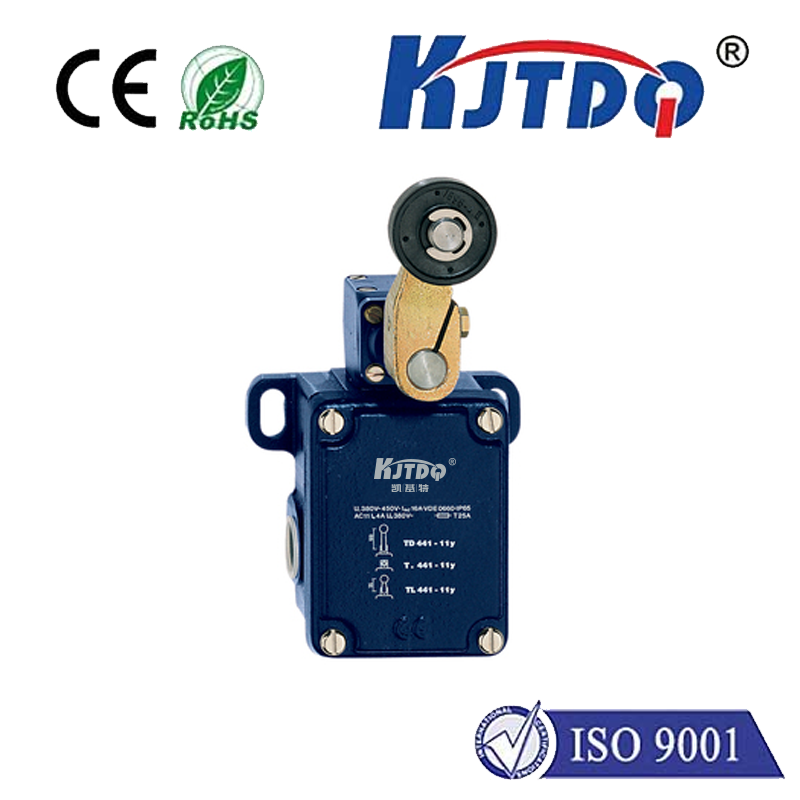
At its essence, a two-way limit switch is a precision electro-mechanical sensor strategically positioned to detect the presence or position of a moving part within a machine. Its defining characteristic, as the name implies, is its ability to monitor and control movement in two opposite directions. Unlike a standard, single-direction limit switch that might only prevent over-travel in one path, the two-way variant establishes both the upper and lower boundaries, or the start and end points, of a linear or rotary motion path.
Think of it as setting precise bookends for movement. When the moving part (often an actuator arm, carriage, or cam) reaches the switch mechanism at one end of its stroke, the switch is actuated. This sends a signal to the machine’s control system (like a PLC - Programmable Logic Controller), which then halts motion in that specific direction. Crucially, when the part reverses direction and approaches the opposite limit, the same switch (or its complementary mechanism) is triggered again, signaling the control system to stop movement in that direction. This bidirectional sensing capability is key.
How It Works: Mechanisms for Dual Detection
Two-way limit switches achieve this bidirectional control through various mechanisms, each suited to specific applications and environmental demands:
Why Two-Way? Advantages Over Single-Direction Switches
The benefits of employing a two-way limit switch are significant and directly address core operational needs:
Key Applications: Where Bidirectional Control is Non-Negotiable
Two-Way vs. Standard Limit Switches: A Quick Comparison
| Feature | Two-Way Limit Switch | Standard Limit Switch |
|---|---|---|
| Core Function | Defines both start & end points | Defines only one end point |
| Directionality | Senses and controls two opposite directions | Controls only one direction |
| Components | Typically one device per travel axis | Often requires two devices per travel axis |
| Control Logic | Simplifies wiring & PLC programming | Can require more complex setup |
| Primary Use | Precise bidirectional travel limits | Single-point detection, safety interlocks, position verification |
Choosing the Right Two-Way Limit Switch
Selecting the optimal switch involves considering several factors:
The Essential Enabler of Controlled Movement
From safeguarding multi-ton equipment to enabling micro-precision in delicate assembly, the two-way limit switch is a fundamental pillar of reliable and safe industrial motion control. Its ability to definitively establish bidirectional boundaries prevents costly damage, enhances operational precision, and protects personnel. Far more than just a simple on/off device, it is the unsung guardian ensuring machinery operates efficiently and predictably within its meticulously defined physical limits. Understanding and correctly implementing this vital component is non-negotiable for engineers and technicians designing and maintaining any system where controlled, bidirectional travel is essential.