check

check

check

check
check
check
check
check

check
check
Imagine a high-speed bottling line – plastic containers whizzing by, glass jars clinking, cardboard packages gliding past. Or picture a modern woodworking shop, intricate cuts being made on composite materials. How does sophisticated machinery reliably “see” and interact with these non-conductive materials without missing a beat or causing damage? The answer lies in the often unsung heroes of industrial automation: non-metallic proximity sensors.
Unlike their inductive counterparts specifically designed for ferrous and non-ferrous metals, non-metallic proximity sensors are engineered to detect targets that don’t conduct electricity. This capability unlocks a vast array of applications across industries plagued by the limitations of metal-only detection, enabling automation that’s safer, more precise, and vastly more versatile.
Understanding the Core Technology: How “Non-Metallic” Sensing Works
The term “non-metallic proximity sensor” isn’t tied to a single technology but encompasses several key types, each suited for specific material properties:
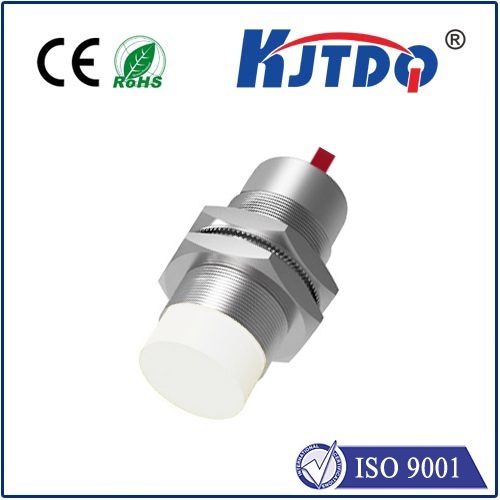
Capacitive Proximity Sensors: These are the most common solution for detecting solids, powders, and liquids regardless of electrical conductivity. They function by generating an electrostatic field. When any material enters this field, it causes a measurable change in capacitance – essentially a shift in the sensor’s ability to store an electrical charge. Even minute changes caused by plastics, wood, paper, glass, liquids, or granular substances trigger the sensor’s output signal. Adjustable sensitivity is a crucial feature here, allowing engineers to fine-tune detection range and ignore background materials like container walls.
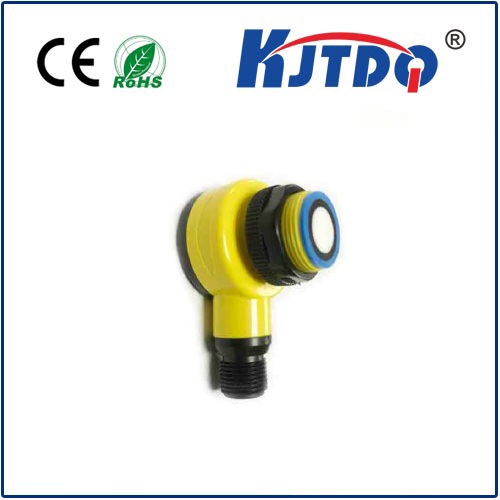
Ultrasonic Proximity Sensors: These sensors emit high-frequency sound waves and measure the time it takes for the echo to return. The distance to the target, rather than its material composition, is the primary detection principle. This makes them highly effective for detecting virtually any object, solid or liquid, at longer ranges than capacitive sensors. They excel in challenging environments with dust, fog, or target color variations that can confuse optical sensors, and are invaluable for continuous level monitoring of liquids and bulk solids.
Photoelectric Sensors (Specific Types): While photoelectric sensors are a broad category, diffuse and retro-reflective types equipped with specific light sources or advanced optics can reliably detect non-metallic objects. They detect the presence or absence of an object by sensing changes in light intensity (diffuse) or by the return of a light beam (retro-reflective). Advanced variants, sometimes incorporating background suppression or contrast detection techniques, offer reliable detection for transparent bottles, colored plastics, and uneven surfaces where basic reflection principles might fail.
Why Choose Non-Metallic Detection? The Compelling Advantages
Reaching for a non-metallic proximity sensor isn’t just about necessity; it offers tangible benefits:
Critical Applications Driving Demand
The practical uses for non-metallic proximity sensors are extensive and growing:
Selecting the Right Sensor: Key Considerations
Choosing the optimal non-metallic proximity sensor requires careful thought:
From essential processes to innovative applications, non-metallic proximity sensors are the silent enablers of modern automation, ensuring efficiency, safety, and product quality wherever traditional metal detection falls short. By understanding the distinct capabilities of capacitive, ultrasonic, and photoelectric variants, engineers can implement the precise sensing solution needed to optimize performance across countless industries.