check

check

check

check
check
check
check
check

check

check
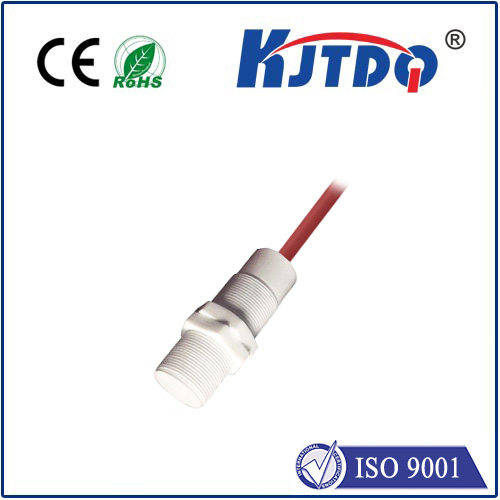
In the intricate ballet of modern automation, countless components work unseen. Yet, the failure of even the most seemingly minor part – a proximity sensor – can halt an entire production line. How do engineers ensure reliable, non-contact object detection in demanding environments? The answer often lies in selecting precision instruments like the SNO4-N proximity sensor. This robust device silently performs critical tasks, from counting parts to confirming positions, forming an indispensable link in the automation chain.
Understanding the SNO4-N Designation
Deciphering sensor model numbers is crucial. Typically, the “SNO4” portion indicates the sensor family and core specifications (size, sensing range, electrical characteristics), while the “-N” suffix is vital. In proximity sensor terminology, ‘-N’ almost universally denotes an NPN output transistor configuration. This signifies that when the sensor detects a target object, the output transistor switches the load to ground (0V), completing the circuit’s negative path. This is distinct from PNP (-P) sensors, which switch the positive voltage. Matching the sensor type (NPN vs. PNP) to your PLC or controller input circuitry is fundamental to proper operation.
Core Technology: Inductive Sensing Explained
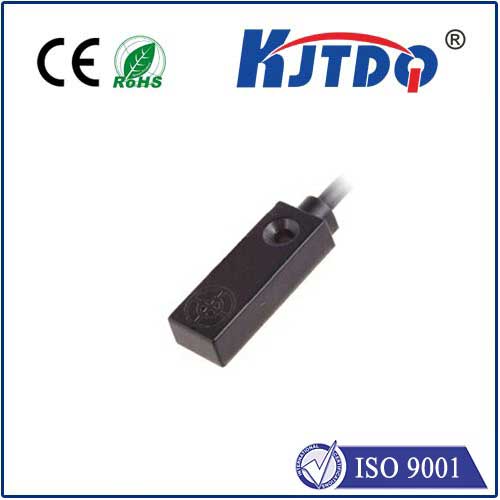
The SNO4-N leverages inductive proximity sensing. This technology relies on an electromagnetic field generated by a coil within the sensor’s face. When a metallic target (typically ferrous metals like steel, though non-ferrous metals are detectable at shorter ranges) enters this field, it causes eddy currents to form on the target’s surface. This interaction results in a measurable energy loss within the sensor’s coil. Sophisticated internal circuitry detects this energy shift and triggers the NPN output transistor to switch states. Crucially, this detection occurs without physical contact, eliminating wear and tear and enabling high-speed operation. Effective sensing ranges for inductive sensors like the SNO4-N typically vary by model but are commonly optimized for distances like 4mm, 8mm, or 12mm.
Why Choose the SNO4-N Proximity Sensor? Key Advantages
Several compelling features make the SNO4-N a preferred choice:
Putting the SNO4-N to Work: Common Applications
The SNO4-N’s versatility shines across diverse sectors:
Selecting and Implementing Successfully
Best practices ensure optimal SNO4-N performance:
Conclusion
The unassuming SNO4-N inductive proximity sensor remains a cornerstone of industrial sensing. Its blend of ruggedness, high-speed NPN output, non-contact reliability, and ease of use makes it an essential tool for engineers and technicians alike. By understanding its operating principles, key specifications like the NPN output type, and implementation best practices, you can leverage the SNO4-N effectively to enhance the efficiency, safety, and reliability of your automated machinery. It truly is a silent sentinel, ensuring the smooth flow of industrial processes.