check

check

check

check

check

check
Industrial Laser Distance Sensors: The Precision Powerhouse Transforming Modern Manufacturing Imagine a world where machines operate with micron-level accuracy, robotic arms weld car frames without human intervention, and quality control happens in real-time at blinding speeds. This isn’t science fiction—it’s the reality enabled by industrial laser distance sensors, the unsung heroes of modern automation. From automotive assembly lines to aerospace manufacturing, these cutting-edge devices are redefining efficiency, safety, and precision in industrial settings.
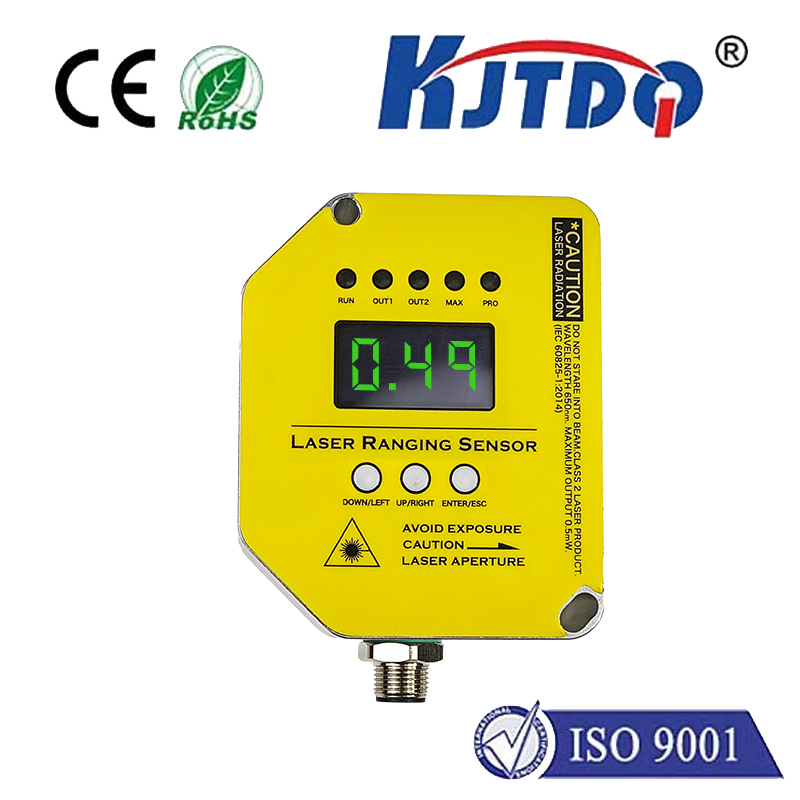
At their core, industrial laser distance sensors are non-contact measurement devices that use laser technology to determine the distance between the sensor and a target object. By emitting a laser beam and analyzing the reflected light—whether through time-of-flight (ToF), triangulation, or phase-shift methods—these sensors deliver real-time data with exceptional accuracy. Unlike traditional mechanical measuring tools, they eliminate physical wear, reduce human error, and thrive in harsh environments where dust, vibrations, or extreme temperatures would cripple conventional systems.
The rise of smart factories and Industry 4.0 has created an insatiable demand for precision and automation. Here’s why laser sensors are leading the charge:
Industrial laser distance sensors aren’t just niche tools—they’re transformative across sectors:
While revolutionary, laser sensors aren’t without hurdles. Engineers often grapple with:
The next frontier for laser sensors lies in edge computing and AI. Sensors equipped with onboard processors now analyze data locally, slashing latency. For instance, Keyence’s LK-G5000 series uses machine learning to ignore irrelevant background noise, boosting reliability in cluttered environments. Meanwhile, miniaturization is opening new applications. Researchers at MIT recently unveiled a chip-sized laser sensor for micro-robot navigation, hinting at future uses in medical devices or nanoscale manufacturing.
Selecting a laser distance sensor hinges on three factors:
From boosting production yields to enabling fully autonomous factories, industrial laser distance sensors are more than tools—they’re the bedrock of tomorrow’s manufacturing landscape. As industries push for finer tolerances and faster cycles, these sensors will remain indispensable, proving that sometimes, the smallest beam of light can cast the longest shadow.