check

check

check

check

check

check
In the dynamic landscape of industrial automation, precision, reliability, and safety are non-negotiable. Among the myriad of components that ensure seamless operations, the optical limit switch stands out as a critical sensor technology. This device, often referred to as a photoelectric sensor, plays a pivotal role in detecting the presence, absence, or position of objects without physical contact, thereby safeguarding machinery and optimizing processes.
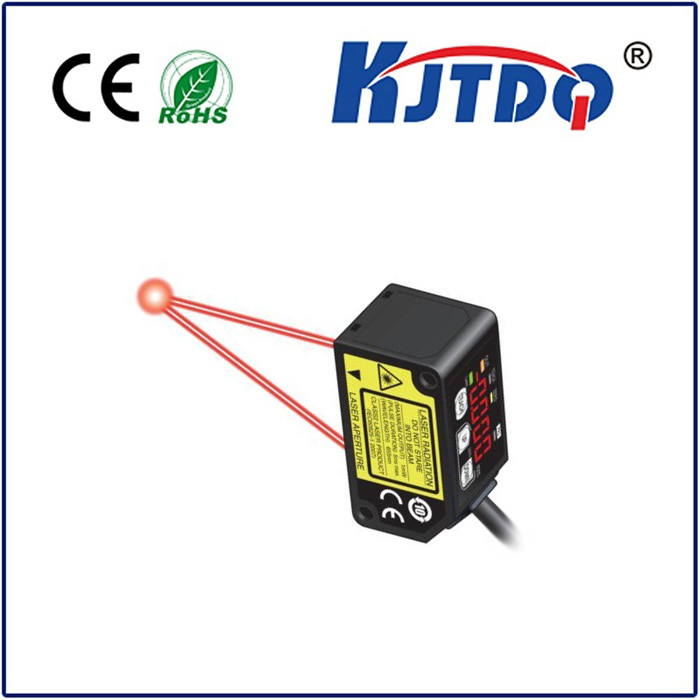
An optical limit switch operates on a simple yet highly effective principle. It consists of a light source, typically an LED that emits infrared, visible red, or laser light, and a photodetector. The system functions by projecting a light beam towards the detector. When an object interrupts this beam, the sensor triggers a signal. This signal is then used to control machinery—initiating a stop, start, or change in direction. The non-contact nature of this detection method is its greatest strength, eliminating mechanical wear and tear, reducing maintenance needs, and ensuring longevity even in high-cycle applications.
The applications of optical limit switches are vast and varied. In packaging lines, they ensure products are correctly positioned for labeling or sealing. In robotic assembly arms, they provide precise endpoint detection, preventing over-travel and potential collisions. Within automated storage and retrieval systems (AS/RS), these switches verify the presence of pallets or goods, ensuring inventory is accurately tracked and handled. The manufacturing sector relies on them for quality control, detecting misaligned components on conveyor belts. Their versatility is further enhanced by different sensing modes: through-beam, retro-reflective, and diffuse reflective, each suited for specific operational environments and detection ranges.
Why choose an optical limit switch over traditional mechanical variants? The advantages are compelling. Firstly, the absence of physical contact means no moving parts are subject to friction, leading to a dramatically longer operational life. They can operate at incredibly high speeds, detecting objects in milliseconds, which is essential for modern high-throughput production. Their precision is exceptional, capable of detecting minute objects or precise positions that mechanical switches might miss. Furthermore, they are largely immune to environmental factors like vibration, shock, and magnetic fields that can impair mechanical switches. Modern optical switches are also designed to be robust, with IP67 or higher ratings making them resistant to dust, moisture, and harsh washing procedures common in food, beverage, and pharmaceutical industries.
Integration into complex control systems is straightforward. These switches typically output a digital signal compatible with Programmable Logic Controllers (PLCs) and other industrial controllers. Advanced models feature adjustable sensing ranges, time delays, and output configurations, allowing for fine-tuning to exact application requirements. The emergence of IO-Link enabled optical switches adds a layer of smart functionality, enabling parameter setting, condition monitoring, and diagnostic data reporting directly to the control system for predictive maintenance.
When selecting an optical limit switch for a specific application, several factors must be considered. The sensing distance required, the size and material of the target object, and the environmental conditions (ambient light, dust, fog, temperature) are paramount. For instance, a through-beam sensor offers the longest range and highest reliability for clear detection but requires separate emitter and receiver units. A diffuse sensor is simpler to install as it uses a single unit but has a shorter range and can be influenced by the color and reflectivity of the target object.
In conclusion, the optical limit switch is an indispensable component in the toolkit of industrial automation. Its ability to provide fast, accurate, and reliable non-contact detection directly contributes to enhanced productivity, reduced downtime, and improved workplace safety. As industries continue to evolve towards smarter, more connected, and more efficient "Industry 4.0" paradigms, the role of precise sensing technologies like the optical limit switch will only become more central. For engineers and system integrators, understanding and leveraging this technology is key to building resilient and future-proof automated systems.