check

check

check

check

check

check
In the intricate world of industrial automation, where precision and reliability are paramount, a humble yet critical component operates tirelessly, often unnoticed. The electromechanical limit switch, a fundamental device with a history as long as automation itself, continues to be a cornerstone of machine safety and control. Unlike its purely electronic counterparts, this switch combines physical actuation with electrical switching, creating a robust and intuitive solution for position detection and end-of-travel control.
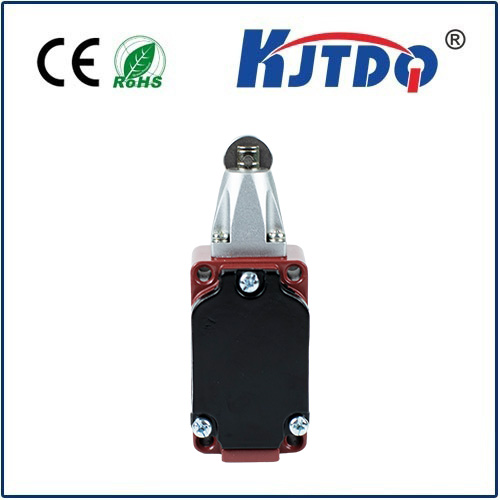
At its core, an electromechanical limit switch is a simple concept. It consists of an actuator—a lever, roller, or plunger—mechanically linked to a set of electrical contacts. When a moving part of a machine, such as a robotic arm, a conveyor cart, or a garage door, comes into contact with the actuator, it triggers a physical movement. This mechanical action directly opens or closes the electrical contacts within the switch body. This state change in the electrical circuit sends a clear signal to the machine's control system, typically a Programmable Logic Controller (PLC), to stop, start, or change the direction of motion. This direct physical feedback loop is its greatest strength, offering a level of certainty and tactile confirmation that purely sensor-based systems sometimes lack.
The applications for these switches are vast and varied. They are the silent sentinels on assembly lines, ensuring a welding robot does not over-extend its reach. They act as safety interlocks on heavy presses, preventing operation unless a guard is securely in place. In material handling, they define the endpoints for crane travel or the positioning of palletizers. Their environmental robustness is a key factor. Designed to withstand harsh conditions—including dust, moisture, vibration, and temperature extremes—many models boast high Ingress Protection (IP) ratings. This durability makes them ideal for foundries, packaging plants, and outdoor machinery where optical or proximity sensors might fail.
While the rise of proximity sensors (inductive, capacitive, photoelectric) has offered non-contact alternatives, the electromechanical limit switch holds its ground for several compelling reasons. First is its simplicity and ease of troubleshooting. A maintenance technician can often diagnose a problem by visually inspecting the actuator or listening for the audible "click" of operation. Second, it provides a positive mechanical drive to the contacts, which can be crucial for safety-related functions where a fail-safe operation is required. The physical actuation force also makes it less susceptible to false triggers from environmental interference like stray metal chips or ambient light, which can affect certain proximity sensors.
Modern electromechanical limit switches have evolved significantly. Today's offerings include models with ruggedized stainless steel housings, a wide variety of actuator styles for different angles of approach, and contact blocks that can handle a range of voltages and currents. Options like slow-action contacts for reduced arcing, and dual-channel outputs for safety circuit applications, demonstrate their adaptation to contemporary industrial needs. They form a vital part of safety circuits, often wired in series to create a safety chain that must be intact for a machine to operate.
Choosing the right limit switch involves careful consideration. Engineers must evaluate the required mechanical life (number of actuations), electrical rating (voltage and current of the load), the type of actuator needed for the application, and the necessary environmental protection. Understanding the difference between normally open (NO) and normally closed (NC) contacts is also essential for proper circuit design, especially in safety-critical stop functions.
In conclusion, in an era increasingly dominated by digital sensors and IoT connectivity, the electromechanical limit switch remains an indispensable workhorse. Its blend of mechanical certainty, electrical simplicity, and rugged reliability ensures it is far from obsolete. It is a testament to the enduring value of well-engineered physical solutions in a digital world, providing a critical layer of deterministic control and safety that keeps industrial processes running smoothly and securely. For machine designers and plant engineers, it remains a trusted, straightforward, and vital component in the automation toolkit.