check

check

check

check

check

check
In the intricate world of automation and machinery, where precision is paramount and safety is non-negotiable, a small yet critical component operates tirelessly, often unnoticed. This component is the small limit switch. Far from being just a simple mechanical part, it serves as a fundamental sentinel, dictating the boundaries of motion and ensuring operational integrity across countless applications. From the robotic arms in automotive assembly lines to the delicate mechanisms inside medical devices, the small limit switch plays a pivotal role in translating physical motion into reliable electrical signals.
The core function of a small limit switch is deceptively straightforward. It is an electromechanical device designed to detect the presence or absence of an object, or to monitor positional limits, by the physical movement of an actuator. When the actuator is triggered—by being pressed, released, or rotated—it causes the internal electrical contacts to change state, either opening or closing a circuit. This simple action sends a clear signal to a machine's control system: "the object has arrived," "the door is closed," or "the axis has reached its endpoint." This immediate feedback is the cornerstone of automated sequencing, safety interlocks, and repetitive positioning tasks. Their compact size, or "small" form factor, is a key advantage, allowing engineers to integrate them into tight spaces without compromising the design or functionality of larger systems.
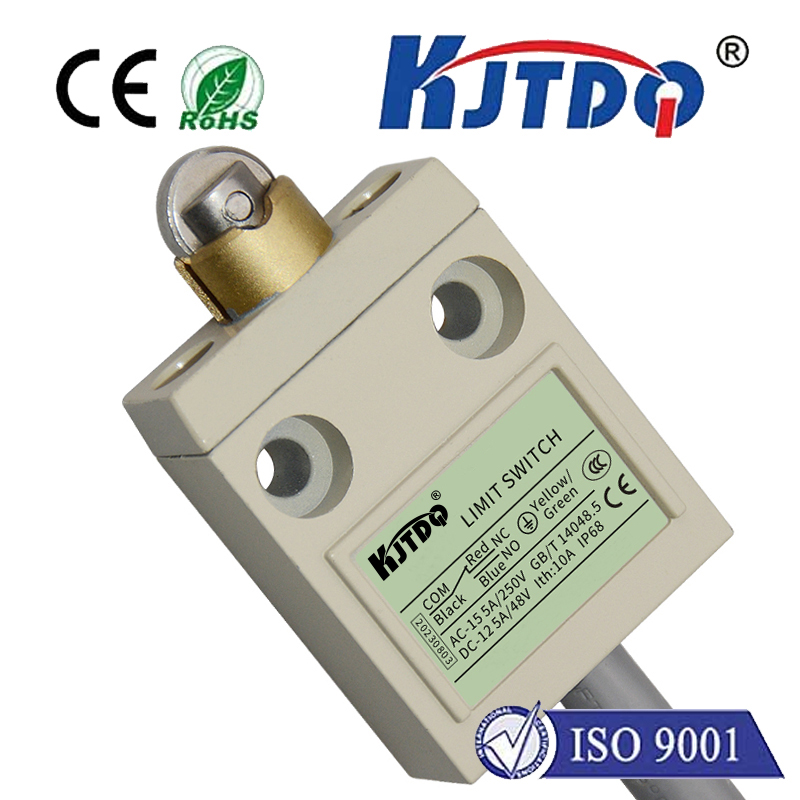
Durability and reliability are the hallmarks of a well-engineered small limit switch. Manufacturers construct these devices to withstand harsh industrial environments, including exposure to dust, moisture, vibration, and extreme temperatures. Sealed housings protect the internal contacts from contaminants, while robust actuators—available in various forms like roller levers, plungers, or whisker types—are built for millions of operational cycles. This resilience ensures consistent performance in demanding settings such as packaging machinery, where rapid cycles are constant, or in material handling equipment, where physical impacts are frequent. The choice of switch often depends on the specific environmental challenges and the required electrical load, with options ranging from standard micro-switches to heavy-duty models.
The application spectrum for small limit switches is remarkably broad. In the realm of industrial automation, they are indispensable for end-of-travel detection on linear actuators, confirming the open/closed status of guards and doors for operator safety, and providing home position signals for CNC machines. Beyond the factory floor, they find purpose in everyday life. Elevators use them to confirm floor leveling and door closure. Home appliances like washing machines employ them to sense lid position and drum rotation limits. Even in the burgeoning field of 3D printing, small limit switches define the print bed's home coordinates, ensuring each print starts from a precise, known location. This versatility underscores their fundamental role in both macro-scale industrial processes and micro-scale precision instruments.
Selecting the right small limit switch requires careful consideration of several technical parameters. The operating force and travel distance of the actuator must match the mechanical motion it will detect. Electrical ratings, including voltage, current (both AC and DC), and contact configuration (normally open or normally closed), must be compatible with the control circuit. Environmental protection, denoted by IP (Ingress Protection) ratings, is crucial for applications exposed to liquids or particulates. Furthermore, factors like repeat accuracy—the consistency with which the switch operates at the same point—and mechanical life expectancy are critical for long-term reliability. Understanding these specifications ensures the switch performs its duty effectively over its intended lifespan.
Innovation continues to evolve the humble limit switch. While traditional mechanical models remain widely used due to their simplicity and cost-effectiveness, newer technologies like solid-state proximity sensors offer non-contact alternatives. However, the tactile, physical feedback of a mechanical limit switch often provides an irreplaceable level of certainty and failsafe operation in many scenarios. Modern small limit switches may also incorporate advanced materials for lighter actuators or better sealing, and LED indicators for immediate visual status confirmation, enhancing both functionality and maintenance ease.
In conclusion, the small limit switch stands as a testament to the principle that great reliability often comes in small packages. It is a fundamental building block of control and safety systems, a device whose unassuming presence belies its critical importance. By providing definitive, physical confirmation of position and limit, it enables the complex, automated world we rely on to function with precision and safety. For engineers and designers, specifying the appropriate small limit switch is not merely a minor component choice; it is a decisive step toward creating robust, dependable, and intelligent mechanical systems.