check

check

check

check

check

check
In the realm of industrial automation and motion control, precision, durability, and reliability are non-negotiable. Among the various technologies enabling this precision, the Hall Effect limit switch stands out as a cornerstone component for countless applications. Unlike traditional mechanical limit switches that rely on physical contact and moving parts, Hall Effect switches offer a contactless, wear-free solution for position sensing and end-of-travel detection.
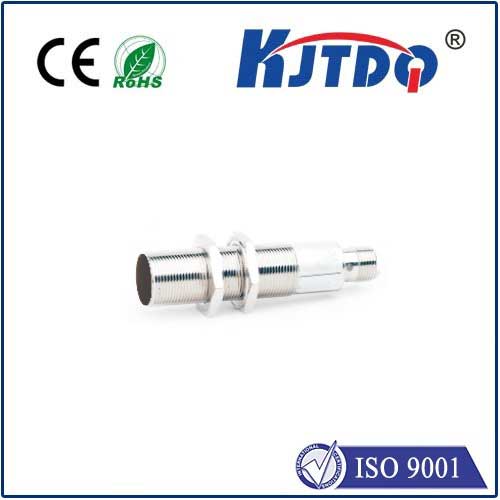
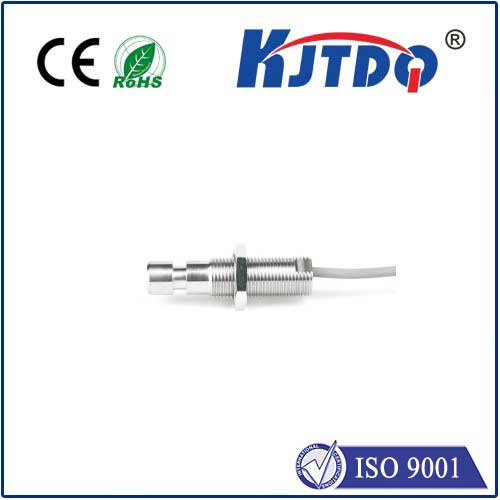
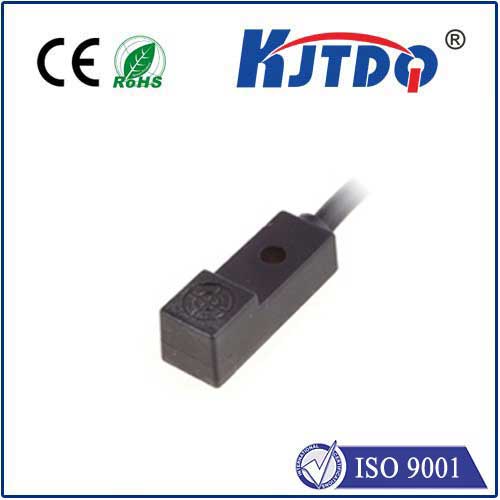
The core principle behind this technology is the Hall Effect, discovered by Edwin Hall in 1879. It describes the generation of a voltage difference (the Hall voltage) across an electrical conductor when a magnetic field is applied perpendicular to the current flow. A Hall Effect limit switch harnesses this phenomenon. It consists of a semiconductor-based Hall sensor and a permanent magnet. When the magnet approaches the sensor within a predefined range, the sensor detects the magnetic field change and triggers a solid-state electronic signal. This signal is then used to control a circuit—typically to stop, start, or change the direction of a motor or actuator.
The advantages of opting for a Hall Effect limit switch are substantial. First and foremost is its exceptional longevity. With no mechanical contacts to arc, wear out, or become contaminated by dust, oil, or moisture, these switches boast an almost infinite operational life in terms of switching cycles. This translates to significantly reduced maintenance costs and downtime. Secondly, they offer remarkable precision and repeatability. The actuation point is determined by the magnetic field strength, allowing for very accurate and consistent positioning, which is critical in high-precision manufacturing and robotics.
Furthermore, Hall Effect switches are inherently robust. They are typically housed in sealed packages, making them highly resistant to harsh environmental conditions including vibration, shock, and wide temperature fluctuations. Their solid-state nature also allows for very high switching speeds, far exceeding the capabilities of mechanical counterparts. This makes them ideal for high-speed automation equipment. Additionally, since the switching is done electronically without contact bouncing, they provide a clean, debounce-free signal that interfaces seamlessly with modern programmable logic controllers (PLCs) and microprocessors.
Typical applications span across diverse industries. In CNC machinery and 3D printers, they provide accurate homing and limit detection for axes. In automotive assembly lines, they ensure robotic arms operate within safe boundaries. They are integral to elevator control systems for floor leveling, used in medical devices for precise instrument positioning, and deployed in aerospace for reliable actuator control. Their silent operation is also a benefit in noise-sensitive environments.
When selecting a Hall Effect limit switch, several key specifications must be considered. The sensing distance, or the range at which the magnet reliably triggers the sensor, is paramount. Output configuration is another critical factor; common types include digital (on/off) outputs like NPN or PNP transistors, and some variants offer analog outputs proportional to the magnetic field strength. Voltage ratings, current sinking or sourcing capability, and housing material (often stainless steel or rugged polymers) should be matched to the application's electrical and physical demands.
Installation and alignment are straightforward but crucial. The magnet must be mounted on the moving part, and the sensor on the stationary frame, or vice versa, ensuring they pass within the specified sensing gap during operation. Proper shielding may be necessary in environments with strong stray magnetic fields to prevent false triggering.
In conclusion, the Hall Effect limit switch represents a significant evolution from mechanical limit switches. By offering a perfect blend of reliability, precision, and durability through solid-state, contactless operation, it has become an indispensable component for engineers designing advanced motion control systems. For applications demanding unwavering performance with minimal maintenance, specifying a high-quality Hall Effect limit switch is not just an option—it is a strategic decision for enhancing operational efficiency and system longevity. As industries continue to push the boundaries of automation and precision, the role of this elegant and robust sensing technology will only become more central.