check

check

check

check

check

check
In industrial automation and control systems, the reliability of every component is paramount. Among these critical components, the limit switch head plays a pivotal, yet often understated, role. It acts as the sensory interface for a limit switch, converting mechanical motion into a precise electrical signal that dictates machine behavior. Choosing the correct limit switch head is not merely a technical specification; it is a fundamental decision impacting operational safety, efficiency, and system longevity. This guide delves into the core aspects of limit switch heads, providing a comprehensive framework for selection and application.
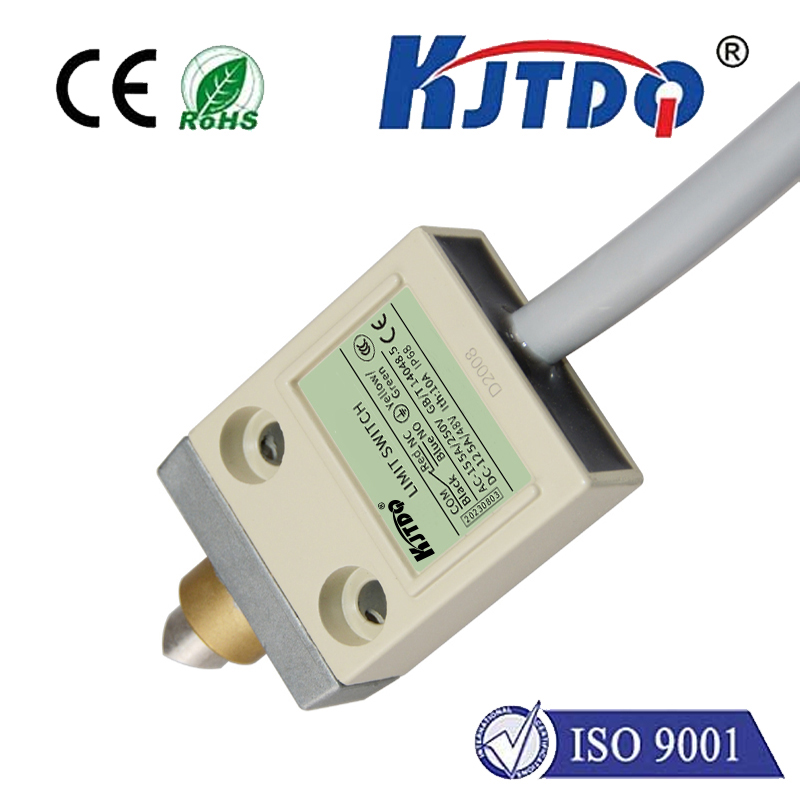
At its essence, a limit switch head is the actuator module attached to the main switch body. It is the part that physically interacts with the target machine component, such as a cam, roller, or plunger. When the moving part of a machine contacts the head's actuator, it triggers an internal mechanism to change the state of the electrical contacts within the switch body. This simple action can start, stop, or sequence complex industrial processes. The design of the head determines how it engages with the target, its durability under repeated use, and its suitability for specific environmental conditions.
The selection process begins with a thorough analysis of the operating environment. Is the area prone to dust, moisture, or chemical exposure? For harsh environments, sealed or hermetically sealed heads with robust housing materials like stainless steel or high-grade thermoplastics are essential to prevent ingress and corrosion. In washdown areas common in food and beverage or pharmaceutical industries, heads with specific IP (Ingress Protection) ratings, such as IP67 or IP69K, are non-negotiable to withstand high-pressure cleaning.
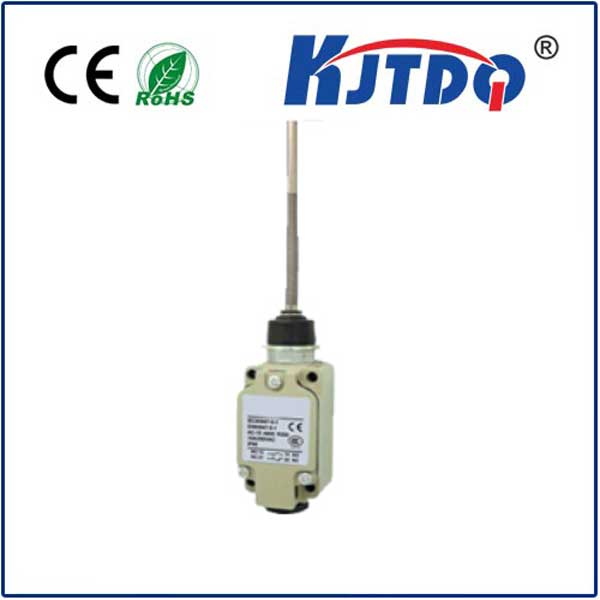
Next, consider the actuation method. The most common types include roller lever, plunger, and wobble stick heads. Roller lever heads, with their rotating arm, are ideal for applications requiring a sweeping motion or where over-travel is necessary. They reduce wear on both the switch and the target. Plunger heads offer a direct, linear actuation and are perfect for precise positioning with minimal movement. Wobble stick or whisker heads are sensitive to contact from any direction, making them suitable for detecting the presence of objects on conveyors or in packaging machinery. The choice directly affects the accuracy and repeatability of the detection event.
Mechanical life expectancy is another critical factor. This refers to the number of mechanical operations the head can endure before failure. A head operating on a high-speed packaging line will have vastly different cycle life requirements than one used on a slow-moving garage door. Manufacturers provide detailed lifecycle ratings, and selecting a head with a margin above the calculated requirement is a best practice for minimizing unplanned downtime.
Electrical ratings of the switch body must align with the head's mechanical capabilities. While the head itself doesn't carry current, it must be compatible with a switch body whose contact block can handle the required voltage and current (AC or DC) of the control circuit. Mismatching can lead to contact welding or failure. Furthermore, the speed of actuator movement and the reset differential (the distance the target must move away to reset the switch) are subtle but important specifications that ensure reliable signaling without false triggers.
Installation and maintenance practicality should not be overlooked. Modular head designs that allow for easy replacement without rewiring the entire switch save valuable time during maintenance. The ability to adjust the actuator angle or pre-travel on some lever heads provides flexibility during machine setup and fine-tuning. Regular inspection of the head for physical damage, wear on the actuator (like a worn roller), and secure mounting is a simple yet effective preventative measure.
In application, proper alignment and mounting are as crucial as the product selection itself. The limit switch head must be positioned so that the target machine part engages it consistently and fully, without causing excessive impact or side-loading that could bend the lever or damage the plunger. Using appropriate brackets and ensuring rigid mounting prevents vibration from loosening the assembly or causing erratic operation.
From robotic cells and material handling systems to CNC machine tools and elevator controls, the humble limit switch head is a guardian of process boundaries. Its correct selection—balancing environmental resistance, actuation type, lifecycle needs, and electrical compatibility—transforms it from a simple component into a cornerstone of machine safety and operational reliability. By applying this structured approach to evaluation, engineers and maintenance professionals can ensure their control systems are built on a foundation of precision and durability.