check

check

check

check

check

check
In modern industrial automation, photoelectric sensors play a critical role in detecting objects, measuring distances, and ensuring precise control in manufacturing processes. Among the various types available, the NPN photoelectric sensor stands out for its compatibility and widespread use in electronic systems. This guide delves into the fundamentals, working principles, and practical applications of NPN photoelectric sensors, providing insights for engineers and technicians seeking reliable solutions.
A photoelectric sensor operates by emitting a light beam—typically infrared, visible, or laser—and detecting changes in the received light caused by an object's presence or absence. The NPN designation refers to the transistor output type used in the sensor's circuitry. In an NPN sensor, the output transistor switches the negative (ground) side of the load, meaning it sinks current to ground when activated. This configuration is common in many electronic setups, particularly in regions like Europe and Asia, where NPN sensors are favored for their alignment with positive logic systems.
The working mechanism of an NPN photoelectric sensor involves three key components: an emitter, a receiver, and a signal processor. The emitter projects light toward a target area, while the receiver captures the reflected or transmitted light. When an object interrupts or reflects the beam, the receiver detects the variation and sends a signal to the processor. The processor then triggers the NPN transistor to switch, creating a low-voltage output signal that can interface with controllers like PLCs (Programmable Logic Controllers) or microcontrollers. This seamless operation enables real-time monitoring and automation in diverse environments.
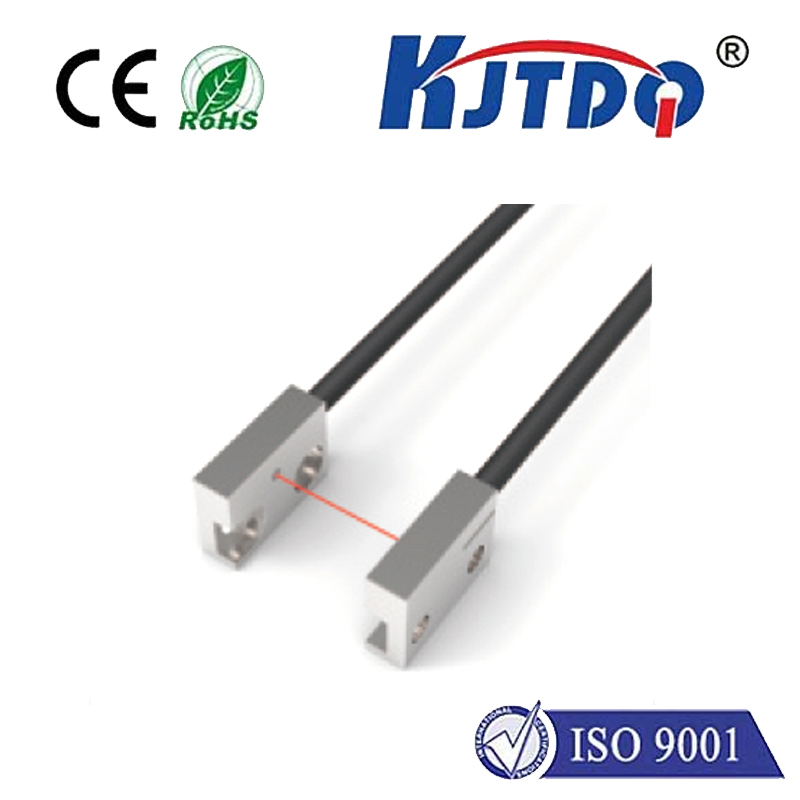
One of the primary advantages of NPN photoelectric sensors is their versatility. They come in different sensing modes, including through-beam, retro-reflective, and diffuse reflective types. Through-beam sensors offer long-range detection with high accuracy by placing the emitter and receiver opposite each other. Retro-reflective sensors use a reflector to bounce light back to the receiver, suitable for medium-range applications. Diffuse reflective sensors detect objects by measuring light scattered directly from the surface, ideal for short-range tasks. The NPN output ensures compatibility with a wide range of industrial equipment, enhancing integration ease.
In practical applications, NPN photoelectric sensors are indispensable across industries. In packaging lines, they detect product presence on conveyor belts, triggering sorting or labeling mechanisms. Automotive assembly plants rely on them for part positioning and quality checks, ensuring precision in robotic operations. Food and beverage sectors use these sensors for fill-level detection and container inspection, maintaining hygiene and efficiency. Additionally, in material handling systems, NPN sensors monitor inventory levels and prevent jams, contributing to smoother logistics. Their robustness in harsh conditions—such as dust, moisture, or temperature variations—makes them a reliable choice for demanding settings.
When selecting an NPN photoelectric sensor, consider factors like sensing range, response time, and environmental resistance. For instance, sensors with IP67 ratings are waterproof and dustproof, suitable for outdoor or washdown areas. It's also crucial to match the sensor's output type with the control system; NPN sensors pair well with sinking input modules. Regular maintenance, including lens cleaning and alignment checks, ensures longevity and accuracy. As technology advances, features like background suppression and fiber-optic options are expanding the capabilities of NPN sensors, offering tailored solutions for complex automation challenges.
In summary, NPN photoelectric sensors are a cornerstone of industrial automation, providing efficient and reliable object detection. Their NPN output design facilitates easy integration into electronic circuits, while their adaptability supports diverse applications from manufacturing to logistics. By understanding their operation and selection criteria, professionals can optimize automation systems for enhanced productivity and safety. As industries evolve toward smarter factories, these sensors will continue to play a vital role in driving innovation and operational excellence.