check

check

check

check

check

check
In the demanding world of industrial automation, where precision and reliability are non-negotiable, the choice of sensing technology becomes paramount. Among the various options available, the 24V inductive proximity sensor stands as a cornerstone for countless applications. This type of sensor, operating on a standard 24V DC supply, offers a robust and contactless method of detecting the presence or absence of metallic objects, making it indispensable in modern manufacturing and control systems.
The fundamental principle behind an inductive proximity sensor is electromagnetic induction. The sensor's active face contains a coil that generates a high-frequency oscillating electromagnetic field. When a metallic object enters this field, eddy currents are induced on the surface of the target. This process dampens the oscillation within the sensor's coil. The integrated electronics within the sensor detect this change in oscillation amplitude and subsequently trigger a solid-state switching signal. The entire process is contactless, meaning there is no physical wear and tear on the sensor from the detected object, leading to exceptionally long service life and minimal maintenance.
The specification "24V" refers to the operating voltage, which has become the de facto standard in industrial control panels and Programmable Logic Controller (PLC) systems. This standardization simplifies wiring, power supply design, and integration. A 24V DC system offers a safe operational voltage compared to higher AC voltages, reduces electrical noise susceptibility, and is perfectly compatible with the input modules of most PLCs and controllers. When selecting a sensor, ensuring it matches the control system's voltage is critical for reliable operation and safety.
Key advantages of using a 24V inductive proximity sensor are numerous. Their solid-state design ensures high switching speeds, capable of detecting objects thousands of times per minute, which is essential for high-speed production lines. They are inherently rugged, typically housed in stainless steel or nickel-plated brass bodies, offering high resistance to vibration, shock, and harsh industrial environments including exposure to coolants, oils, and dust (many models feature IP67 or higher ingress protection ratings). Furthermore, they are immune to ambient light conditions and can detect through certain non-metallic materials if the target metal is behind them, adding to their versatility.
Typical applications are vast and varied. They are commonly used for precise position detection of machine parts, such as verifying if a cylinder is fully extended or retracted. They serve as end-of-travel limit switches on conveyors or automated guided vehicles (AGVs). In assembly lines, they count metallic components or verify the presence of a part before a subsequent operation, like welding or painting. They are also crucial in packaging machinery for detecting metal lids or cans, and in robotic cells for ensuring gripper position or part placement.
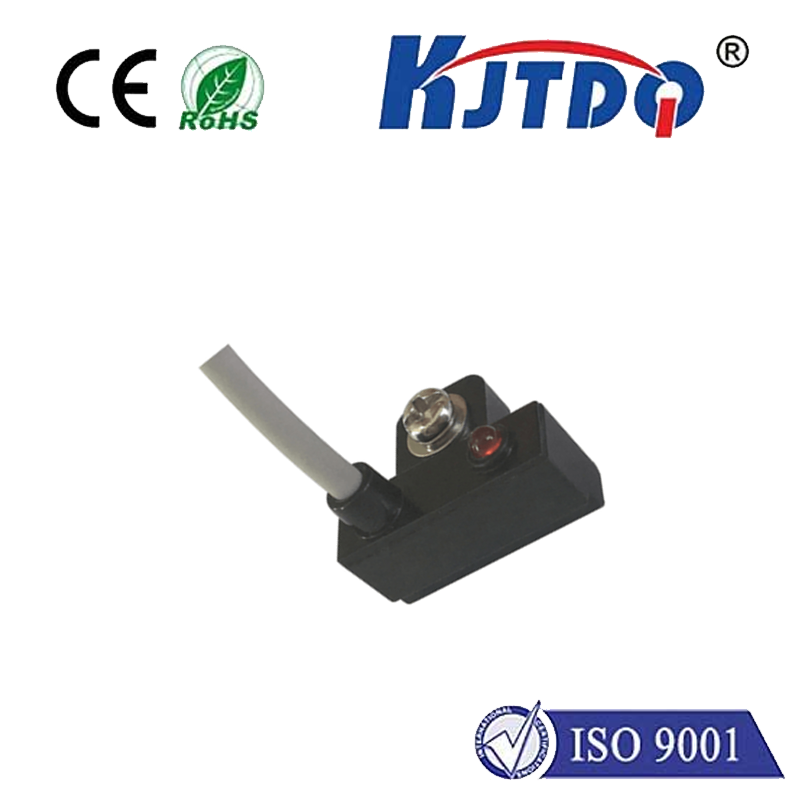
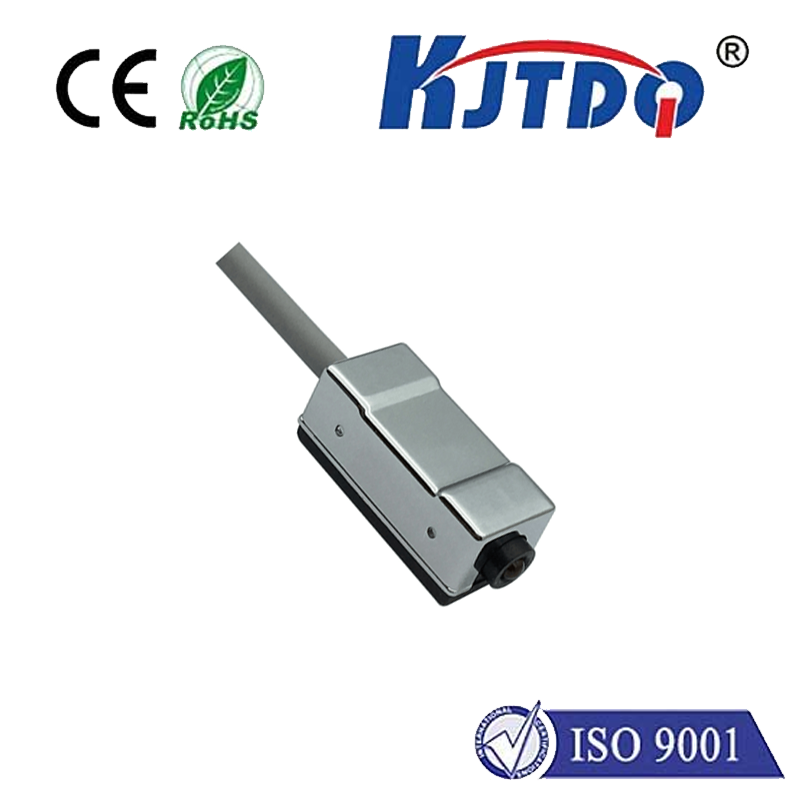
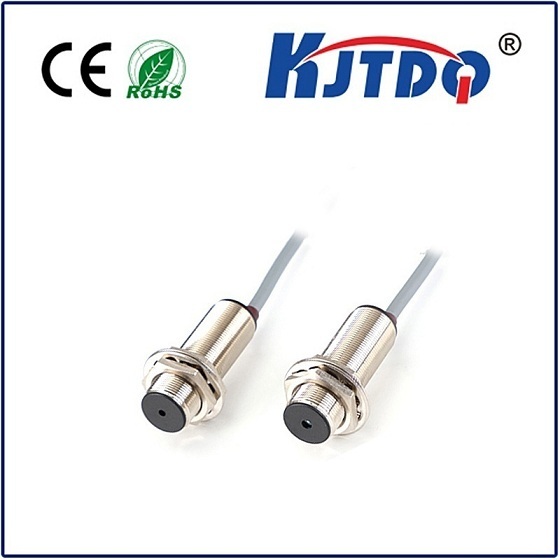
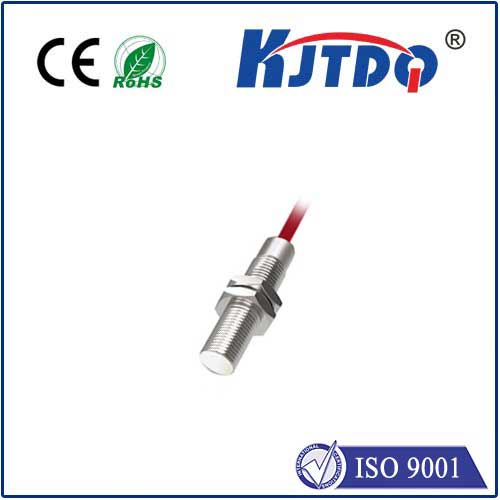
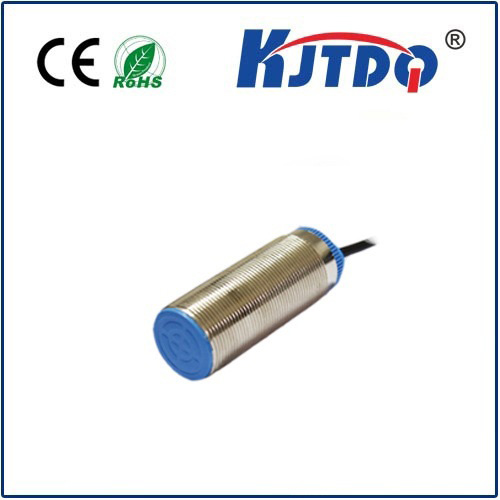
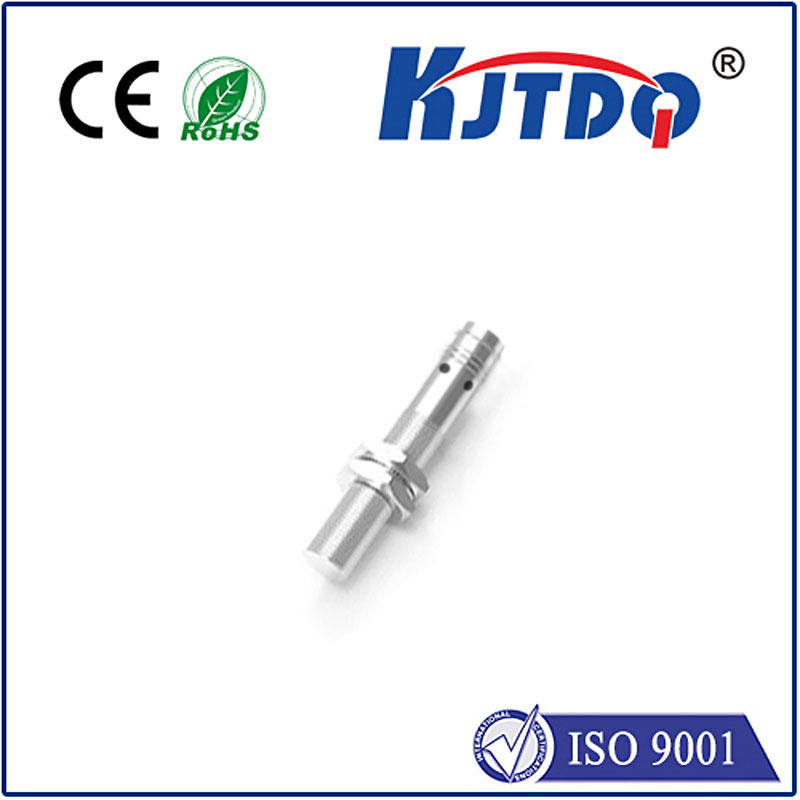
When integrating a 24V inductive sensor like the KJTDQ series, several practical considerations must be addressed. First is the sensing distance, which is typically short-range (a few millimeters to tens of millimeters) and is rated for a standard target (usually mild steel). The actual sensing range can vary with different metals; for instance, aluminum or copper may reduce the effective range. Secondly, the output configuration is vital: PNP (sourcing) or NPN (sinking) must be chosen to correctly interface with the controller. The physical housing style (barrel, rectangular, or ring-shaped) and connection type (pre-wired cable or quick-disconnect) are selected based on mounting constraints and maintenance needs.
Installation is straightforward but requires attention to detail. Maintaining the proper clearance around the sensor head is necessary to prevent false triggers from the surrounding metal mounting structure, a parameter known as the "flush-mountable" or "non-flush" installation guideline. Proper shielding and routing of cables away from high-power lines help prevent electromagnetic interference. Regular testing with the intended target material ensures the sensor continues to operate within its specified parameters.
In conclusion, the 24V inductive proximity sensor represents a perfect blend of simplicity, durability, and performance for industrial sensing tasks. Its contactless operation, compatibility with standard industrial voltages, and robust construction make it a fundamental component for enhancing efficiency, safety, and automation reliability. For engineers and system integrators seeking a dependable solution for metallic object detection, understanding and utilizing these sensors is a key step toward building resilient and productive automated systems. The KJTDQ series embodies these qualities, offering a reliable choice for demanding applications where failure is not an option.