check

check

check

check

check

check
In the world of industrial automation and machinery, reliable and precise object detection is not just a convenience—it's a critical requirement for safety, efficiency, and process control. Among the myriad of sensing technologies available, the 8mm magnetic inductive proximity sensor stands out as a particularly robust and versatile component. This compact device is engineered to deliver consistent performance in demanding environments where other sensors might falter.
The core principle behind an 8mm magnetic inductive proximity sensor is electromagnetic induction. The sensor generates a high-frequency oscillating electromagnetic field from its active face. When a ferromagnetic metal target, such as iron or steel, enters this detection field, eddy currents are induced on the surface of the target. This causes a change in the oscillation amplitude within the sensor's internal coil circuit. The sensor's electronics detect this damping effect and subsequently trigger a solid-state switching signal. This non-contact method of detection is key to its durability, as it eliminates mechanical wear and tear associated with physical contact switches.
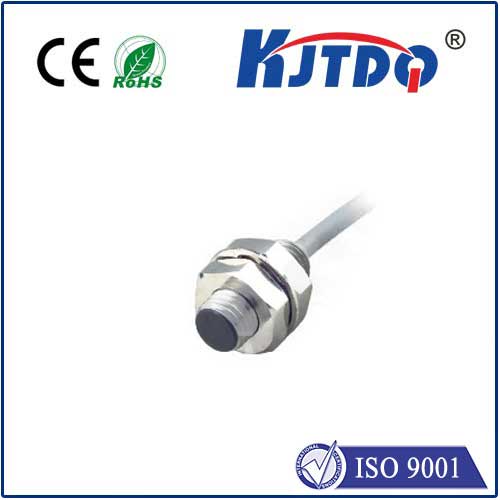
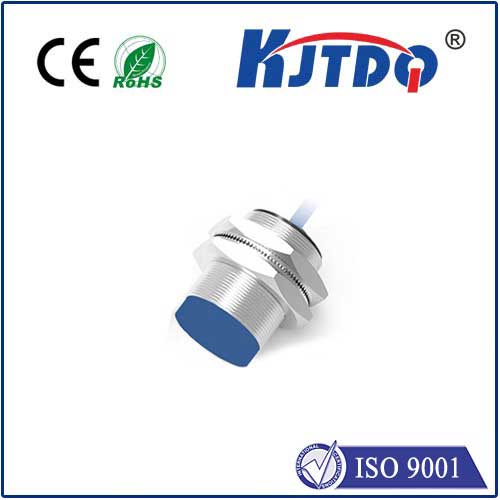
The compact 8mm cylindrical housing is a significant feature, allowing for installation in tight spaces where larger sensors cannot fit. Despite its small size, it is typically built to withstand harsh industrial conditions. Many models boast an IP67 or higher ingress protection rating, making them resistant to dust, oils, and temporary immersion in water. This ruggedness ensures reliable operation on factory floors, in automotive assembly lines, and within packaging machinery, where exposure to coolants, metal shavings, and vibrations is common.
One of the primary advantages of this sensor type is its insensitivity to non-metallic materials. It will not falsely trigger in the presence of plastics, wood, liquids, or most non-ferrous metals like aluminum or copper (unless specifically designed for such metals). This selective detection is invaluable for applications requiring precise counting or positioning of metal components. Common use cases include detecting the presence or absence of metal parts on a conveyor, confirming the closed position of a metal door or hatch, serving as an end-of-travel limit switch in actuators, and monitoring the rotation of gear teeth or a metal cam.
When selecting an 8mm magnetic inductive sensor, several technical specifications are crucial. The sensing distance, or nominal range, is typically up to 2mm for a standard steel target. It is vital to note that this range can vary with different metals; for instance, the effective range for stainless steel might be reduced. The operating voltage is another key parameter, with common options being 10-30V DC or 20-250V AC/DC models, allowing for integration into various control systems. The output configuration is also important, available normally open (NO), normally closed (NC), or with complementary outputs, and can be in PNP (sourcing) or NPN (sinking) transistor formats to match the PLC or controller input requirements.
Installation and maintenance are straightforward. The sensor is usually mounted using an M8 nut, and proper alignment with the target is essential for optimal performance. Ensuring a clean sensing face free of debris and maintaining the recommended lateral and axial distance from other metal objects prevents interference. Unlike photoelectric sensors, they are unaffected by ambient light, dust, or opaque materials, provided the target is ferromagnetic.
In summary, the 8mm magnetic inductive proximity sensor is a workhorse of industrial sensing. Its combination of a small form factor, rugged construction, selective metal-only detection, and non-contact operation makes it an indispensable tool for engineers and maintenance technicians. By providing a reliable digital signal for the presence of metal objects, it forms a fundamental link in automated control systems, enhancing both productivity and operational safety. For applications demanding a durable, precise, and space-efficient solution for detecting ferrous metals, this sensor technology continues to be a top-tier choice.