check

check

check

check

check

check
In the world of industrial automation, precision, reliability, and durability are non-negotiable. Among the myriad of sensing technologies available, the Factor 1 inductive proximity sensor stands out as a cornerstone for countless applications requiring robust, non-contact detection of metallic objects. This guide delves into the core principles, unique advantages, and critical applications of this essential component, explaining why it remains a first-choice solution for engineers and system integrators globally.
At its heart, an inductive proximity sensor operates on the principle of electromagnetic induction. The sensor generates a high-frequency oscillating electromagnetic field from its active face. When a metallic target enters this field, eddy currents are induced on the target's surface. This causes a change in the oscillation amplitude within the sensor's coil circuit. The sensor's internal circuitry detects this change and triggers a solid-state output switch. The term "Factor 1" is pivotal here. It refers to a standardized reduction factor that accounts for the different detection distances achievable for various metals compared to the reference material, mild steel. For a Factor 1 sensor, the rated operating distance is specified for mild steel. For other metals like stainless steel, aluminum, or copper, the effective sensing range is reduced by a specific factor. Understanding this factor is crucial for correct sensor selection and ensuring reliable performance in diverse environments.
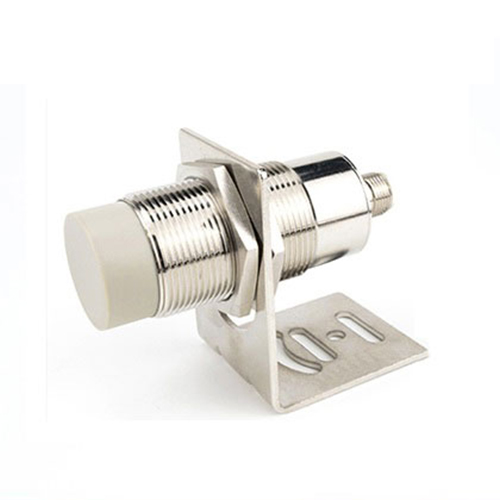
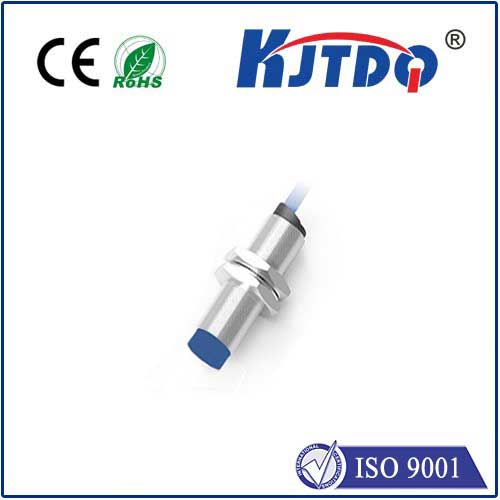
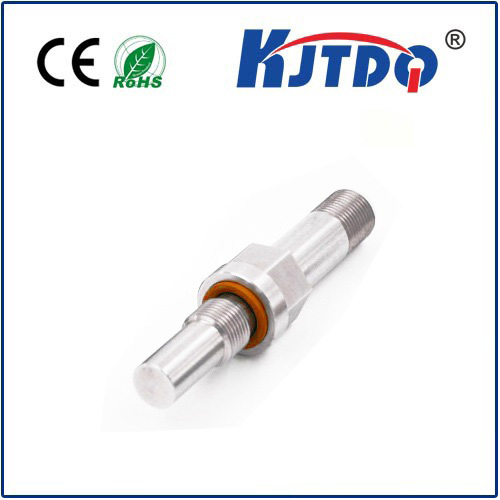
The defining characteristic of a high-quality Factor 1 inductive sensor is its exceptional reliability in harsh conditions. These sensors are typically housed in robust, sealed bodies made from materials like nickel-plated brass, stainless steel, or high-grade plastics like PBT. This construction grants them remarkable resistance to dust, dirt, cutting fluids, oils, and even brief washdowns, making them ideal for machine tools, packaging lines, and automotive assembly plants. Unlike optical sensors, they are completely immune to ambient light interference, fog, or accumulated grime on the lens. Their solid-state design, with no moving mechanical parts, translates to a virtually unlimited mechanical lifespan, measured in millions of switching cycles. This translates to reduced maintenance costs and minimized machine downtime, a critical factor for lean manufacturing operations.
When selecting a Factor 1 inductive proximity sensor, several technical parameters demand careful consideration. The sensing range, defined as the distance at which a standard target can reliably be detected, is primary. Common ranges vary from a few millimeters to several tens of millimeters. The mounting style is another key decision; cylindrical threaded barrels (e.g., M8, M12, M18, M30) are ubiquitous, while rectangular or block-style housings suit specific mounting constraints. Output configuration is equally important: PNP (sourcing) or NPN (sinking) transistor outputs are standard, with 2-wire, 3-wire, or 4-wire (with dual independent outputs) versions available. Some advanced models feature analog outputs (4-20 mA or 0-10V) for distance-proportional measurement, or IO-Link capability for digital communication and parameterization, enabling Industry 4.0 connectivity.
The application spectrum for these sensors is vast. They are indispensable for simple tasks like part presence verification on a conveyor, end-of-travel detection on a linear actuator, or counting metallic objects. In more complex roles, they monitor rotational speed by detecting gear teeth or encoder pulses, control positioning in automated guided vehicles (AGVs) by sensing embedded floor markers, or provide safety interlocking on machine guards. Their speed and consistency make them perfect for high-speed bottling or canning lines where every millisecond counts.
In conclusion, the Factor 1 inductive proximity sensor is far more than just a simple switch. It is a sophisticated, rugged, and highly adaptable workhorse of industrial sensing. By mastering the implications of its "Factor 1" specification and carefully matching its technical features—such as housing material, sensing range, output type, and environmental ratings—to the application's demands, engineers can build systems that are not only functional but also exceptionally resilient and efficient. In the relentless pursuit of productivity and quality, choosing the right sensor is the first and most critical step, and the Factor 1 inductive proximity sensor consistently proves to be a foundational element in that journey.