check

check

check

check

check

check
In the rapidly evolving landscape of industrial automation and smart systems, the demand for reliable, non-contact detection solutions has never been higher. Among the array of sensing technologies available, the proximity reflector sensor stands out as a cornerstone for precision and efficiency. This guide delves into the core principles, diverse applications, and critical advantages of this pivotal technology, offering a comprehensive understanding for engineers, system integrators, and technology enthusiasts.
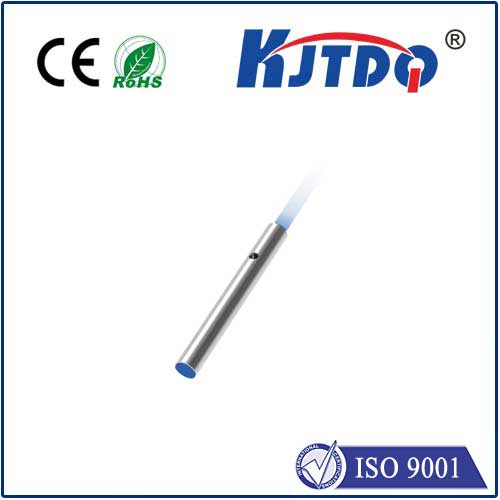
At its heart, a proximity reflector sensor operates on a straightforward yet ingenious principle. It consists of two main components housed in a single unit: an emitter and a receiver. The emitter projects a beam of light, typically infrared or laser. When this beam strikes a suitable reflective surface or a dedicated reflector target, it is bounced back towards the sensor. The integrated receiver detects this reflected light. The sensor's logic is then triggered based on the presence or intensity of the returned signal. Unlike through-beam sensors that require separate emitter and receiver units, the reflector type combines both, simplifying installation and alignment. This design makes it exceptionally effective for detecting objects within a defined range without physical contact.
The versatility of reflector sensors is demonstrated across a multitude of industries. In manufacturing and packaging lines, they are indispensable for precise object counting, jam detection, and verifying the presence of products on conveyors. Their robustness allows them to perform consistently in environments with dust or light interference, especially when paired with polarized filters that only accept light reflected in a specific orientation. Within the realm of automotive assembly, these sensors ensure components are correctly positioned for robotic welding or installation. Furthermore, they play a vital role in security systems, acting as invisible beams to monitor perimeters or detect unauthorized entry into restricted zones when the reflected beam is interrupted.
Choosing and implementing a proximity reflector sensor requires careful consideration of several technical parameters. The sensing range is paramount, defining the maximum distance at which the sensor can reliably detect a standard reflector. The type of light source influences performance; infrared sensors offer cost-effective general-purpose detection, while laser-based variants provide extremely precise, long-range sensing with a small, focused beam spot. Environmental factors cannot be overlooked. Sensors rated with high Ingress Protection (IP) codes are essential for washdown areas in food processing or outdoor applications. Additionally, the output configuration—whether NPN, PNP, analog, or IO-Link—must be compatible with the existing control system for seamless integration.
The operational benefits of deploying reflector sensors are substantial. Their non-contact nature eliminates mechanical wear and tear, leading to significantly lower maintenance costs and longer service life compared to mechanical limit switches. The high switching speed enables detection of rapidly moving objects, which is crucial for high-speed production machinery. By ensuring accurate detection, they minimize errors, reduce material waste, and enhance overall production quality. The simplified installation process, requiring wiring and mounting at only one point, translates into reduced setup time and lower labor costs.
Looking ahead, the integration of proximity reflector sensors with Industrial Internet of Things (IIoT) frameworks is set to unlock new potentials. Smart sensors with advanced diagnostics can communicate operational status, health metrics, and predictive maintenance alerts directly to central monitoring systems. This connectivity facilitates data-driven decision-making, optimizing entire production processes and minimizing unplanned downtime. As machine vision and collaborative robotics advance, the role of precise, reliable proximity detection provided by reflector sensors will only become more critical.
In conclusion, the proximity reflector sensor is far more than a simple switch. It is a sophisticated, adaptable, and reliable component that forms the sensory backbone of modern automated systems. From ensuring the smooth flow of packaging to safeguarding sensitive areas, its impact is profound. Understanding its functionality, specifications, and ideal applications is key to leveraging its full potential, driving efficiency, safety, and innovation in an increasingly automated world.