check

check

check

check

check

check
In the demanding world of industrial automation, reliable and precise sensing is the cornerstone of operational efficiency and safety. Among the myriad of sensing technologies available, the integration of proximity sensors with RS485 communication has emerged as a powerful and versatile solution for modern smart factories and process control systems. This guide delves into the core principles, advantages, and practical applications of this robust combination.
A proximity sensor, fundamentally, is a device that detects the presence or absence of an object within a specific range without any physical contact. Common types include inductive sensors for metals, capacitive sensors for a wider range of materials, and ultrasonic sensors for distance measurement. Their non-contact nature ensures minimal wear and tear, leading to high reliability and long service life in harsh industrial environments filled with dust, moisture, and vibration.
The true transformative power, however, is unlocked when these sensors are paired with an RS485 communication interface. RS485 is a standard defining the electrical characteristics of drivers and receivers for use in balanced digital multipoint systems. In simpler terms, it is a robust, long-distance, and noise-resistant serial communication protocol. Unlike simpler voltage or current output signals (like 0-10V or 4-20mA), RS485 allows for bidirectional digital data exchange.
The synergy between a proximity sensor and RS485 creates a network-ready sensing node. Instead of just providing a simple "on/off" signal, an RS485-enabled proximity sensor can transmit detailed data packets. This data can include not only the detection status but also diagnostic information like sensor health, operating temperature, signal strength, and even configuration parameters. This level of data granularity is crucial for predictive maintenance, allowing engineers to address potential issues before they cause downtime.
The benefits of deploying proximity sensors with RS485 connectivity are substantial. Firstly, they enable significant wiring simplification. Multiple sensors can be connected on a single twisted-pair cable (a bus topology), drastically reducing installation time, material costs, and points of failure compared to traditional star-topology wiring where each sensor needs a separate cable run back to the controller. This is especially valuable in large-scale installations like automotive assembly lines, material handling systems, or warehouse automation.
Secondly, the RS485 standard supports communication over much longer distances—up to 1200 meters—without signal degradation, making it ideal for sprawling industrial plants. Its differential signaling technique provides excellent immunity to electromagnetic interference (EMI), ensuring stable and accurate data transmission even in electrically noisy environments near motors, drives, or welding equipment.
Thirdly, it facilitates seamless integration into higher-level industrial networks and the Industrial Internet of Things (IIoT). RS485 often serves as the physical layer for popular industrial protocols like Modbus RTU or PROFIBUS. This allows proximity sensors to communicate directly with Programmable Logic Controllers (PLCs), Human-Machine Interfaces (HMIs), and supervisory control systems, feeding real-time data into the broader ecosystem for centralized monitoring and control.
Practical applications are vast. In packaging machinery, an array of RS485 proximity sensors can coordinate to detect product position, count items, and verify lid placement, communicating status to the main controller for synchronized operation. In automated storage and retrieval systems (AS/RS), they ensure precise positioning of shuttles and cranes. In food and beverage processing, stainless-steel capacitive proximity sensors with RS485 output can monitor fill levels in tanks or detect packaging materials on conveyor belts, with all data logged for traceability and quality assurance.
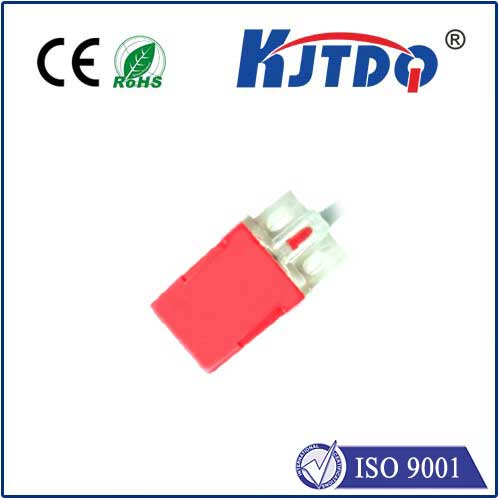
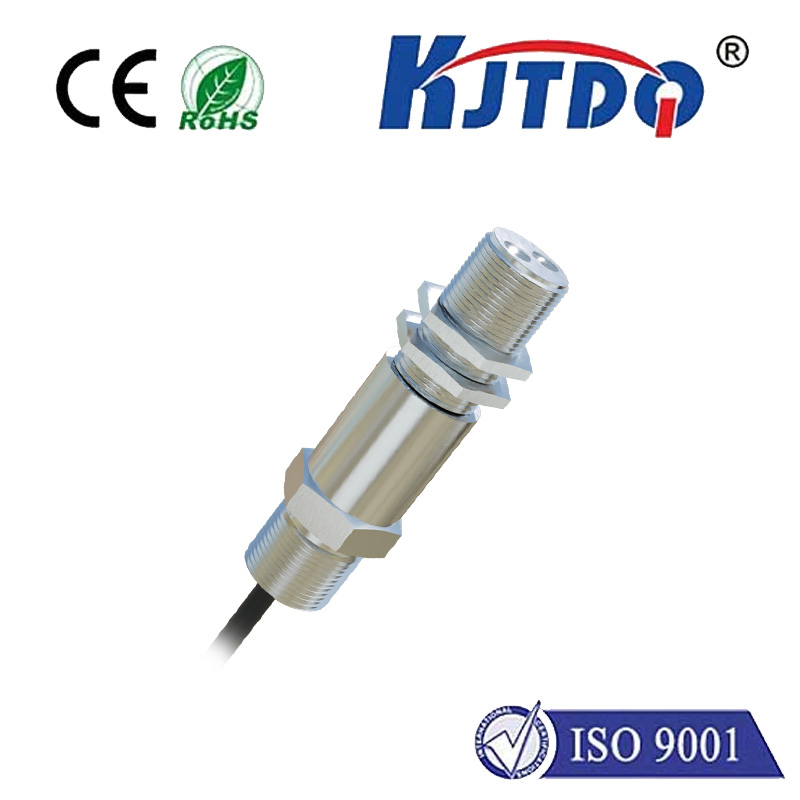
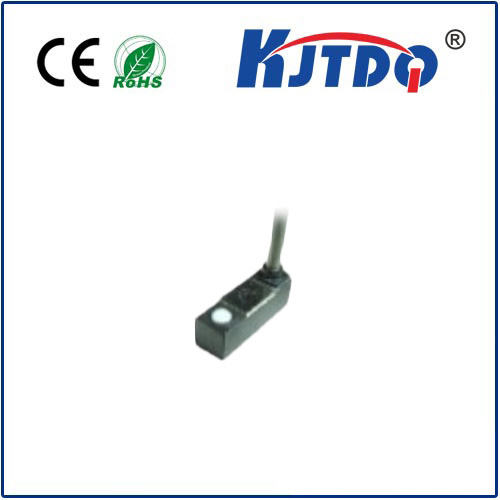
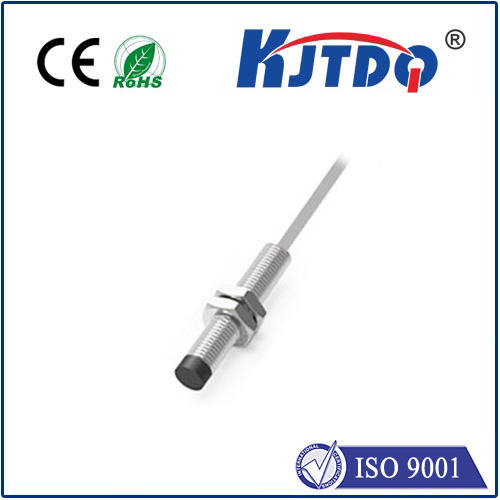
When selecting a proximity sensor with RS485, key specifications to consider include the sensing type (inductive, capacitive), sensing range, housing material (e.g., nickel-plated brass, stainless steel for corrosive environments), IP rating for ingress protection, the supported communication protocol (e.g., Modbus), and the baud rate for data transmission speed. Leading manufacturers offer a wide range of models to suit specific application needs, from compact cylindrical designs to rectangular heavy-duty variants.
In conclusion, the marriage of proximity sensing technology with the robust RS485 communication standard represents a significant leap forward in industrial sensing. It moves beyond simple detection to intelligent, networked data acquisition. By reducing wiring complexity, enhancing reliability over distance, and enabling rich data exchange for IIoT readiness, proximity sensor RS485 solutions are an indispensable component for building smarter, more connected, and more efficient automated systems. For engineers and system integrators aiming to future-proof their installations, understanding and leveraging this technology is no longer an option but a necessity for maintaining a competitive edge.